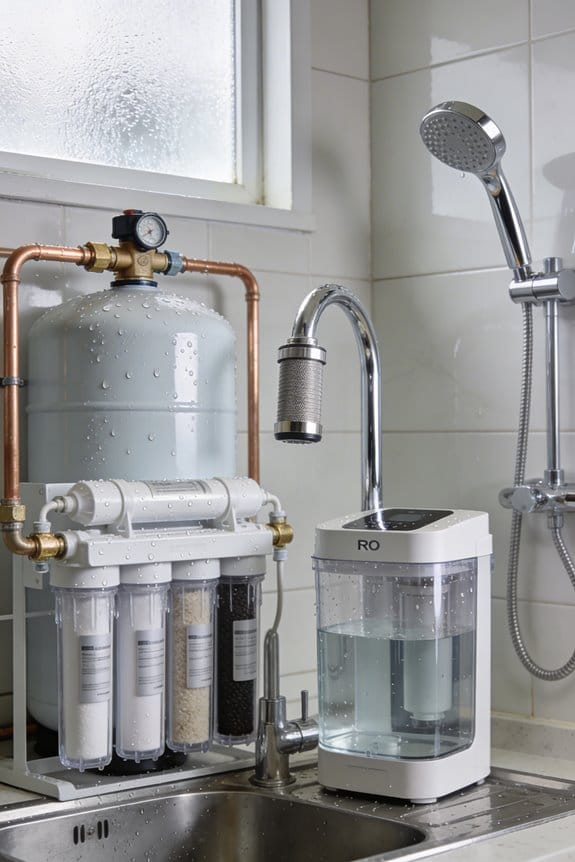
As an Amazon Associate, we earn from qualifying purchases. Some links on this site are affiliate links at no extra cost to you. Our recommendations are based on thorough research and editorial judgment.


Why RO Water Tastes Flat and What Remineralization Does to Fix It

RO water tastes flat because the filtration process removes dissolved minerals like calcium and magnesium, which naturally give water its crisp flavor and texture. You can restore that taste through remineralization, which adds these minerals back using mineral cartridges, electrolyte drops, or built-in alkaline stages in your system. While your diet typically provides these minerals anyway, remineralization mainly improves mouthfeel and taste satisfaction. If you’re curious about specific methods and when remineralization becomes necessary, there’s more to discover about optimizing your water’s flavor.
Key Takeaways
- RO membranes remove dissolved minerals like calcium and magnesium, creating bland, chemically pure water lacking natural flavor.
- Remineralization restores calcium and magnesium to water, improving mouthfeel, crispness, and overall taste quality.
- Mineral cartridges or electrolyte drops slowly release minerals into purified water for controlled remineralization.
- Most essential minerals come from diet, so remineralization primarily enhances taste rather than providing nutrition.
- Remineralization is optional; skip it if current taste satisfies you and avoid added cost and maintenance.
Why RO Filtration Creates Flat, Bland Water
Disappointment often follows when you first taste water from a reverse osmosis system, and there’s a straightforward scientific reason behind that flat, bland flavor you’re experiencing. RO filtration works by forcing water through a semipermeable membrane, which removes not only contaminants but also beneficial minerals like calcium and magnesium. This mineral removal fundamentally alters your water’s taste chemistry. Without these dissolved solids, your water lacks the natural crispness and texture that makes drinking water satisfying. The purification process strips away impurities so thoroughly that it also eliminates the compounds responsible for water’s subtle flavors. The result is effectively neutral H₂O—chemically pure but disappointingly bland on your palate.
Quick Fixes You Can Try Today
Before you consider replacing your RO system, you can tackle the flat taste problem with several straightforward solutions that work immediately. Start by running multiple flush cycles through your system, which removes residual carbon dust and factory preservatives from new filters. I’d recommend flushing 3-5 gallons initially, then repeating fill-drain cycles until the water tastes cleaner.
Next, chill water in your refrigerator before drinking it. Cold temperatures reduce your perception of flatness by enhancing subtle flavors and creating a crisper mouthfeel. You might also carbonate your RO water for sparkling texture and added sharpness, which masks the bland taste effectively.
Additionally, use a water aerator or fountain to introduce freshness through aeration. These quick fixes address immediate taste concerns while you decide whether remineralization suits your needs.
Spotting Contamination and Bacterial Growth

If those quick fixes don’t solve your flat taste problem, I’d recommend investigating whether contamination or bacterial growth is causing the issue, since these problems often hide behind the flatness you’re experiencing. Check your system’s components carefully for warning signs. Look for moldy seals around filter housings, which indicate moisture buildup and microbial growth. Examine your storage tank for cloudiness, sediment, or discoloration—a cloudy tank suggests bacterial colonies or mineral deposits accumulating inside. Sniff the water for sour or musty odors, which point to active bacterial contamination. If you notice metallic tastes or see visible particles, your filters likely need replacement. These contamination issues develop when filters age, tubing remains stagnant, or summer heat accelerates bacterial multiplication inside your system’s components.
Should You Add Minerals Back?

Once you’ve ruled out contamination and bacterial growth as the cause of your flat-tasting water, the next logical step is determining whether remineralization makes sense for your situation. The decision depends on two main factors: health benefits and taste preference. While your diet provides most essential minerals you need, remineralization can improve water’s mouthfeel and crispness by restoring calcium and magnesium. If you enjoy crisp, textured water or find RO water uncomfortably bland, remineralization addresses this concern. However, if you’re satisfied with your water’s current taste, adding minerals isn’t necessary. Consider your specific preferences and whether the improved flavor justifies the additional cost and maintenance of a remineralization filter or mineral drops.
Three Ways to Remineralize Your Water

Several proven methods exist for adding minerals back into your RO water, each offering different levels of convenience and cost. The first option involves mineral cartridges, which you install directly into your RO system’s filter housing. These cartridges slowly release calcium and magnesium as water passes through, restoring taste naturally. Second, you can use electrolyte drops, liquid solutions you add manually to each glass or pitcher. This method gives you precise control over mineralization levels. Third, you might purchase an RO system with a built-in alkaline stage, which automatically remineralizes water during filtration. Each approach works effectively; your choice depends on budget, convenience preferences, and desired mineral content levels.
When to Upgrade Your RO System
Your RO system’s performance naturally declines over time, and recognizing the right moment to upgrade guarantees you continue enjoying clean, properly mineralized water. Most filter cartridges reach their maximum filter lifespan between six months and two years, depending on your water quality and usage. When you notice taste declining despite remineralization efforts, filters are likely saturated. Additionally, if your household experiences capacity expansion—meaning more people need clean water—your current system may struggle to keep pace with demand. Upgrading to a higher-capacity model prevents extended wait times for stored water. Consider replacing your system when filtration becomes noticeably slower, contaminants breakthrough occurs, or your remineralization stage can’t compensate for declining output quality.
Frequently Asked Questions
Does RO Water’s Flatness Pose Any Health Risks or Nutritional Deficiencies?
I’d say RO water’s “nutritionally modest” nature doesn’t cause deficiencies since you’re getting minerals elsewhere. However, I’d note electrolyte balance concerns exist for athletes, and mineral bioavailability matters for those relying solely on water sources.
How Long Does Remineralization Take to Noticeably Improve Water Taste?
I’ll tell you that you’ll notice improvement within a few minutes of adding remineralization filters or mineral drops. However, you’ll experience the most dramatic taste transformation over gradual weeks as your palate adjusts and mineral levels stabilize completely.
Can I Remineralize RO Water Using Natural Methods Like Adding Fruits?
You can’t effectively remineralize RO water through fruit infusion alone—I’d need mineral leaching from sources like mineral-rich shells or stones, not just flavor. Dedicated remineralization filters work far better.
Will Remineralization Increase My Water’s Total Dissolved Solids Above Safe Levels?
No, remineralization won’t exceed safe TDS levels if you’re monitoring properly. I’d recommend checking your mineral balance regularly and keeping TDS under 500 ppm for peak safety and taste.
How Often Should I Replace Remineralization Filters or Mineral Cartridges?
You’re probably wondering when your minerals’ll run out—here’s the truth: I’d replace your cartridge maintenance every 6-12 months, depending on your filter lifespan and water usage. Check annually.