As an Amazon Associate, we earn from qualifying purchases. Some links on this site are affiliate links at no extra cost to you. Our recommendations are based on thorough research and editorial judgment.


What the Difference Is Between a Tank RO System and a Tankless RO System

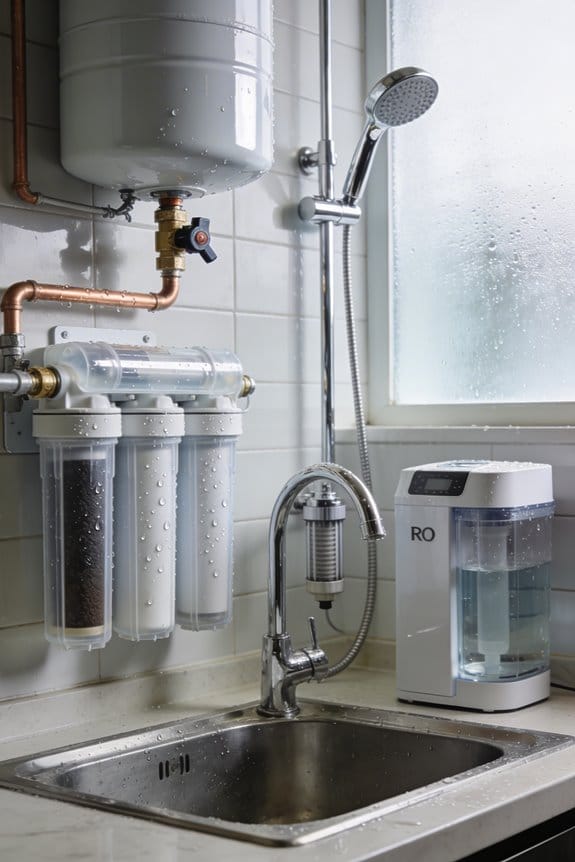
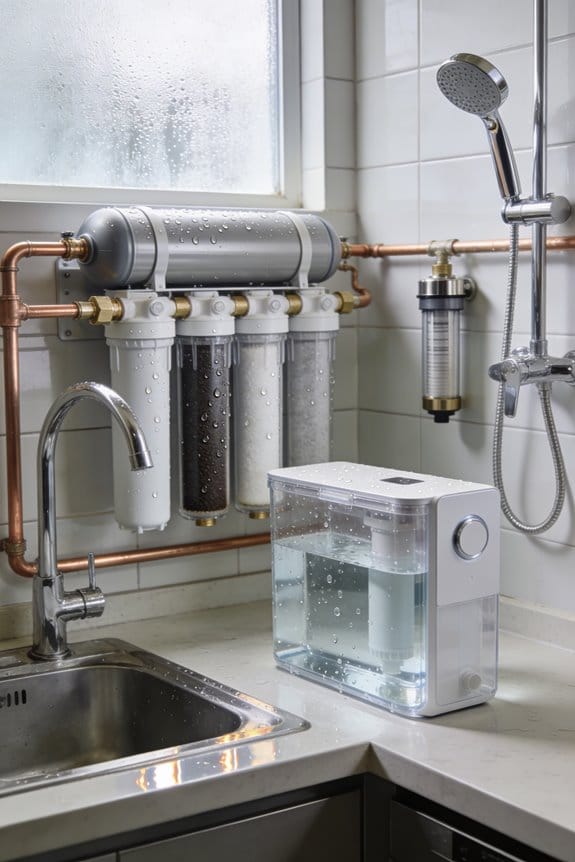
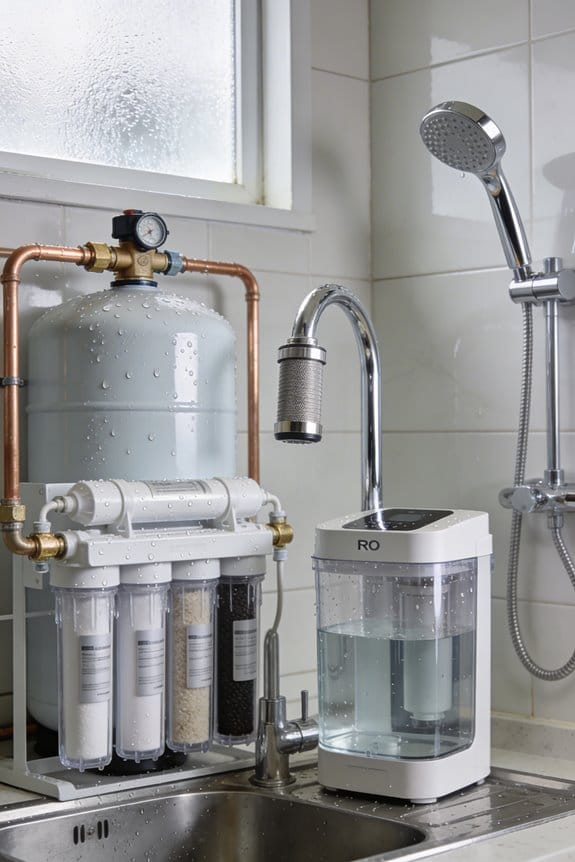
Tank RO systems store filtered water in a pressurized tank, delivering it quickly—about 19 seconds—because water’s already filtered and ready. Tankless systems filter water on-demand through five filtration stages, taking roughly 45 seconds initially but using far less space and wasting markedly less water. Tanks cost less upfront but require more maintenance, while tankless units demand higher initial investment yet offer long-term savings through reduced waste and fewer repairs. Your choice depends on space, budget, and water conservation priorities—though there’s considerably more to explore about each system’s specific advantages.
Key Takeaways
- Tank systems store filtered water for rapid delivery in ~19 seconds; tankless systems process water on-demand with ~45-second startup delays.
- Tankless systems occupy significantly less space, requiring only a fraction of under-sink room compared to tank-based alternatives.
- Tank systems produce 4 gallons of wastewater per 1 gallon filtered; tankless systems generate considerably less wastewater through powered pump efficiency.
- Tankless systems offer easier maintenance with quick filter changes and longer filter lifespans; tank systems require frequent cleaning and component replacement.
- Tank systems cost less upfront with lower failure rates; tankless systems have higher initial costs but provide long-term savings and stop during power outages.
Space Requirements: Tank vs. Tankless RO Systems
When you’re deciding between a tank and tankless RO system, one of the most important factors to take into account is how much space you’ve got available under your sink. Tank systems store approximately three gallons of filtered water in a pressurized tank, which demands significant under-sink space and limits your under sink aesthetics. Tankless systems, by contrast, require only a fraction of that space since they don’t need storage tanks. Tank-based designs need roughly twice the installation space compared to tankless alternatives, restricting where you can position them. Tankless systems offer superior installation flexibility, allowing you to fit them in smaller homes and tighter areas. If you’re working with limited cabinet space, a tankless system provides the compact design you’ll need for comfortable installation.
Speed Comparison: Water Delivery Times
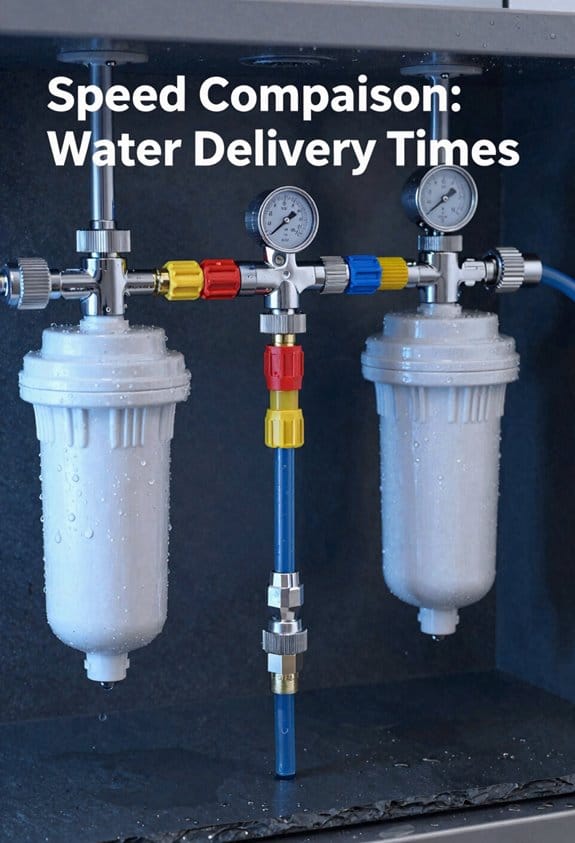
If you’ve ever stood at your sink waiting for filtered water, you’ll quickly realize that speed matters. Tank systems deliver water rapidly, filling in about 19 seconds because the water’s already filtered and stored. Tankless systems experience a startup delay, taking roughly 45 seconds for initial delivery. This difference exists because tank systems have faster flow rates—stored water passes through just one filtration level before reaching your faucet. Tankless systems require water to travel through five filtration stages during instant processing. However, tank systems have a significant drawback: once depleted, they need 1-3 hours to refill depending on your home’s water pressure. Understanding these flow rates helps you choose the system that best matches your household’s daily water usage patterns.
Water Efficiency: Waste and Wastewater Differences
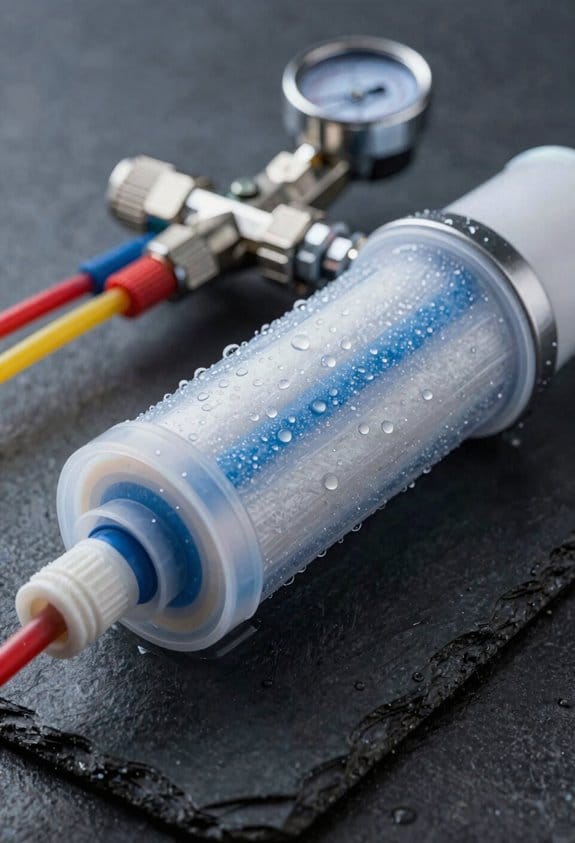
While speed matters when you’re thirsty, water efficiency matters for your wallet and the environment. Tank systems generate approximately 4 gallons of wastewater to produce just 1 gallon of filtered water, creating a significant water footprint. Tankless systems, however, produce considerably less wastewater because their powered internal pump creates ideal pressure for efficient processing. This efficiency difference becomes particularly important for households facing high municipal water fees or living in areas with regulatory compliance requirements regarding water conservation. The powered pump in tankless systems enables better pressure management, reducing the water needed for filtration. Additionally, tankless design prevents water stagnation in storage tanks, maintaining fresher quality. When you’re deciding between systems, consider not only your immediate costs but also your long-term environmental impact and local water regulations.
Maintenance and Filter Changes
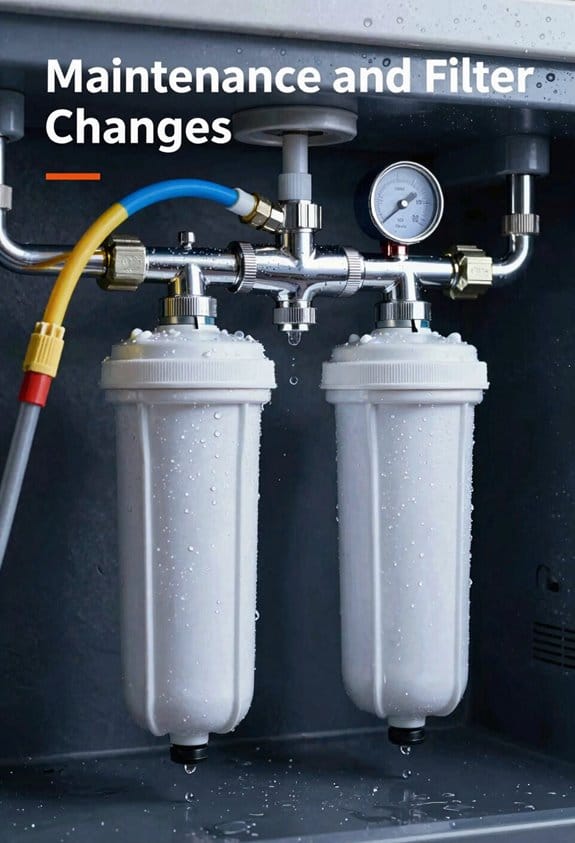
Maintaining your RO system doesn’t require the same effort for both tank and tankless models, and I’d recommend understanding these differences before making your choice. Tankless systems make filter changes markedly easier, taking only seconds to complete. Tank systems, by contrast, require more complex maintenance procedures, including regular tank cleaning and component replacement that demand considerably more time and effort. When considering filter lifespan, tankless units typically last longer due to their design preventing water stagnation, which means you’ll schedule fewer replacements overall. Tank systems need more frequent service scheduling because standing water can degrade filter quality faster. Since tankless systems have fewer moving parts, they generally demand less maintenance attention than their tank-based counterparts, making them ideal if you prefer minimal upkeep requirements.
Price: Which System Costs Less Overall?

When you’re deciding between tank and tankless RO systems, the initial purchase price often becomes the primary factor in your decision. Tank systems typically cost less upfront, making them ideal if you’re budget-conscious and need affordable water filtration now. However, looking beyond upfront pricing reveals a more complex picture. Tankless systems cost more initially because they require electrical infrastructure and complex installation. Yet they offer long term savings through reduced maintenance expenses and fewer component replacements. Tank systems demand regular tank cleaning and frequent maintenance procedures, which accumulate costs over time. Tankless systems have fewer moving parts, meaning lower maintenance demands and extended lifespans. Consider your budget constraints and how long you plan using the system before deciding which option makes financial sense for your household.
Reliability: Failure Rates and Power Outage Performance
As you’ve considered the financial aspects of tank versus tankless RO systems, understanding their reliability becomes equally important for making a well-informed choice. Tank systems generally demonstrate lower failure rates because they operate with minimal electrical demands and stable, consistent power usage. Tankless systems, however, experience higher failure rates due to their frequent machine starts, which accelerates aging of internal electrical components and reduces pump longevity over time. Additionally, power outages create a significant difference between these systems. During outages, tank systems continue delivering stored filtered water without interruption. Tankless systems, conversely, stop functioning immediately since they depend entirely on electricity. If power reliability concerns you, consider backup solutions like battery systems or portable generators to maintain water access when needed.
Which System Fits Your Home: Decision Framework
Now that you’ve explored how these systems perform under different conditions, you’re ready to determine which option matches your home’s specific needs and circumstances. Consider your family size and daily water consumption, as tank systems deliver quick bursts while tankless systems provide consistent flow. If you have limited under-sink space, tankless’s compact design works better. Think about installation timing—tank systems install faster and cheaper, making them ideal for budget-conscious households. Conversely, if you want lower maintenance and reduced wastewater, tankless systems justify their higher upfront cost. Evaluate your home’s electrical infrastructure, since tankless requires a grounded outlet. Finally, assess whether power outages concern you; tank systems maintain functionality during outages, while tankless systems cannot.
Frequently Asked Questions
Do Tank RO Systems Require Electricity to Operate, or Are They Completely Passive?
Like water finding its level, tank RO systems flow naturally without electric demand. They’re passive unless you’ve added optional features. However, pump activation only occurs if you’ve equipped UV filters or pumps—otherwise, pure gravity does the work.
How Much Noise Do Tankless RO Systems Make During Normal Daily Operation?
I’ll tell you that tankless RO systems produce brief pump sounds during operation, creating an operational hum and flow vibration. The working current runs 3-4 times larger than tank models, generating more noticeable noise during filtration cycles.
What Is the Storage Capacity of a Typical Tank RO System?
You might think 3 gallons sounds limited, but I’ve found it’s plenty for most households. A typical tank RO system stores about 3 gallons in its pressurized tank, which maintains consistent water pressure throughout your home.
Can Tankless RO Systems Function During a Power Outage or Blackout?
No, tankless RO systems can’t function during power outages since they require electricity for their powered internal pump. However, you can install a battery backup or consider a gravity feed model to maintain water access during blackouts.
How Many Filtration Stages Do Tankless RO Systems Use Compared to Tank Systems?
Tankless systems pass water through five filter stages versus tank systems’ single filtration level. I’d say this complexity, while extending lifespan, demands more frequent maintenance attention than traditional tank alternatives.