As an Amazon Associate, we earn from qualifying purchases. Some links on this site are affiliate links at no extra cost to you. Our recommendations are based on thorough research and editorial judgment.

How Reverse Osmosis Works and Why It Removes So Many Contaminants

Reverse osmosis forces water through an ultra-fine membrane using high pressure, which blocks nearly everything else. The membrane’s pores are smaller than one nanometer, so it traps dissolved salts, heavy metals, bacteria, viruses, and chemicals while letting water molecules pass through. This size-exclusion process removes 95–99% of contaminants in one step. Pre-filters protect the membrane by removing larger particles and chlorine first. Understanding how pressure, membrane design, and maintenance work together reveals why this system remains so effective.
Key Takeaways
- A high-pressure pump forces water molecules across a semi-permeable membrane, reversing natural osmotic flow and separating contaminants.
- Membrane pores smaller than one nanometer enable molecular sieving to reject dissolved salts, heavy metals, bacteria, viruses, and organic compounds.
- Multi-stage filtration removes sediment, chlorine, and volatile organic compounds before the RO membrane processes water for maximum contaminant rejection.
- RO systems achieve 95–99% removal of dissolved solids from seawater and brackish water through size exclusion and barrier mechanisms.
- Pre-filters and carbon stages protect the RO membrane from fouling and chlorine damage while capturing pesticides, pharmaceuticals, and other chemicals.
What Is Reverse Osmosis and How Does It Work?
When you turn on a tap, you’d expect clean water to pour out, but many water sources contain dissolved salts, minerals, and contaminants that aren’t visible to the naked eye. Reverse osmosis is a water purification process that removes these impurities through a semi-permeable membrane. I’ll explain how it works: a high-pressure pump forces water across the membrane, which allows water molecules through while rejecting larger dissolved salts and contaminants. This process reverses osmotic equilibrium, where water normally flows toward higher salt concentration. The system produces two streams—purified permeate and concentrated brine containing rejected minerals. Water desalination using reverse osmosis removes 95-99% of dissolved solids, making it effective for both seawater and brackish water treatment. Understanding this technology helps explain why it’s widely used in homes and industrial applications.
Which Contaminants Does Reverse Osmosis Remove?
Reverse osmosis removes most contaminants that dissolve in water or are larger than water molecules, which means it’s exceptionally good at filtering out the stuff you can’t see. The process excels at mineral rejection, eliminating dissolved salts like sodium, calcium, and magnesium that affect water hardness and taste. It effectively removes heavy metals including lead and arsenic, which pose serious health risks even in tiny amounts. The system also filters out bacteria, viruses, and organic matter through its semi-permeable membrane barrier.
Additionally, RO systems capture pharmaceutical residues—medications that enter water supplies through human waste—along with pesticides, herbicides, and chlorine. Because the membrane rejects particles and molecules larger than water itself, it provides all-encompassing filtration that most other methods can’t match, making it ideal for producing exceptionally pure drinking water.
The Three-Stage Reverse Osmosis Filtration Process
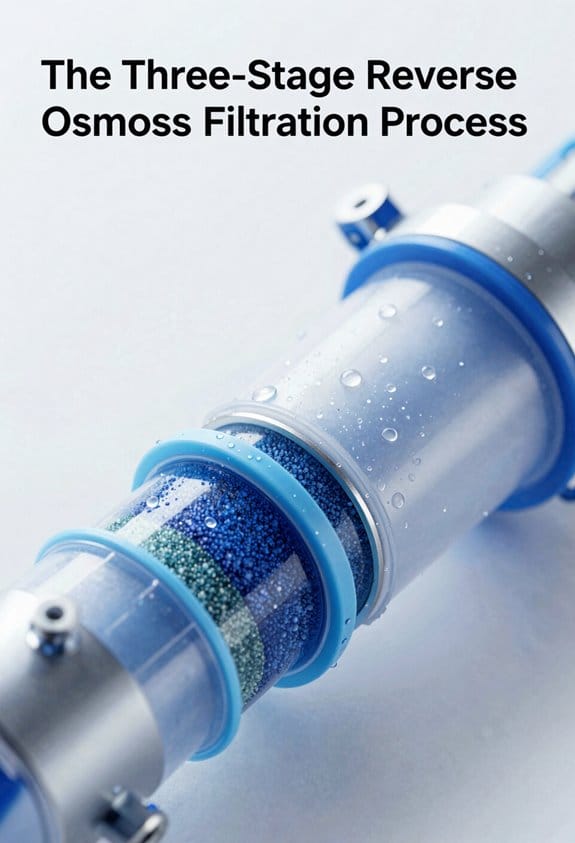
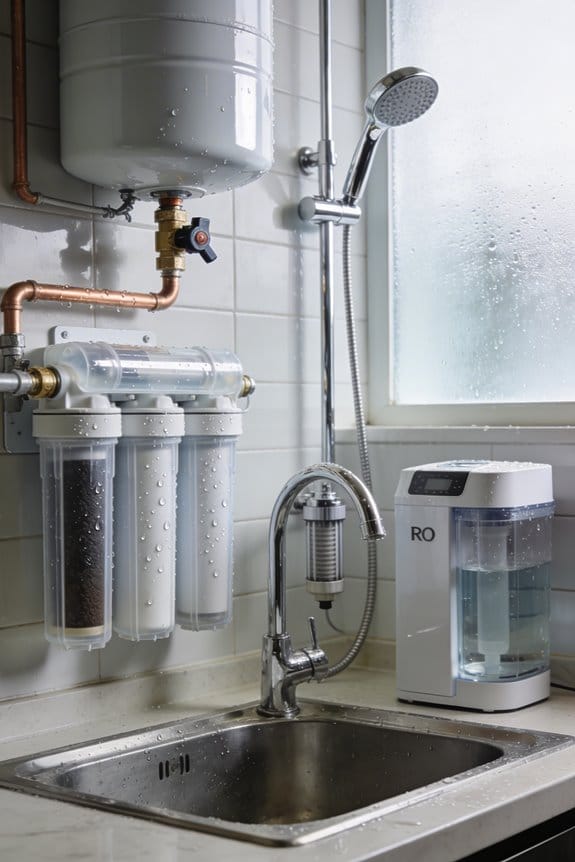
Before your tap water becomes pure and drinkable through reverse osmosis, it must pass through three distinct filtration stages that work together to protect the RO membrane and produce the highest quality water possible. The first stage uses a sediment filter with pre filter sizing calibrated to 5 microns, which traps dirt, sand, and rust particles. Stage two employs a carbon block filter that removes chlorine, volatile organic compounds, and chemicals affecting taste and odor. The third stage is the RO membrane itself, which rejects dissolved salts and heavy metals under high pressure. Some systems include post filter polishing, an additional stage that enhances purity further. These stages guarantee contaminants don’t damage your membrane while delivering exceptionally clean water.
How the RO Membrane Actually Works
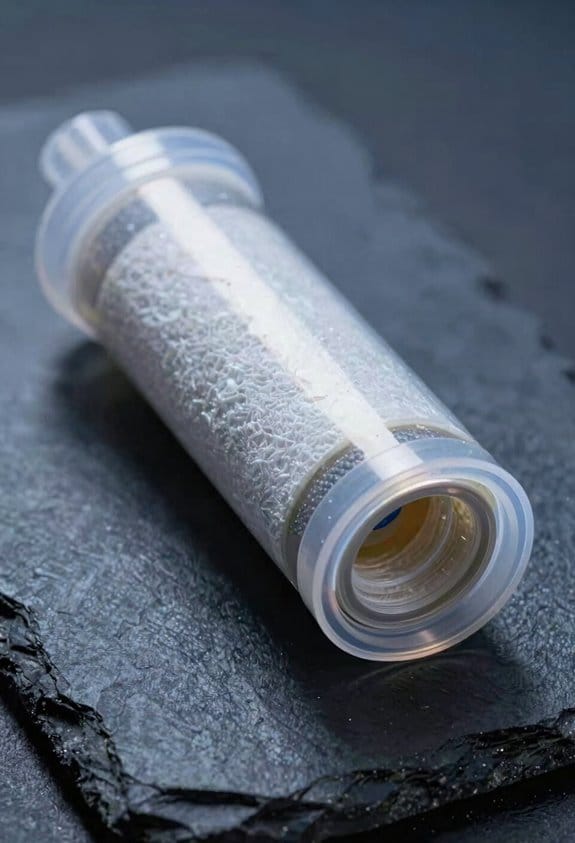
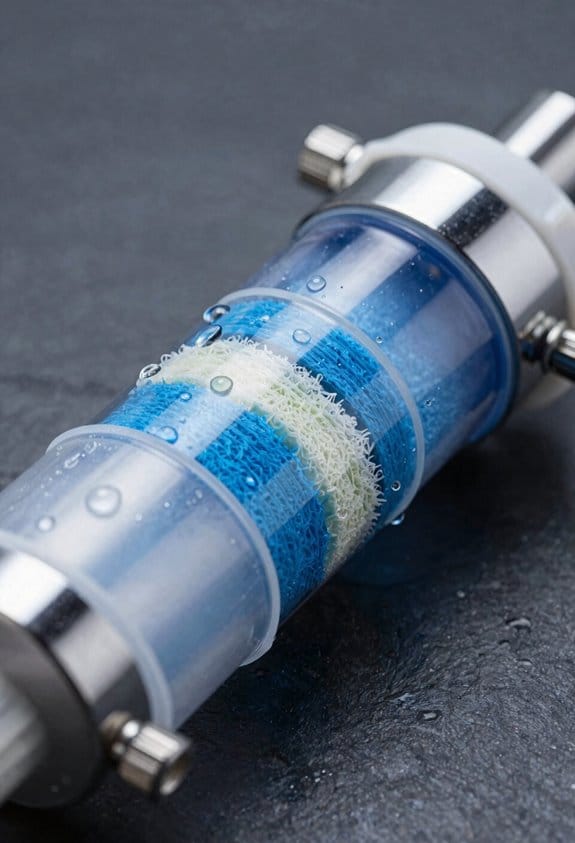
At the heart of any reverse osmosis system sits a semi-permeable membrane, which is a thin barrier that separates water molecules from larger contaminants through a process called size exclusion. This membrane works through molecular sieving, allowing only the smallest water molecules to pass while blocking dissolved salts, heavy metals, and other impurities. The membrane’s polymer chemistry creates a dense structure with microscopic pores, typically measuring less than one nanometer. When pressure forces feed water against the membrane, water molecules slip through these tiny openings, while larger dissolved solids remain trapped in the reject stream. The spiral-wound design guarantees even water distribution across the membrane’s surface, maximizing filtration efficiency and producing consistently pure permeate water.
Why Applied Pressure Drives RO Purification
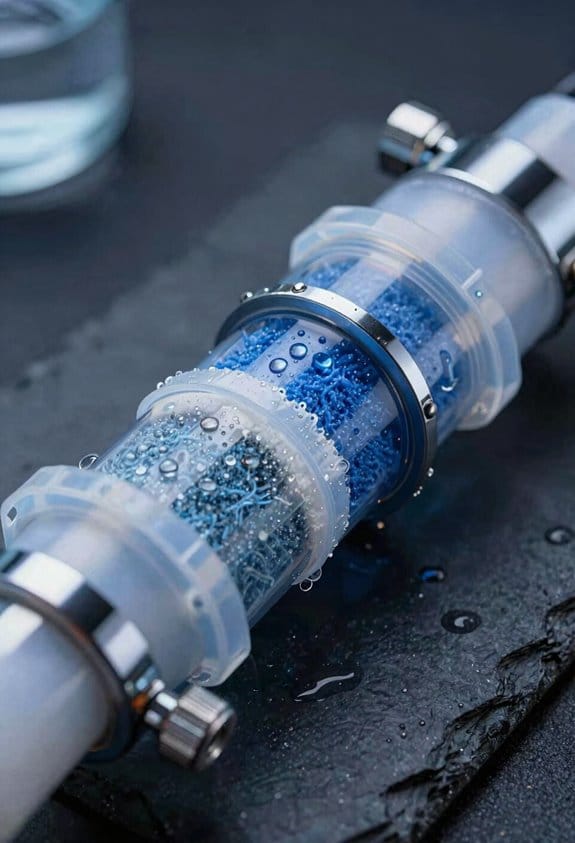
Pushing water through a semi-permeable membrane wouldn’t happen on its own, which is why pressure becomes the driving force behind reverse osmosis purification. You see, natural osmosis moves water toward higher salt concentration, but we need the opposite effect. A high-pressure pump applies force—typically 50-60 bars for seawater—that overcomes the osmotic pressure trying to push water the wrong direction. This external pressure forces water molecules across the membrane while rejecting dissolved salts and contaminants. Modern systems use energy recovery devices that capture energy from the concentrated reject stream, reducing overall power consumption. This pressurized approach makes reverse osmosis remarkably effective at removing 95-99% of dissolved solids from your water.
Reverse Osmosis Recovery Rates: Why You Get 20–85% Clean Water
While that pressurized force is what makes reverse osmosis work so effectively, I should tell you that not all the water entering an RO system actually becomes pure drinking water. The recovery rate—the percentage of water that becomes clean permeate—varies considerably based on your water source. Seawater systems recover only 20–40% because the high salt concentration requires tremendous pressure and leaves substantial brine. Brackish water systems achieve 80–85% recovery since lower salinity demands less pressure. This difference matters for recovery optimization and brine disposal costs. Larger facilities can improve efficiency through multi-stage arrays that progressively extract water, reducing reject volume. Understanding your system’s recovery rate helps you anticipate water usage and plan for concentrate management.
Staging Multiple Membranes for Better Results
When a single reverse osmosis membrane reaches its limits, staging multiple membranes in series arrangement dramatically improves your system’s overall performance. I’ll explain how this works: the reject water from one membrane stage feeds into the next stage, progressively removing more dissolved salts. This staged energy recovery approach captures pressure from the concentrate stream, reducing the pump’s workload and lowering energy costs. Flux balancing guarantees each membrane handles appropriate water volumes, preventing some membranes from overworking while others remain underutilized. Arrays like 2:1 configurations systematically process water through successive stages, extracting cleaner permeate at each step. This multi-stage method achieves higher recovery rates and produces exceptionally pure water efficiently.
Membrane Fouling, Chlorine Damage, and Pressure Loss
Despite the effectiveness of reverse osmosis systems, they’re vulnerable to three interconnected problems that degrade performance over time: membrane fouling, chlorine damage, and pressure loss.
Membrane fouling occurs when particles, minerals, and microorganisms accumulate on the membrane surface, restricting water flow. Scaling prevention requires monitoring feed water composition and adjusting pH levels to inhibit mineral buildup. Biofouling control involves maintaining proper system conditions and using appropriate pre-filters to eliminate bacteria and organic matter before they reach the membrane.
Chlorine damage is particularly destructive because it degrades the membrane’s thin barrier layer, creating permanent structural damage that reduces the membrane’s lifespan from typical years to mere months. Pre-filtration with carbon filters eliminates chlorine before water reaches the membrane.
As fouling accumulates and chlorine damage progresses, the high-pressure pump must work harder to force water across the compromised membrane, causing pressure loss and increased energy consumption while reducing water production efficiency.
Maintenance and Filter Replacement Schedules
Regular maintenance and timely filter replacement schedules are your best defense against the performance degradation we’ve discussed, working together to keep your reverse osmosis system running efficiently and extending the life of your expensive membrane components. You’ll want to establish scheduled servicing intervals based on your water quality and system usage. Pre-filters typically need cartridge rotation every 6-12 months, while carbon filters require replacement annually or when you notice taste or odor changes. RO membranes last 2-3 years under normal conditions. Monitor your system’s pressure gauges and flow rates regularly; significant drops indicate fouling or filter saturation. Following manufacturer recommendations for each stage guarantees peak contaminant removal and prevents costly membrane damage from neglect.
Frequently Asked Questions
Can Reverse Osmosis Remove All Contaminants From Water Completely?
I’d love to tell you RO’s a magic wand, but it’s not—it achieves partial removal of 95-99% contaminants. Still, you’ll face microbial regrowth in storage tanks, so it’s impressively thorough, not flawless.
Is Reverse Osmosis Water Safe to Drink Long-Term Without Added Minerals?
I’d say RO water’s safe long-term, though some worry about mineral loss affecting health. You might notice taste preferences shift since minerals are gone. Adding trace minerals back addresses both concerns effectively.
How Much Does It Cost to Install and Operate an RO System?
You might think RO’s pricey, but I’ve found installation costs typically run $150-$300 for basic units. Maintenance expenses stay low—mainly filter replacements annually, costing around $50-$100, making long-term savings worthwhile.
Can Reverse Osmosis Systems Treat Water With Extremely High Salinity Levels?
Yes, I can treat extremely high salinity water, but you’ll need robust pre-treatment to prevent membrane fouling. I’d implement specialized brine management and multi-stage arrays since higher salt concentrations require increased pressure and careful handling.
What Environmental Impact Does Reverse Osmosis Have From Reject Water Disposal?
I’ll tell you something troubling: that concentrated reject water you’re dumping poses real dangers. Brine management requires careful planning—improper ecosystem discharge devastates marine habitats and increases salinity levels where aquatic life can’t survive.