As an Amazon Associate, we earn from qualifying purchases. Some links on this site are affiliate links at no extra cost to you. Our recommendations are based on thorough research and editorial judgment.

How to Pair an RO System With a Whole House Filter for Complete Protection

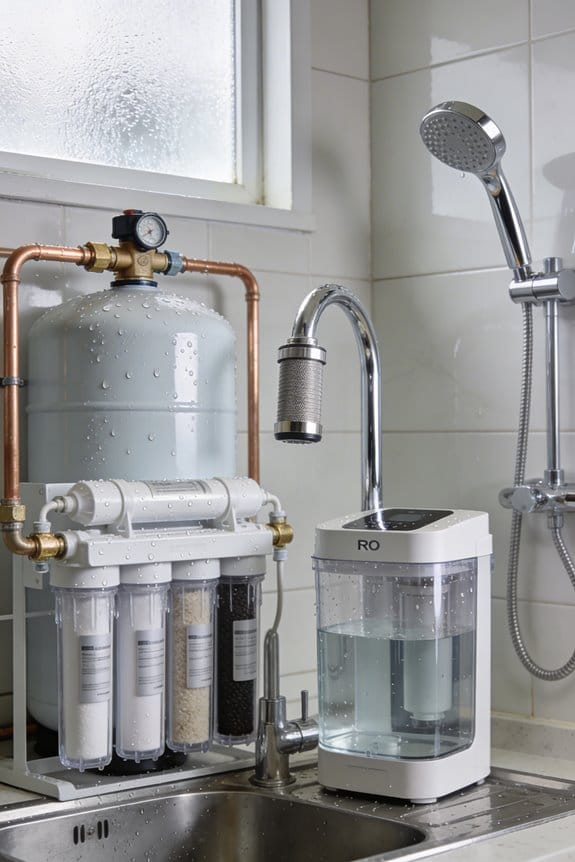
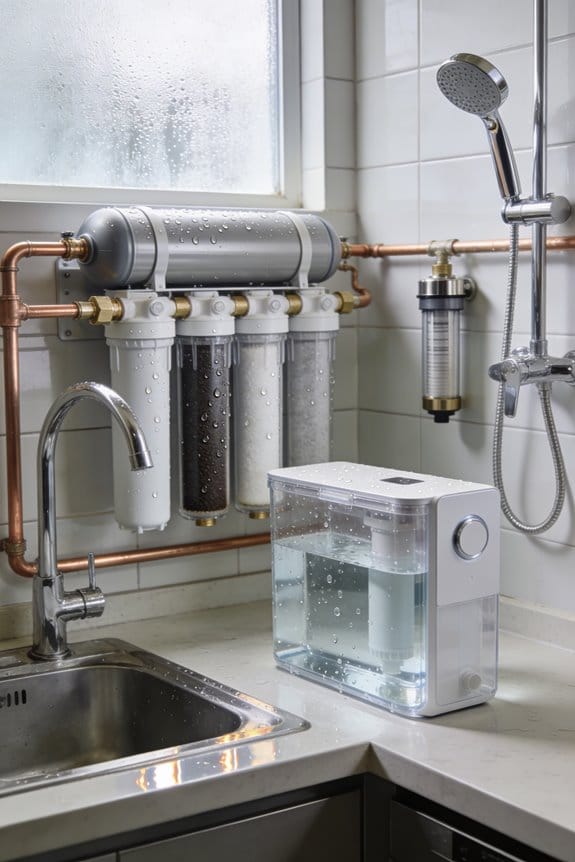
I pair a whole house filter with an RO system because they remove different contaminants at separate stages. My whole house filter installs on the main line, trapping sediment and chlorine before water reaches my taps. Then, my under-sink RO system eliminates dissolved solids and harmful microorganisms for drinking water. Together, they remove up to 99% of impurities, including arsenic and lead. Testing my water first makes certain I select the right combination for my specific contaminants, and proper maintenance extends both systems’ lifespans. Discover the complete installation and maintenance process ahead.
Key Takeaways
- Install whole house filter on main water line near shutoff valve to remove sediment and larger particles first.
- Place RO system under sink for final purification of drinking and cooking water with dedicated faucet.
- Test water supply for specific contaminants like sediment, chlorine, lead, and dissolved solids before selecting systems.
- Whole house pre-filter protects RO membrane from fouling by trapping debris, extending membrane lifespan significantly.
- Replace whole house filter every 6-12 months and RO membrane annually; check filters quarterly for optimal performance.
Why You Need Both Systems, Not Just One?
While a whole house filter and an RO system each excel at removing different types of contaminants, combining them creates a more complete water treatment solution than using either system alone. A whole house filter tackles sediment, chlorine, and larger particles at your main water line, protecting all your home’s taps. An RO system then polishes that water further, eliminating dissolved solids and harmful microorganisms for drinking water. This two-stage approach delivers significant health benefits by removing up to 99% of impurities, including arsenic and lead. You’ll also see cost savings by eliminating bottled water purchases and reducing appliance wear from mineral buildup. Neither system alone provides this all-encompassing protection.
Test Your Water to Choose the Right Filter Combination
How do you know which filter combination your home actually needs? Water sampling is the best way to discover what contaminants hide in your supply. I’d recommend testing for common issues like sediment, chlorine, lead, and total dissolved solids before choosing your system.
Seasonal variability matters too—your water quality changes throughout the year, so testing multiple times gives you a complete picture. Spring runoff might increase sediment levels, while summer could bring different mineral concentrations. A professional lab analysis identifies exactly which contaminants you’re fighting, preventing you from buying unnecessary filters or missing dangerous substances. Once you understand your water’s specific problems, you can confidently select the right whole house filter and RO system pairing that addresses your home’s actual needs rather than guessing.
Install the Whole House Filter on the Main Line
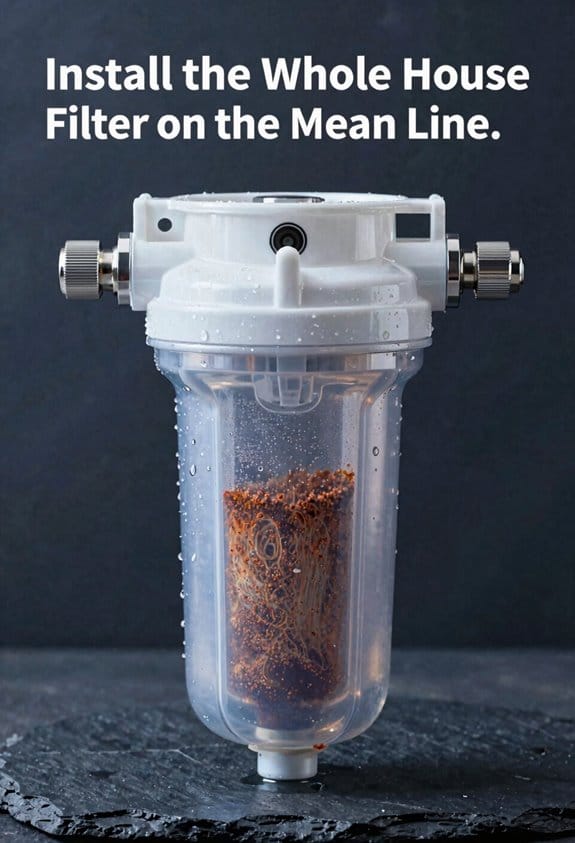
Installing your whole house filter on the main water line represents the essential first step in your filtration system setup, and I’ll walk you through why this placement matters and what to expect. Before installation begins, locate your home’s main shutoff valve, which controls water entering your entire house. A professional plumber will install the filter near this shutoff, ensuring pre-treatment of all incoming water. The system includes a bypass loop, which allows water to flow around the filter during maintenance without shutting off your home’s water supply. This bypass loop proves essential for changing filters without disrupting daily water use. Proper main line installation protects your RO system downstream by removing sediment and large particles first, preventing membrane damage and extending equipment lifespan considerably.
Install Your RO System Under the Sink for Final Purification
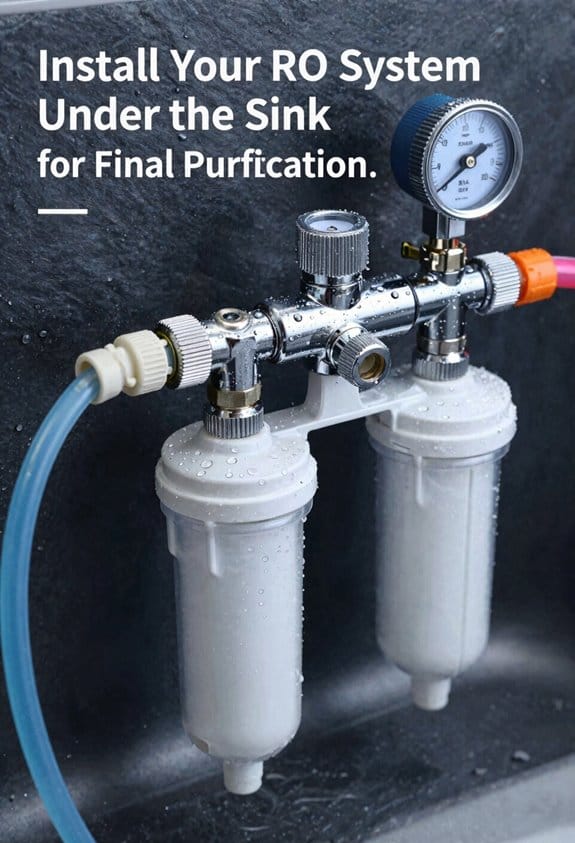
After your whole house filter removes sediment and large particles from the main water line, your RO system takes over the job of eliminating dissolved solids and microscopic contaminants that slip through the first stage of filtration. I recommend installing your RO unit under the sink because this location provides the final polishing step for your drinking water without requiring extensive plumbing modifications. Consider space constraints beneath your cabinet when selecting a system size. The under-sink placement also allows convenient faucet placement directly at the point where you’ll use purified water most. Your RO system connects to the cold water line, and a dedicated faucet dispenses treated water. This configuration guarantees you’re getting the cleanest possible drinking and cooking water while keeping your whole house water safe for all other uses.
How Pre-Filtration Protects Your RO Membrane
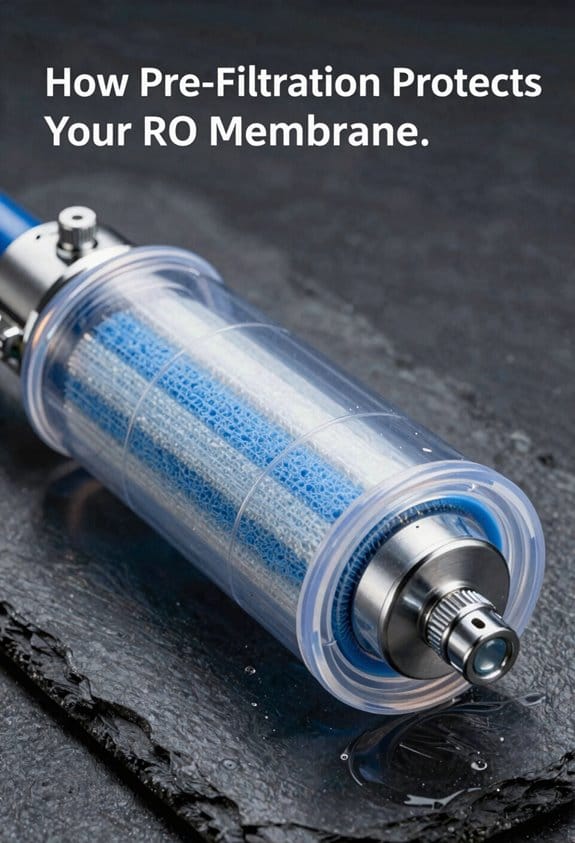
Because your RO membrane is a delicate component designed to filter molecules at the microscopic level, it needs protection from larger particles that can cause permanent damage. Your whole house filter acts as the first line of defense through sediment trapping, removing sand, rust, and debris before water reaches your RO system. This pre-filtration step prevents membrane fouling, which occurs when particles accumulate on the membrane surface and reduce its effectiveness. Without this protection, your RO membrane clogs prematurely, requiring costly replacement within months rather than years. By installing the whole house filter upstream, you’re essentially extending your RO membrane’s lifespan significantly. This strategic layering ensures your RO system works optimally, maintaining its ability to remove dissolved solids and contaminants while protecting your investment long-term.
When and How to Replace Filters for Peak Performance
To keep your combined whole house and RO system running at maximum efficiency, you’ll need to understand the replacement schedules for both components, since they work on different timelines. Your whole house pre-filter typically needs replacement every 6 to 12 months, depending on your water quality and usage. The RO membrane, however, lasts about one year before requiring cartridge disposal and installation of a new unit. I recommend checking your filter schedules quarterly to monitor sediment buildup and water flow rates. When flow decreases noticeably, that’s your signal to replace cartridges promptly. Marking replacement dates on your calendar prevents system degradation. Proper maintenance guarantees your setup continues removing 99% of impurities effectively, protecting both your membrane and your home’s water quality.
Frequently Asked Questions
What Is the Typical Cost Difference Between Whole House Filters and RO Systems?
I’d say whole house filters typically cost $1,000-$2,500 for installation costs, while RO systems run $500-$1,500. Here’s the kicker: you’ll replace RO membranes yearly, whereas whole house maintenance frequency is minimal, making whole house more economical long-term.
Can I Install a Whole House Filter Myself or Do I Need Professional Help?
I’d recommend hiring a professional plumber for your whole house filter installation. DIY risks include improper connections and water damage, while permit requirements vary by location and typically need professional handling for main line work.
How Much Water Does an RO System Waste During the Filtration Process?
You might worry RO systems waste too much water, but here’s the truth: they typically produce a 1:1 waste-to-product ratio. I’d recommend advanced systems achieving 50-70% efficiency with recirculation valves, minimizing your wasted ratio and simplifying brine disposal.
Will a Combined System Reduce My Monthly Water and Energy Utility Bills?
Yes, you’ll see reduced bills through lowered maintenance costs and extended appliance longevity. The whole house filter protects your RO membrane, minimizing replacements. Energy-efficient RO technology further cuts utility expenses compared to traditional purification methods.
Do Whole House RO Systems Require Electricity to Operate Properly?
Yes, they do require electricity. I’ve found that RO systems need power for the re-pressure pump and storage tank’s float switch. You’ll want backup power during outages since electric demand’s constant for peak operation.