As an Amazon Associate, we earn from qualifying purchases. Some links on this site are affiliate links at no extra cost to you. Our recommendations are based on thorough research and editorial judgment.

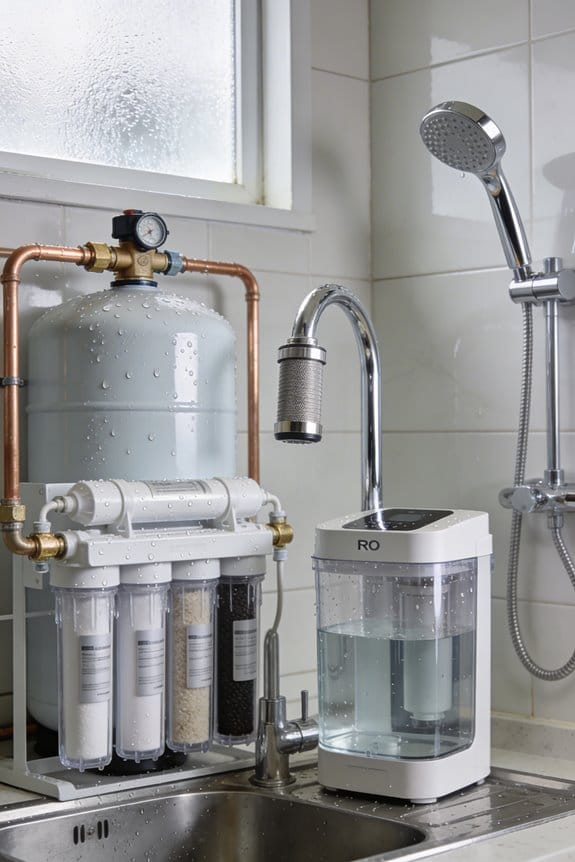
How to Know When Your RO Membrane Needs Replacing

Your RO membrane needs replacing when permeate TDS exceeds 40 ppm, indicating declining filtration performance. You’ll notice slower tank fill times, salty or bitter-tasting water, and higher electric bills as the membrane clogs. Visible signs include cloudiness, white scaling deposits, or pressure spikes during operation. Weekly TDS checks help you catch these changes early—aim for consistent readings between 70–95% reduction from your source water. Understanding each warning signal helps you replace your membrane before water quality becomes compromised.
Key Takeaways
- Permeate TDS exceeds 40 ppm or output TDS rises above 10% of source water TDS consistently.
- Tank fill time slows beyond 4 hours, indicating membrane clogging or flow restriction developing.
- Water tastes salty, bitter, or smells unpleasant; visible cloudiness or sediment appears in output.
- Operating pressure fluctuates ~15% from baseline or reject ratio worsens toward 1:5 ratio.
- Physical cracks, white scaling deposits, or brown/black fouling visible on membrane surface warrant replacement.
Rising TDS Levels in Your Permeate Water
One of the most reliable indicators that your RO membrane’s performance is declining is when you notice rising TDS (total dissolved solids) levels in your water. I recommend checking if your permeate water exceeds 40 ppm or if output TDS surpasses 10% of your source water TDS. When this happens, sensor degradation may be occurring, making your system less effective at filtering contaminants.
As membranes age, ionic migration—where dissolved minerals pass through the membrane barrier—increases markedly. This means salt and other particles escape into your treated water rather than being rejected. If your TDS reduction efficiency drops below 70-95%, or if salt passage has increased 10% since startup, your membrane likely needs replacement. Regular weekly TDS checks using a handheld meter help you catch this problem early.
Why Your RO’s Flow Rate Drops Below Baseline
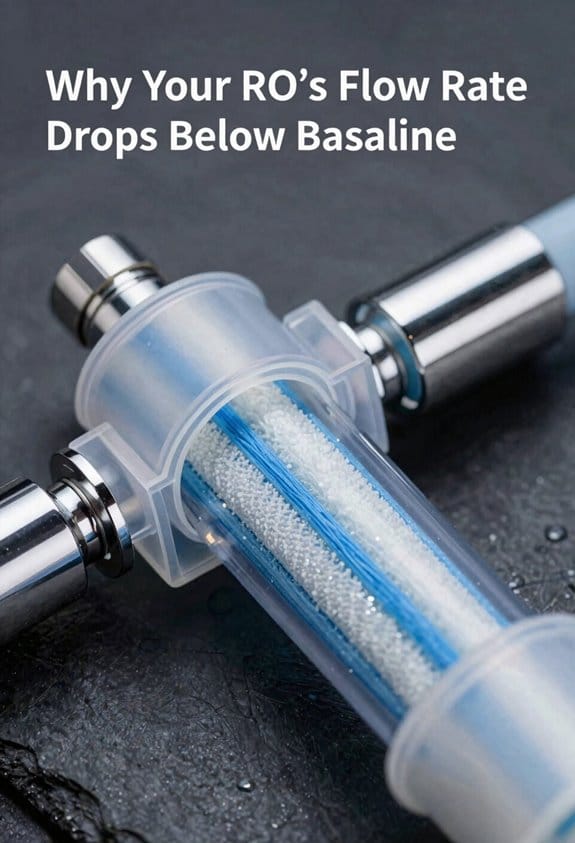
While rising TDS levels indicate that your membrane’s filtering ability is weakening, a noticeable drop in water flow tells you something different—your membrane is becoming clogged or physically compromised. When your system fills your storage tank slower than the normal 2-4 hours, you’re experiencing flow restriction from accumulated sediment or mineral buildup inside the membrane’s pores. Valve clogging can also reduce output markedly. You might notice water takes longer to fill a glass, or your faucet pressure drops noticeably compared to baseline performance. Sometimes the decline happens suddenly rather than gradually. These flow reductions mean your membrane requires replacement soon, as cleaning won’t restore full functionality once physical damage occurs.
Taste, Odor, or Visible Changes in Water Quality
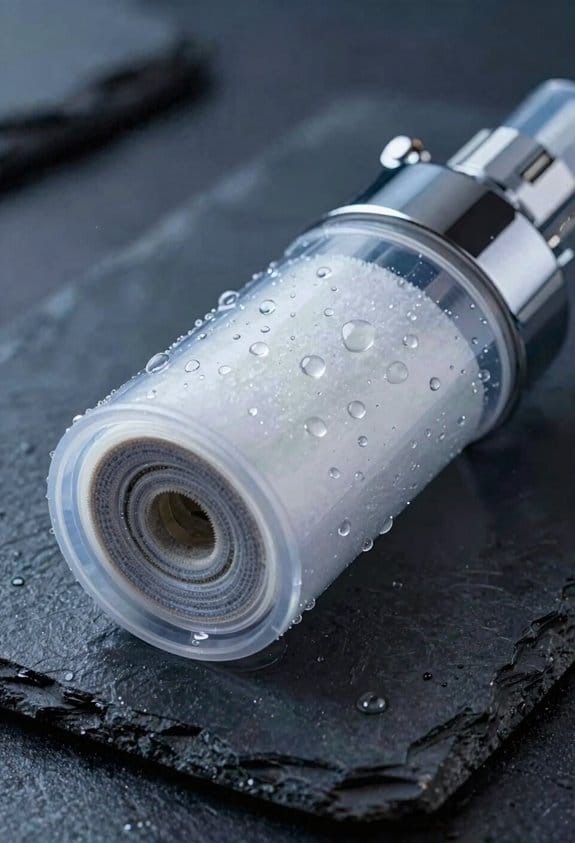
Your senses—taste, smell, and sight—can tip you off that your RO membrane’s effectiveness is deteriorating, even when numerical readings haven’t flagged a problem yet. If you notice flavor alterations in your water, such as an unexpected salty or bitter taste, your membrane may be failing to filter properly. Unpleasant odors suggest microbial growth developing inside the system, which happens when membranes weaken and allow bacteria to pass through. Visible changes like cloudiness, discoloration, or sediment particles indicate contaminants bypassing the membrane barrier. These sensory warning signs often appear before TDS meters show significant increases. Trust your observations—they’re valuable indicators that replacement time is approaching.
Membrane Pressure Spikes and Rising Energy Use
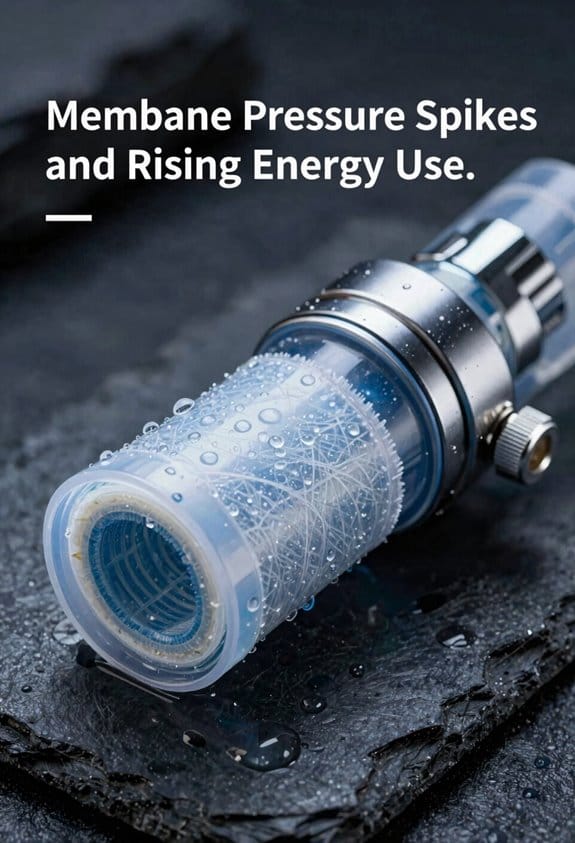
Beyond what you can taste, smell, or see, your RO system itself sends signals through its operating behavior that the membrane’s condition is declining. You’ll notice pressure fluctuations as the membrane clogs with accumulated contaminants, forcing your system to work harder. When this happens, energy spikes become noticeable—your electric bill climbs without any change in water usage patterns.
A failing membrane creates resistance inside the system, causing the pump to compensate by increasing pressure markedly. If your normalized operating pressure drops 15% or rises unexpectedly, that’s a clear warning sign. Additionally, your system may reject more water than before, shifting from a typical 1:2-3 ratio to 1:5, which means wasted water and higher energy consumption. These mechanical changes indicate your membrane requires replacement soon.
Spotting Scaling, Fouling, and Cracks: What to Look For
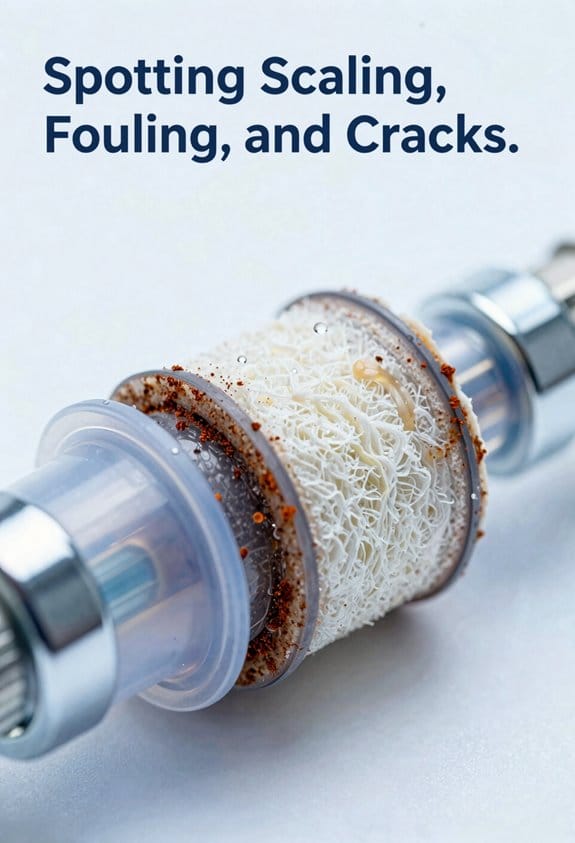
Physical inspection reveals what numbers and performance metrics sometimes miss, so I’d recommend checking your RO membrane and system components regularly for visible damage. Scaling appears as white, crusty deposits on membrane surfaces, while fouling shows up as brown or black buildup indicating bacterial growth or sediment accumulation. You might notice cracks or tears during microscopic inspection, which compromise membrane integrity completely. Material compatibility issues arise when incompatible chemicals contact membrane materials, causing deterioration. Check your system’s housing, connections, and visible membrane sections for discoloration, unusual textures, or structural damage. Early detection of these physical signs prevents complete system failure and helps you schedule timely replacement before water quality severely declines.
Why Heat and Chlorine Kill Your Membrane Faster
Although RO membranes can last 2-3 years under ideal conditions, two common culprits—heat and chlorine—dramatically shorten that lifespan by degrading the membrane’s material structure. Thermal degradation occurs when water temperature rises above 77°F, causing the membrane’s polymers to weaken and become more porous. This loosening allows more salt and impurities to pass through, reducing your system’s effectiveness. Chlorine oxidation poses an equally serious threat. Chlorine, present in most tap water, chemically attacks the membrane’s layers, breaking down its protective coating. Even small amounts of free chlorine—which should measure 0.0 ppm—can cause rapid deterioration. Installing a carbon filter upstream removes chlorine before it reaches your membrane, while maintaining cooler water temperatures preserves membrane integrity and extends replacement intervals considerably.
Build Your Weekly Testing Routine
While protecting your membrane from heat and chlorine damage prevents problems before they start, catching existing issues early requires you to monitor your system’s performance regularly. I recommend establishing a weekly testing routine using a handheld TDS meter to track your permeate water quality. Test your output water every seven days at the same time, recording results in a notebook or spreadsheet. This consistency helps you identify trends, since normal fluctuations occur with temperature changes. You’ll also want to perform sensor calibration monthly, ensuring your meter provides accurate readings. By tracking these measurements weekly, you’ll notice when TDS levels climb unexpectedly or when salt passage increases, giving you advance warning before membrane failure occurs.
When to Replace Your Membrane: Signs It’s Time
Even if you’re diligent with your weekly testing routine, there’ll eventually come a time when your RO membrane reaches the end of its usable life and needs replacement. Most membranes last two to three years under normal conditions, though this timeline varies based on your water quality and usage patterns. Hard water, sediment, and chlorine exposure shorten lifespan markedly.
Pay attention to installation timing and warranty considerations when planning replacements. Many manufacturers provide warranties covering defects within specific periods. When TDS levels spike despite cleaning, flow rates drop noticeably, or water quality declines substantially, your membrane’s probably failing. Listen for unusual sounds like grinding or humming, and watch for visible scaling or discoloration inside the system. These warning signs indicate it’s time for a new membrane.
Frequently Asked Questions
How Long Can I Safely Use an RO System With Elevated TDS Readings Before Replacing the Membrane?
I’d recommend replacing your membrane once TDS readings consistently exceed 40 ppm, as extended lifespan becomes risky. You shouldn’t delay—gradual decline accelerates rapidly, compromising your water quality and system efficiency markedly.
What Is the Typical Cost of Replacing an RO Membrane Versus Buying a New System?
I’d say membrane replacement costs $150-300 versus $500-2,000 for new systems—a stark 75% savings! When comparing replacement cost to system comparison, you’ll find replacing membranes extends your RO’s lifespan affordably.
Can a Clogged Pre-Filter Cause Symptoms That Mimic a Failing RO Membrane?
Yes, a clogged prefilter can absolutely mimic membrane failure. I’ve seen it happen—reduced flow, increased pressure, and higher TDS readings all result from blockage upstream, not actual membrane degradation.
Is It Possible to Repair a Cracked Membrane or Must It Be Replaced?
I’ll tell you that a cracked membrane isn’t something we can nurse back to health. You’ve got no real repair options—only temporary fixes like sealing tape that won’t last. Replacement’s your only permanent solution.
How Does Water Temperature Fluctuation Throughout Seasons Affect Membrane Replacement Frequency?
I’ve found that seasonal scaling and thermal stress from temperature fluctuations markedly shorten your membrane’s lifespan. Warmer seasons loosen membranes faster, while cold causes scaling buildup. You’ll likely need replacements every 1.5-2 years instead of the typical 2-3.


