As an Amazon Associate, we earn from qualifying purchases. Some links on this site are affiliate links at no extra cost to you. Our recommendations are based on thorough research and editorial judgment.


How RO Systems Remove Lead Fluoride and Arsenic From Drinking Water

RO systems remove these contaminants through layered filtration. The semipermeable membrane blocks lead ions, achieving up to 99% removal, while filtering about 95% of arsenic particles. For fluoride, RO membranes combine with activated alumina—a specialized filter that uses adsorption to trap fluoride and remaining arsenic on its high surface area. Pre-filtration stages remove sediment and chlorine first, protecting the delicate membrane from damage. Understanding which contaminants you’re targeting helps determine whether you’ll need whole-house coverage or a focused undersink system for your household’s specific needs.
Key Takeaways
- RO membranes block heavy metal ions, removing up to 99% of lead by forcing water through submicron pores.
- RO membranes reject approximately 95% of arsenic; activated alumina adsorption enhances removal below EPA’s 10 ppb standard.
- Fluoride removal exceeds 90% through RO membrane rejection combined with activated alumina adsorption on high surface area.
- Pre-filtration stages remove sediment and chlorine before the RO membrane, preventing fouling and extending system lifespan.
- Multi-stage filtration combines membrane rejection and adsorption technologies for comprehensive removal of all three contaminants simultaneously.
EPA Standards and Health Risks: Why Your Tap Water Matters
Since the Environmental Protection Agency established drinking water safety standards, millions of Americans have relied on these guidelines to protect their health, though many don’t realize how these rules came about or what they actually mean for their homes. The EPA sets maximum contaminant levels (MCLs) for harmful substances like arsenic, which the agency classifies as a waterborne carcinogen. Arsenic poses particular risks during infant exposure, when young children’s developing bodies absorb toxins more readily. The arsenic MCL has been 10 ppb since 2006, tightened from the previous 50 ppb standard. Understanding these regulations helps you recognize whether your tap water meets safety requirements and when filtration systems become necessary for protecting your family’s health.
How Reverse Osmosis Removes Lead, Arsenic, and Fluoride
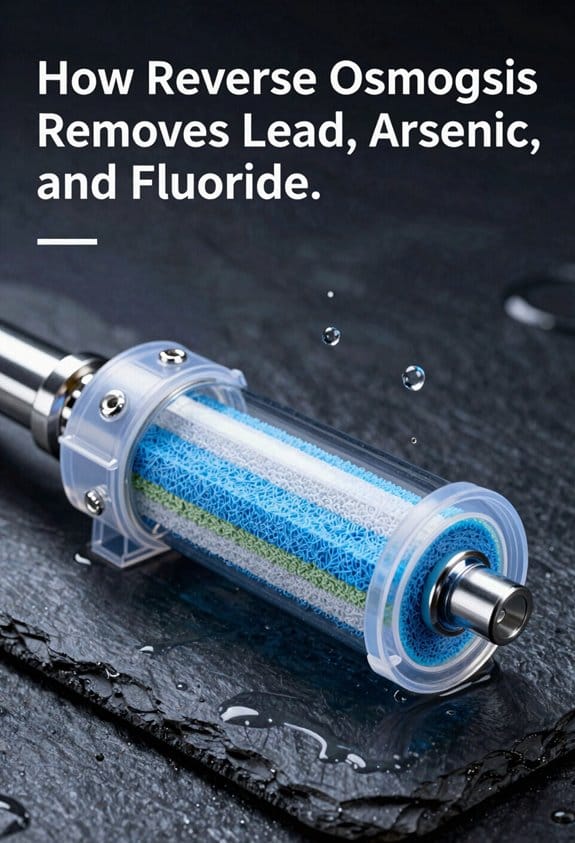
Reverse osmosis systems tackle three of the most serious drinking water contaminants—lead, arsenic, and fluoride—through a multi-stage filtration process that works differently for each threat. The semipermeable RO membrane blocks lead and arsenic by trapping heavy metal ions, removing up to 99% of lead and 95% of arsenic. Activated alumina, used as a secondary filter stage, specifically targets fluoride and arsenic through adsorption, a chemical bonding process that captures these contaminants on its high surface area.
Pre-filtration with activated carbon protects the main membrane from membrane fouling caused by chlorine, which would otherwise damage it. While RO systems effectively reduce contaminants, they do require higher energy consumption than traditional filters, making whole-house systems more demanding than undersink units.
Pre-Filtration: Protecting Your RO Membrane From Damage
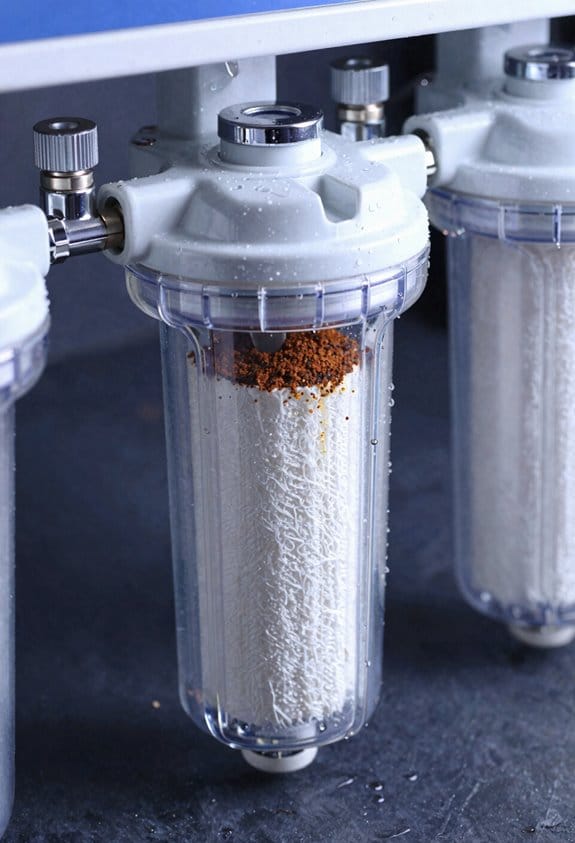
Protecting your RO membrane from damage is critical if you want your system to work effectively for years to come. Pre-filtration stages act as your first line of defense, removing sediment and chlorine before water reaches the delicate semipermeable membrane. Sediment staging uses multiple filters to trap particles that would otherwise clog your system, while chlorine protection through activated carbon prevents oxidative damage that shortens membrane lifespan. This layered approach improves flow optimization by keeping water moving smoothly through the system. When you implement proper pre-filtration, your RO membrane remains cleaner longer, operates more efficiently, and requires fewer replacements. Think of pre-filters as guardians that extend your investment’s durability and maintain consistent water quality output throughout your system’s operational life.
Testing Your Water: Identifying Contaminants Before They Hurt You
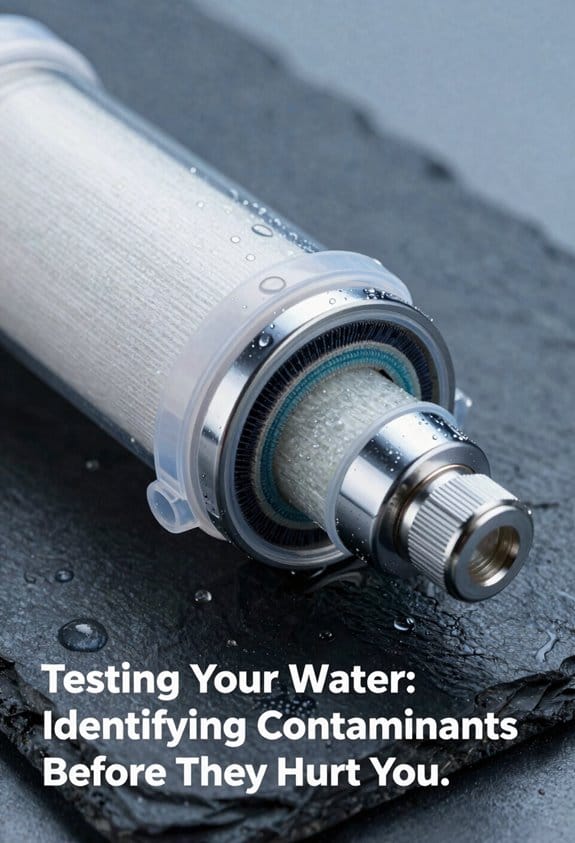
Before you invest in an RO system, you need to know exactly what contaminants are hiding in your drinking water. I recommend starting with home testing kits, which reveal whether you’re dealing with lead, arsenic, or fluoride problems. These tests are affordable and straightforward to perform yourself. However, for thorough results, professional water analysis provides more detailed information about contamination levels. You’ll also notice that seasonal variations affect water quality—spring runoff and summer heat can increase contaminant concentrations from wells and older pipes. By testing your water first, you’ll understand which filtration stages your RO system needs. This targeted approach guarantees you’re investing in the right solution rather than paying for unnecessary features.
Lead From Older Pipes: Why Homes Built Before 1980 Need RO
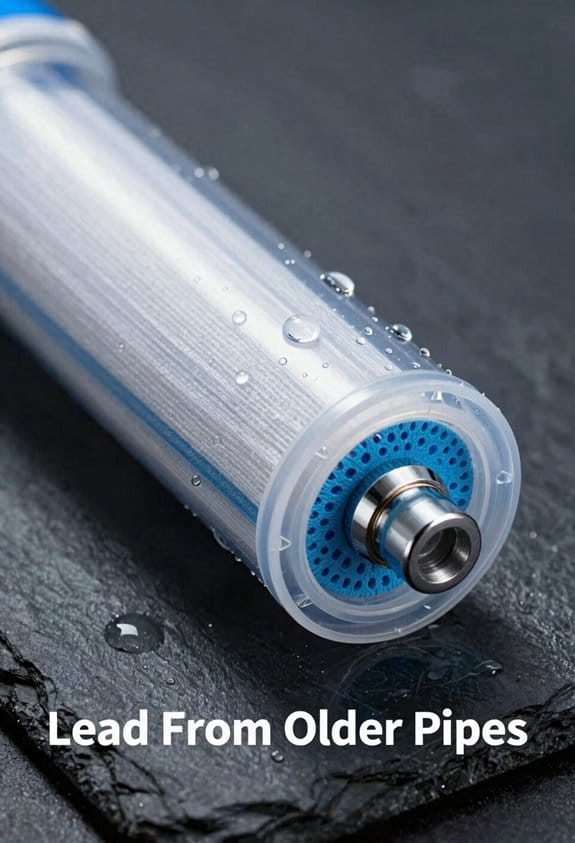
Constructed from lead-based solder and galvanized pipes, homes built before the 1980s carry a significant water quality risk that many homeowners don’t realize until they test their water. As these pipes age, pipe corrosion becomes inevitable, releasing lead particles into your drinking water. This historical plumbing infrastructure was common before regulations changed, and the deterioration accelerates when water becomes slightly acidic. RO systems effectively remove up to 99% of lead through semipermeable membranes that block heavy metals at the molecular level. The process works by forcing water through tiny pores smaller than lead particles, trapping contaminants while allowing clean water through. If your home was constructed before 1980, testing your water and installing an RO system provides essential protection for your family’s health.
How RO Systems Reduce Arsenic Below EPA Limits
While lead contamination from aging pipes presents one major water quality concern, arsenic poses an equally serious threat, particularly for households relying on well water or living in areas with naturally high arsenic levels in the ground. RO systems reduce arsenic to below the EPA’s 10 ppb standard through multi-stage filtration. I recommend homeowners conduct well testing to establish baseline arsenic levels before installing treatment systems. Research shows that 47% of tested homes achieved EPA-compliant levels after RO filtration. Community outreach programs help residents understand arsenic risks and available solutions. RO membranes block arsenic ions while activated alumina stages provide additional removal capacity, making these systems highly effective for protecting your family’s drinking water quality.
How RO Systems Remove Fluoride Through Multi-Stage Filtration
Fluoride removal requires a different approach than arsenic or lead treatment because fluoride ions behave differently in water and demand specialized filtering materials to eliminate them effectively. I want to explain how RO systems tackle this challenge through multi-stage filtration.
RO membranes remove over 90% of fluoride through membrane rejection, blocking fluoride ions at the semipermeable barrier. However, activated alumina serves as your system’s most effective tool, positioned in pre-filter stages where fluoride adsorption occurs. This high-surface aluminum oxide material attracts and traps fluoride molecules through chemical bonding.
When you combine membrane rejection with activated alumina filtration, you’re creating a comprehensive defense. The activated alumina stage reduces fluoride to safe levels before water reaches your tap, while the RO membrane provides additional protection. This layered approach guarantees your drinking water meets safety standards consistently.
Activated Alumina: Why It Catches What RO Membranes Miss
By design, RO membranes excel at blocking larger particles and ions, yet they have limitations when it comes to certain contaminants like fluoride and arsenic that require different removal mechanisms. I’ll explain why activated alumina becomes essential in these systems.
Activated alumina functions as a specialized second-stage filter because of its pore size selectivity and high surface area. Unlike RO membranes that physically block contaminants, activated alumina uses adsorption—a chemical process where fluoride and arsenic molecules stick to the aluminum oxide’s surface.
The material’s strong affinity for these contaminants makes it the most common adsorbent for arsenic removal from ground and surface water. When the alumina becomes saturated, surface regeneration allows reactivation, extending the filter’s lifespan. This combination approach achieves removal rates exceeding 90% for fluoride while simultaneously addressing arsenic concerns that RO alone cannot fully resolve.
Removal Rates Compared: Lead vs. Arsenic vs. Fluoride
RO systems don’t remove all contaminants at the same rate, and understanding these differences helps you choose the right filtration setup for your home’s water quality. Lead removal reaches up to 99% efficiency, making RO highly effective for older pipes. Arsenic removal achieves about 95% efficiency, though studies show 47% of homes still need activated alumina for EPA compliance. Fluoride removal exceeds 90% efficiency through semipermeable membranes and activated alumina stages. The relative efficiency differences matter for your cost comparison—systems targeting arsenic require extra filtration stages, increasing initial investment but ensuring thorough protection. Your specific water contaminants determine which technology delivers the best value for your household needs.
Whole-House vs. Undersink RO: Which System Do You Need?
Since your home’s water quality and household size determine which filtration approach works best, you’ll need to understand how whole-house and undersink systems differ in coverage, installation, and effectiveness.
Whole-house RO systems treat all water entering your home, protecting every tap and appliance from lead, arsenic, and fluoride contamination. However, they require professional installation logistics and demand more frequent maintenance scheduling due to higher water volume processing.
Undersink systems target only your drinking and cooking water at a single location. They’re easier to install yourself, need less frequent filter changes, and cost considerably less upfront. For extensive fluoride and arsenic protection throughout your home, whole-house filtration works better. For budget-conscious households prioritizing drinking water safety, undersink RO offers practical, efficient contamination removal.
Frequently Asked Questions
How Often Do I Need to Replace RO Filters and Activated Alumina Cartridges?
I’d replace your RO pre-filters every 6-12 months and activated alumina cartridges annually, depending on water quality. Filter lifespan varies with usage; cartridge maintenance schedules prevent contaminant breakthrough and make certain peak performance.
Can RO Systems Remove Other Contaminants Like Nitrates, Chlorides, and Chromium Simultaneously?
Yes, RO systems work like a thorough security checkpoint—they simultaneously filter lead, arsenic, fluoride, nitrates, chlorides, and chromium. I’ve found iSpring’s 6-stage system excels at nitrate removal and chromium reduction alongside heavy metals.
What Is the Typical Water Waste Ratio for Residential RO Systems?
I’ll tell you that most residential RO systems operate at a waste ratio of 3:1 to 4:1, meaning you’ll produce three to four gallons of brine discharge for every gallon of purified water you use.
How Do RO System Costs Compare Between Undersink and Whole-House Installations?
Undersink units typically cost $300-$800, while whole-house systems run $2,000-$5,000. Though pricier, powerful whole-house installations provide superior savings on maintenance and municipal water expenses across your entire home.
Are RO Systems Effective for Both Well Water and Municipal Water Sources?
I’ve found RO systems work effectively for both well water and municipal supply. They’re customized for your local water challenges, removing contaminants like arsenic, lead, and fluoride regardless of your source.