As an Amazon Associate, we earn from qualifying purchases. Some links on this site are affiliate links at no extra cost to you. Our recommendations are based on thorough research and editorial judgment.

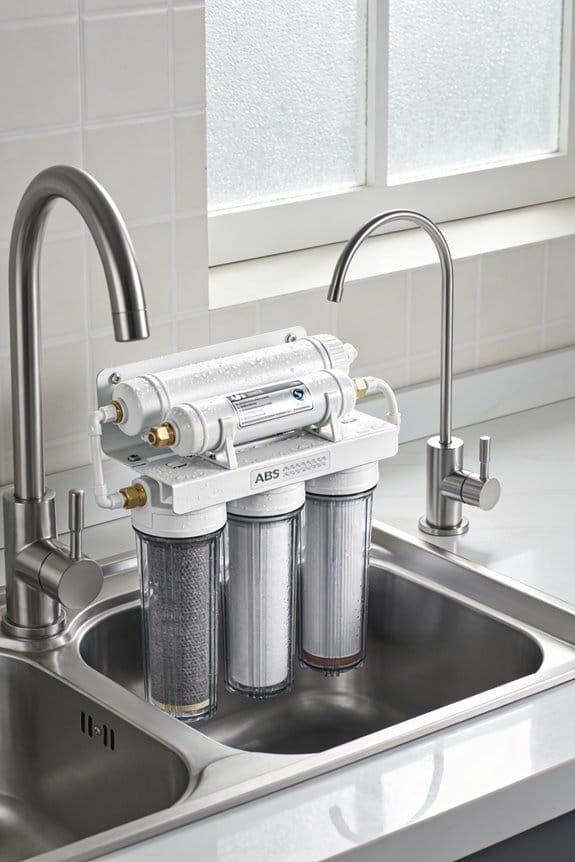
Why Tankless Under Sink RO Systems Are Replacing Traditional Tank Models

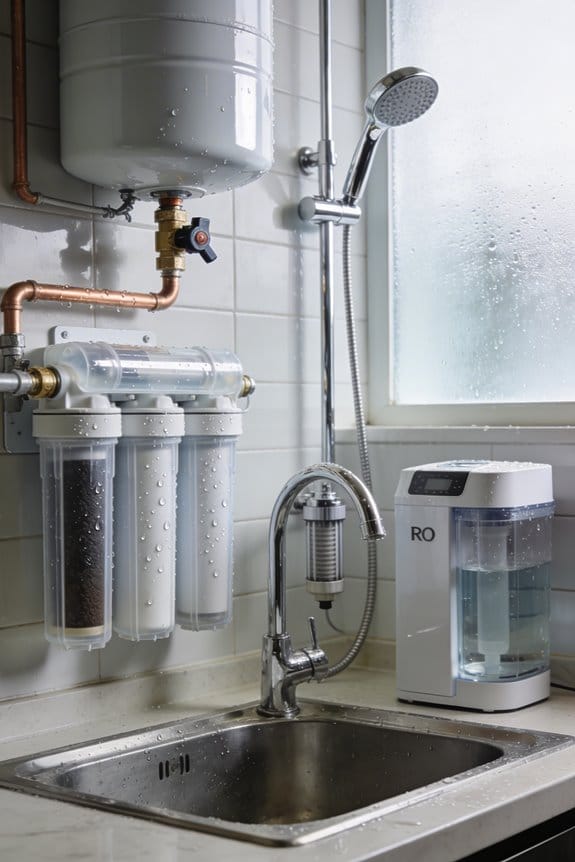
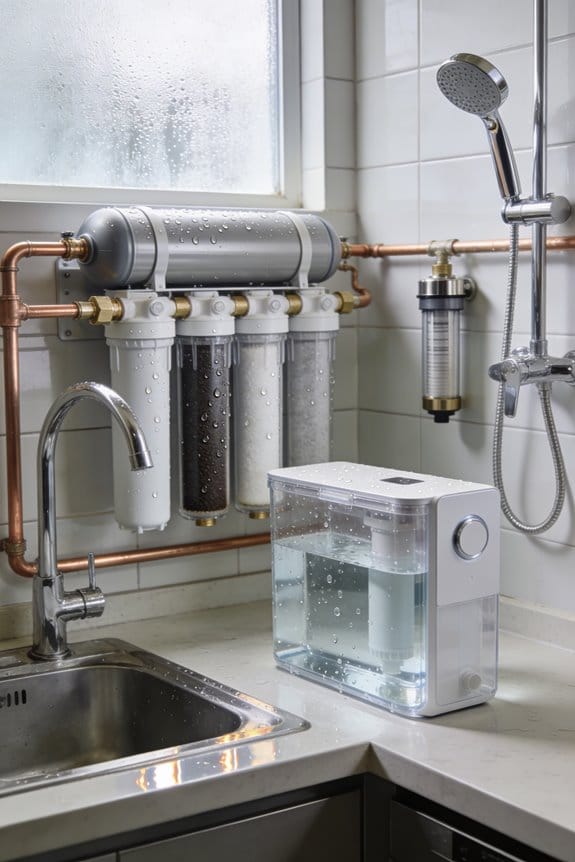
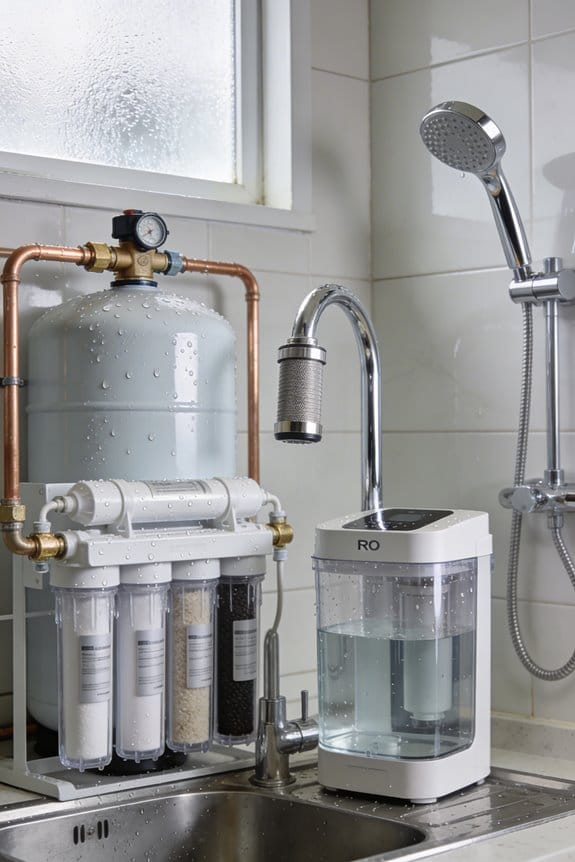
Tankless under-sink RO systems are replacing traditional models because they solve three major problems. First, they save about 40 liters of cabinet space with a laptop-sized footprint. Second, they cut water waste roughly in half compared to tank systems, saving you money on bills. Third, they deliver fresher water on demand since you’re not storing stagnant water. The pump filters continuously whenever you open the faucet, eliminating bacterial growth. Plus, filter changes take just 30 seconds. Understanding when electricity becomes essential helps you decide if tankless is right for your home.
Key Takeaways
- Tankless systems save significant cabinet space with laptop-sized footprints, reclaiming storage previously occupied by bulky tanks and filters.
- On-demand filtration eliminates stagnant water, preventing bacterial growth and ensuring fresher, better-tasting water with each use.
- Improved wastewater ratios (2:1 or better) reduce water consumption and lower utility bills compared to traditional 3:1 or 4:1 tank models.
- Tool-free filter cartridges swap in seconds with digital replacement reminders, eliminating time-consuming tank cleaning and maintenance hassles.
- Continuous real-time filtration maintains water quality consistency, delivering purified water that meets current safety standards with every dispensing event.
Space Savings That Actually Matter for Tight Kitchens
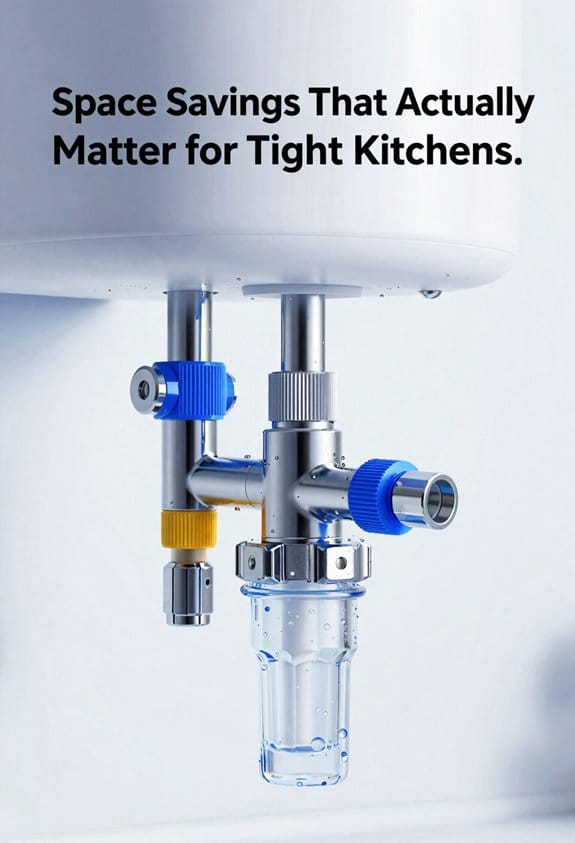
If you’re working with a cramped under-sink cabinet, you’ll find that tankless RO systems offer a genuine advantage over their bulky tank-based counterparts. Tankless models feature a laptop-sized footprint that requires approximately 40 liters less space than traditional tank systems, making them ideal for tight under-sink organization benefits. Cabinet ergonomics improve markedly because you’re eliminating the large storage tank and associated filter layout that consume valuable real estate.
This compact design works particularly well when you have trash pull-outs or cleaning supplies competing for space. Unlike traditional tanks that demand substantial square footage, tankless units mount efficiently without major cabinet modifications. The streamlined setup means you reclaim usable storage while maintaining full water purification capabilities, transforming previously unusable cramped spaces into functional areas.
How Tankless RO Systems Cut Your Water Waste in Half
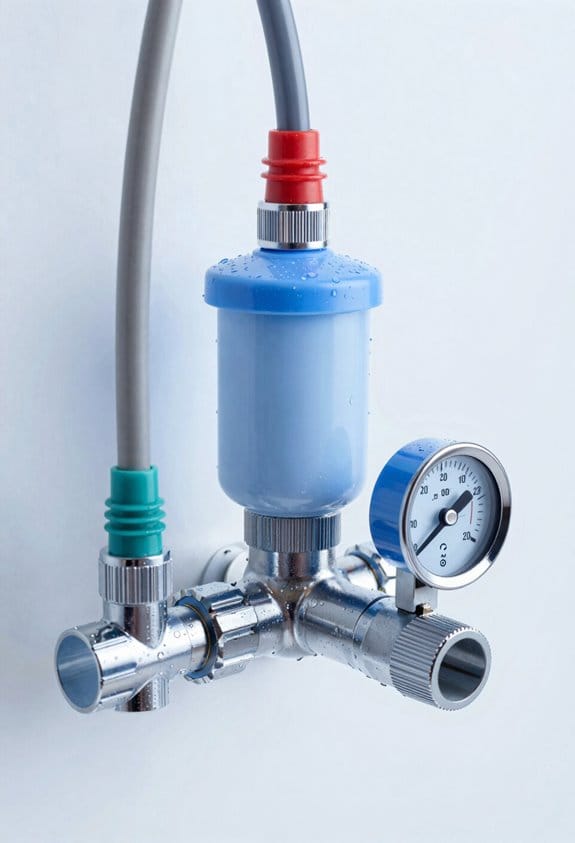
Beyond the space benefits, tankless RO systems tackle another major issue that affects both your wallet and the environment: water waste. Traditional tank models typically produce a 3:1 or 4:1 ratio of wastewater to pure water, meaning you’re discarding significant amounts of water for every gallon you use. Tankless systems, however, achieve a superior 2:1 ratio, sometimes reaching 1:1 or 1:2 ratios through advanced waste reduction technology. This improved effluent capture means less water goes down the drain. By installing a tankless system, you’ll notice your water bills decrease noticeably. The on-demand pump continuously filters without storing stagnant water, maximizing efficiency. Over five years, this waste reduction saves approximately $230 while conserving thousands of gallons annually.
Why You Get Fresh Water on Demand Instead of Stored
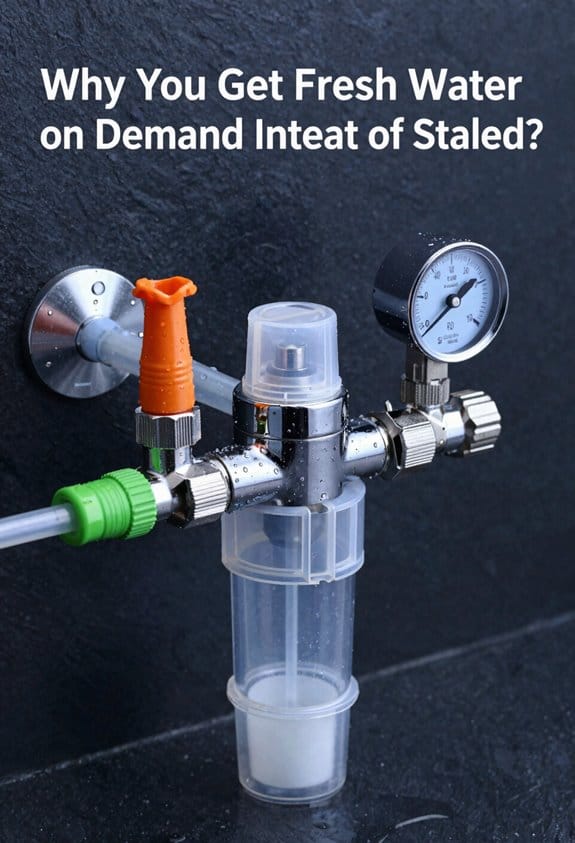
Tankless RO systems deliver water through an on-demand pump that filters continuously whenever you open the faucet, which means you’re always getting fresh, newly purified water rather than water that’s been sitting in a storage tank. This on-demand freshness eliminates the stagnant water problem that traditional tanks create, where stored water can lose purity over time. With immediate purification happening at the moment you need it, you avoid bacterial growth and mineral buildup that occurs in reserve tanks. The internal pump activates instantly when you turn on the tap, pushing water through multi-stage filters in real-time. You’ll notice the difference in taste and quality because every drop comes from the latest filtration cycle, not yesterday’s supply sitting idle.
What Renter-Friendly Installation Really Means
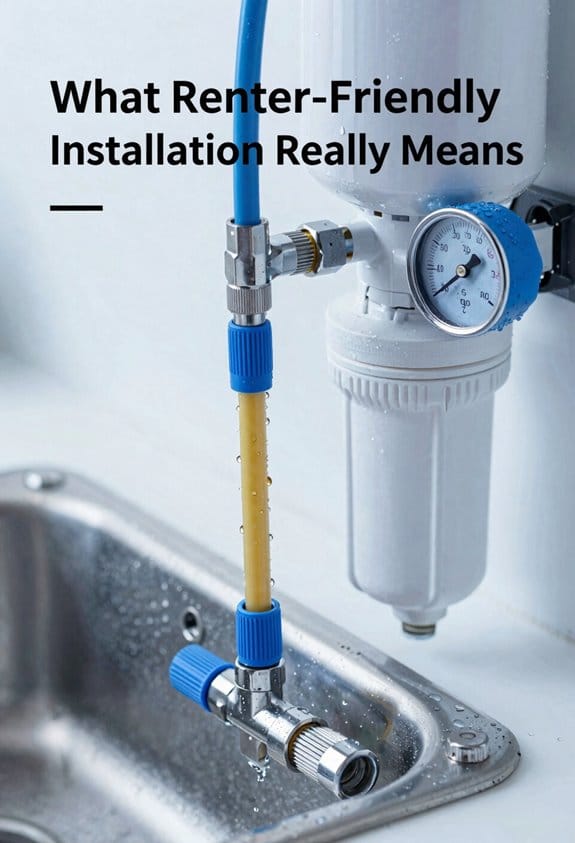
One major advantage that sets tankless RO systems apart is how they slip into rental apartments without leaving a permanent mark, which matters tremendously if you’re moving soon or don’t want to lose your security deposit. Unlike traditional tanks that require drilling holes and permanent cabinet modifications, tankless units connect using simple adapters to your existing faucet with no drill needed. The quick swap filter cartridges mean maintenance takes seconds rather than the involved process tanks demand. Installation uses temporary hooks and basic plumbing connections, making these systems landlord friendly since you can remove them without damage. This flexibility makes tankless systems ideal for renters who want filtered water without compromising their lease agreements or deposit protection.
Why Tankless Pays for Itself in 5 Years
While tankless RO systems cost more upfront than traditional tank models, the long-term savings tell a different story that makes the higher initial investment worthwhile. You’ll see significant financial benefits through energy amortization, where the system’s efficiency reduces operational costs over time. Tankless units consume less water, cutting your monthly utility bills substantially. Since they eliminate wastewater through superior 2:1 pure-to-waste ratios, you’re paying less for water that gets wasted. Additionally, minimal maintenance means fewer filter replacements and no tank cleaning expenses. When you calculate these long term savings—reduced water consumption, lower electricity usage, and decreased maintenance—the system pays for itself within five years, then continues saving you money annually.
Filter Changes You Can Do in 30 Seconds
Beyond the five-year payback period, you’ll discover that maintaining your tankless RO system doesn’t require special skills or extensive time commitments. The quick swaps of filter cartridges take approximately 30 seconds, since they’re designed for tool free replacements. You simply twist out the old filter and insert the new one, similar to changing a lightbulb. Most tankless systems feature digital displays that remind you when filters need replacing, eliminating guesswork about maintenance schedules. Because there’s no storage tank to clean, you avoid the time-consuming scrubbing that traditional models demand. These convenient filter changes mean you’ll spend less time maintaining your system and more time enjoying fresh, purified water. The straightforward design makes upkeep accessible for any homeowner.
When Electricity Becomes a Deal-Breaker (And When It Doesn’t)
Because tankless RO systems require a constant electrical connection to power their internal pump, you’ll need to take into account whether electricity availability matters for your situation. If you live in an area prone to power outages, a tankless system becomes problematic since it can’t dispense water during electrical failures. However, if your power supply’s reliable, the constant electricity dependency isn’t an issue. You can explore backup options like battery backup systems or portable generators to protect against outages. Traditional tanks work without electricity, making them better for unreliable power areas. Consider your local power grid’s stability and whether backup options fit your budget before choosing tankless technology.
Frequently Asked Questions
Can Tankless RO Systems Handle High-Volume Needs for Larger Households or Commercial Use?
I’d say tankless systems handle moderate household needs well with their 0.8 GPM flow, but they’re not ideal for high demand. You’ll want traditional tanks for peak capacity and scalability in larger homes or commercial settings requiring flow management.
What Happens to Tankless Water Purifiers During Power Outages or Electrical Failures?
When power fails, I can’t dispense water since the pump won’t operate. I’d recommend installing battery backups for continued functionality or using a manual bypass to access unfiltered water temporarily.
How Does Water Temperature Affect Tankless RO System Performance and Output Speed?
I’ve tested whether cold water slows tankless RO systems—it’s true. Temperature sensitivity directly impacts your flow rate variability; I’ve found colder water increases viscosity, reducing output speed and requiring your pump to work harder, ultimately decreasing efficiency.
Are Tankless Models Compatible With All Existing Under-Sink Plumbing Configurations Without Modifications?
I’d say most tankless models work with your existing plumbing through simple pipe adapters, though you’ll want to verify your cabinet space accommodates the unit’s compact footprint before installing.
Do Tankless Systems Require Special Maintenance for Hard Water or Mineral-Heavy Supply Lines?
Yes, I’d recommend you invest in specialized prefiltration to protect your tankless system from mineral buildup. You’ll want routine flushing scheduled quarterly if you’re dealing with hard water supply lines.