As an Amazon Associate, we earn from qualifying purchases. Some links on this site are affiliate links at no extra cost to you. Our recommendations are based on thorough research and editorial judgment.


How Much Water a Reverse Osmosis System Wastes and How to Reduce It

Standard RO systems waste 75–90% of input water because their tiny membrane pores reject contaminants while flushing minerals away continuously. You’re discarding three to ten gallons for every gallon produced. However, you can cut waste markedly with permeate pumps, which use reject water pressure to boost efficiency without electricity, or upgrade to WaterSense-labeled systems that limit waste to 2.3 gallons per gallon treated—saving over 3,100 gallons yearly. The key trade-off involves balancing efficiency against membrane lifespan, which typically lasts two to three years depending on how hard your system works.
Key Takeaways
- Standard RO systems waste 75–90% of input water, producing three to ten gallons of reject water per gallon produced.
- Permeate pumps reduce waste by up to 80% while increasing production by 50% without requiring electricity.
- Tankless RO systems with internal pumps achieve approximately 1:1 waste ratios and produce up to 800 gallons daily.
- WaterSense-labeled systems limit reject water to 2.3 gallons per gallon treated, saving over 3,100 gallons yearly per household.
- Higher recovery rates accelerate membrane aging; moderate efficiency settings balance waste reduction with preserving the typical 2–3 year lifespan.
Why Standard RO Systems Waste 75–90% of Your Water
When you turn on a reverse osmosis system, here’s what’s actually happening: for every gallon of pure water that comes out of your tap, three to four gallons of water—and sometimes as many as ten gallons—go straight down the drain. This happens because RO membranes work by forcing water through incredibly tiny pores, rejecting contaminants but also wasting enormous amounts of water in the process. The exact waste ratio depends on municipal variability, meaning your local water quality affects how hard the system must work. Additionally, household habits like frequent use increase total waste. Standard systems typically achieve only 10-25% recovery rates, meaning 75-90% of input water becomes reject water that never reaches your glass.
How Water Pressure and Membrane Design Drive Waste Ratios
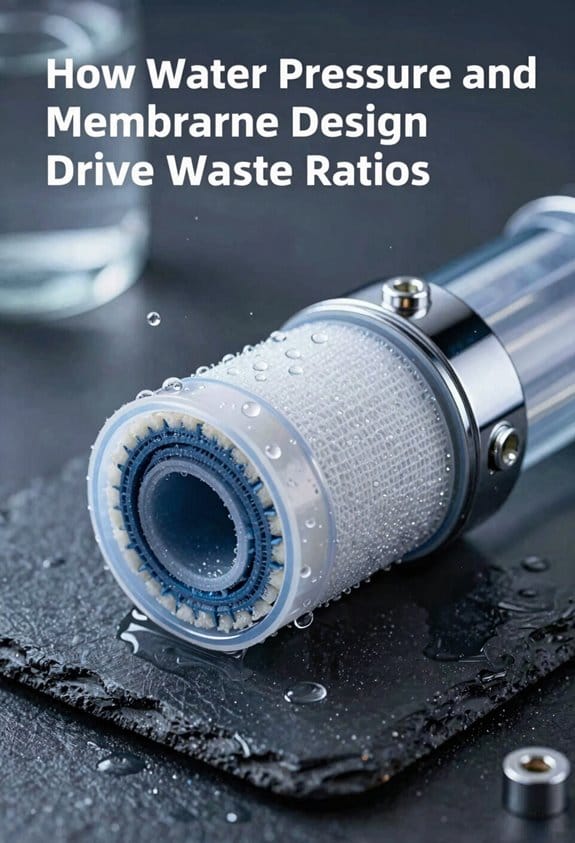
The waste you’re seeing isn’t just a result of how often you use your system—it’s built into the fundamental mechanics of how reverse osmosis works, and two factors control most of that waste: water pressure and the way your membrane’s designed. Water pressure variability markedly affects your waste ratio; low pressure from storage tanks increases waste to 4:1, while higher pressure improves efficiency but risks membrane scaling. Membrane porosity, measured at 0.0001 microns, requires constant flushing to prevent fouling and blockages. This design means reject water continuously flows across the membrane surface, carrying away contaminants and excess minerals. Understanding these mechanics explains why even efficient systems can’t eliminate waste entirely—they’re fighting against the physics of filtration itself.
Technologies That Reduce Waste to 1:1 or 2:1 Ratios
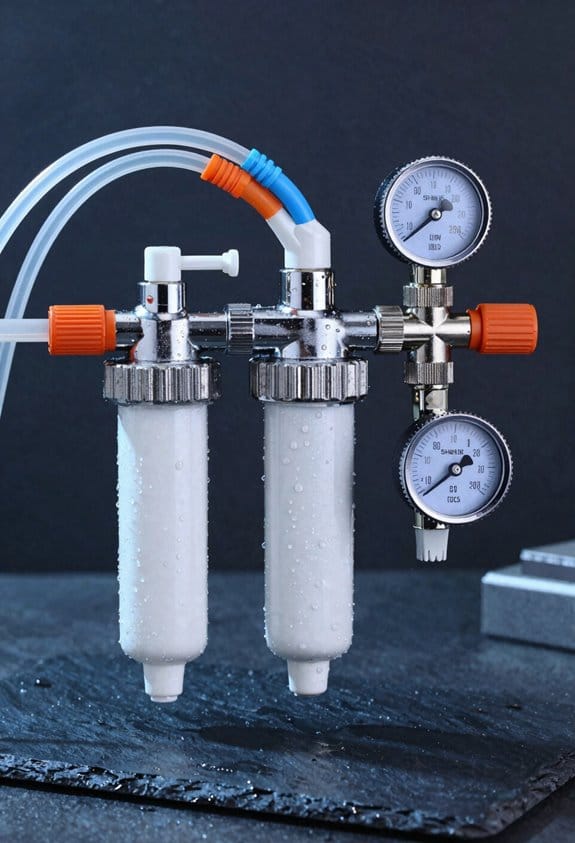
Now that you understand how water pressure and membrane design create waste as a fundamental part of reverse osmosis, you might wonder if there’s a way around these physics-based limitations—and there is, through technologies that actively work against the system’s natural tendency to waste water.
A permeate pump is one solution, reducing waste by up to 80% while boosting production by 50%. This non-electric device uses the system’s reject water pressure to push treated water through more efficiently. Alternatively, tankless RO systems with internal pumps achieve impressive 1:1 waste ratios and can produce 800 gallons daily. These modern models represent significant advances in efficiency, though they’re pricier than traditional systems. Both technologies work by optimizing pressure dynamics, transforming how your system balances water production with conservation.
WaterSense RO Systems: 3,100+ Gallons Saved Yearly
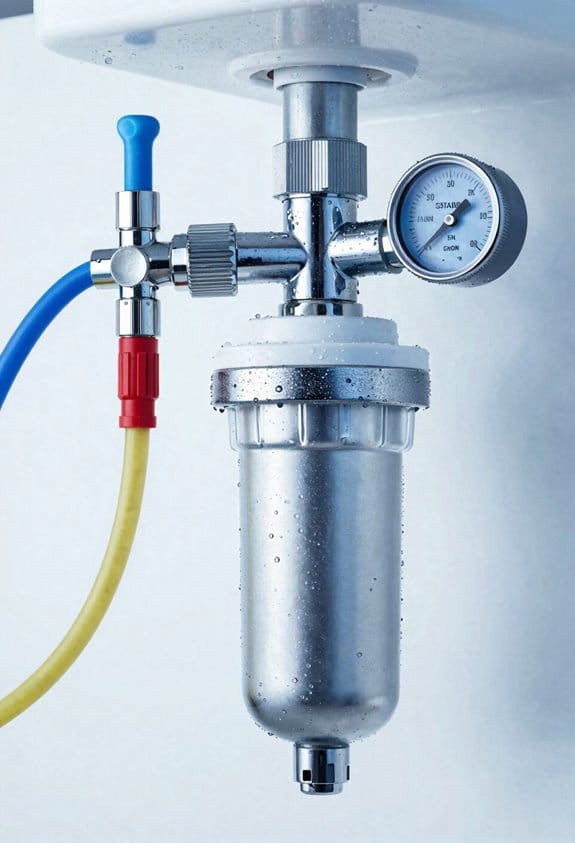
If you’re considering upgrading your reverse osmosis system, WaterSense-labeled models offer a practical path toward meaningful water conservation, requiring no exotic technology or major lifestyle changes. These certified systems limit reject water to 2.3 gallons or less per gallon treated, compared to standard systems that waste 4 gallons per gallon produced. WaterSense adoption delivers substantial household savings: replacing a typical RO system saves over 3,100 gallons yearly per household. When you multiply this across numerous homes, national WaterSense adoption could conserve approximately 3.1 billion gallons annually. The efficiency gains don’t compromise water quality; these systems balance purification performance with reduced waste generation, making them an accessible option for environmentally conscious households seeking tangible conservation results.
Efficiency vs. Membrane Life: The Real Trade-Off
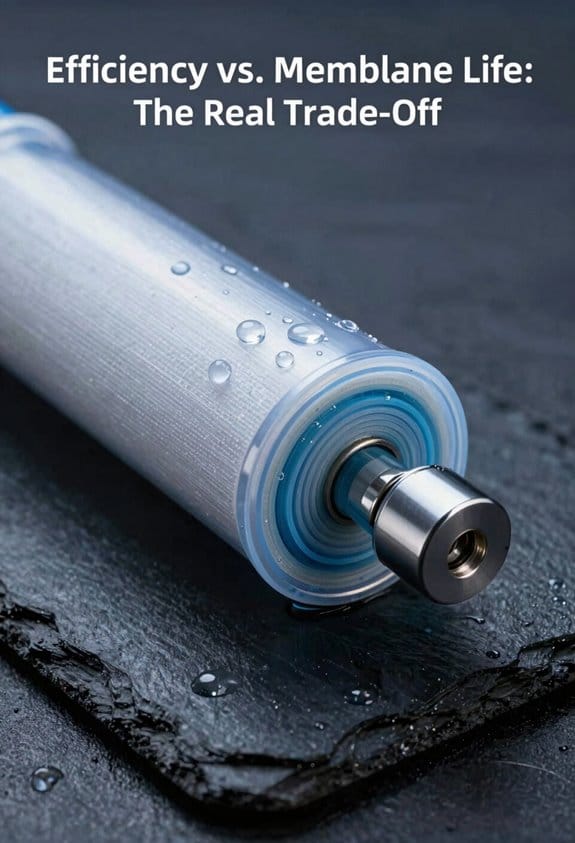
While WaterSense systems deliver impressive water savings, you might wonder whether pushing your RO system toward maximum efficiency comes with hidden costs, and that’s where membrane aging enters the conversation. Higher recovery rates strain membranes, accelerating deterioration and reducing their typical 2-3 year lifespan. You’ll face quality tradeoffs too—pushing efficiency harder risks mineral buildup and scaling on membranes. Performance monitoring becomes essential when operating at peak efficiency; you’ll need regular testing to catch declining water quality. Establishing appropriate service intervals protects your investment. The reality is that moderate efficiency settings, like WaterSense’s 2.3:1 ratio, balance waste reduction with membrane longevity, ensuring both environmental responsibility and system reliability without sacrificing durability.
Frequently Asked Questions
Can I Recycle RO Waste Water for Toilets, Gardens, or Cleaning Purposes?
I’ve recycled my RO waste like water through a sieve—it flows right back out. You can use it for toilets and gardens through greywater reuse systems, though plant irrigation needs monitoring since reject water contains concentrated minerals.
How Often Should I Replace My RO Membrane, and Does Waste Ratio Affect Replacement Frequency?
You’ll typically replace your RO membrane every 2-3 years. Watch for replacement indicators like reduced water pressure, slower flow, or cloudier water. Higher waste ratios don’t directly affect membrane lifespan—proper maintenance does.
What’s the Average Annual Water Bill Increase From Using a Standard RO System?
I can’t give you an exact annual cost increase because it varies by location and usage, but I’ll tell you this: while your bill rises from wasting gallons, water savings from purification often offset costs through health benefits and reduced bottled water expenses.
Do Watersense RO Systems Cost More Upfront Than Standard Residential Systems?
Yes, WaterSense RO systems typically cost more upfront than standard models, but I’d say the higher WaterSense pricing and installation costs pay off through reduced water waste and lower long-term bills.
Can I Add a Permeate Pump to My Existing RO System Myself?
You can install a permeate pump yourself if you’re handy, but I’d recommend checking your warranty first—some manufacturers void coverage for DIY modifications. Installation tips include matching your system’s specs and following the pump’s instructions carefully.