As an Amazon Associate, we earn from qualifying purchases. Some links on this site are affiliate links at no extra cost to you. Our recommendations are based on thorough research and editorial judgment.

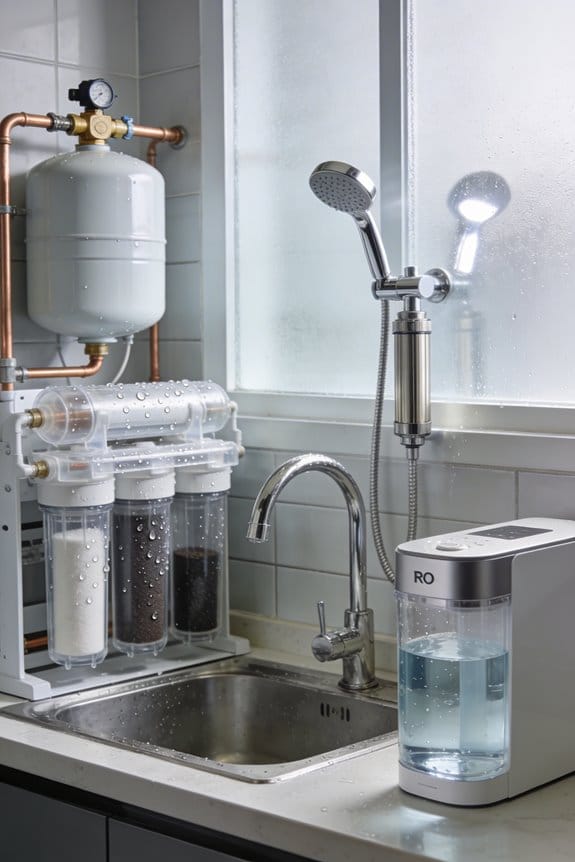
What NSF ANSI 42 53 and 58 Certifications Mean in Plain Language

NSF certifications are independent seals proving what contaminants a filter removes. NSF 42 improves taste and odor through carbon filters but doesn’t protect health. NSF 53 targets dangerous substances like lead and VOCs, making it genuinely protective for your family. NSF 58 uses reverse osmosis to remove dissolved minerals and salts. Each certification covers different problems, so matching your water issue to the right seal matters greatly—and we’ll explore exactly which certification solves your specific concern.
Key Takeaways
- NSF 42 removes chlorine and improves taste/odor; it addresses aesthetic concerns, not health hazards.
- NSF 53 reduces dangerous health contaminants like lead, asbestos, and VOCs to safe levels.
- NSF 58 validates reverse osmosis systems that remove dissolved salts and minerals from water.
- Each certification tests specific contaminants; verify your filter model’s exact certifications before purchasing.
- NSF 42 does not guarantee lead removal; NSF 53 is needed for health protection.
Water Filter Certifications Explained: NSF 42, 53, and 58
When you’re shopping for a water filter, you’ll often see certifications like NSF 42, 53, or 58 printed on the packaging, and understanding what each one means can help you choose the right filter for your specific needs. NSF 42 targets aesthetic concerns, removing chlorine, taste, and odor through carbon adsorption, where contaminants stick to the filter’s surface. NSF 53 addresses health-related contaminants like lead and volatile organic compounds. NSF 58 covers reverse osmosis systems designed for dissolved solids removal. Each certification represents independent third-party validation, though the specific contaminants tested vary by standard. Rather than assuming a filter handles all water problems, I’d recommend checking the exact contaminants certified for your model, ensuring it matches your particular water quality concerns through taste testing before commitment.
NSF 53: Health Contaminants Like Lead
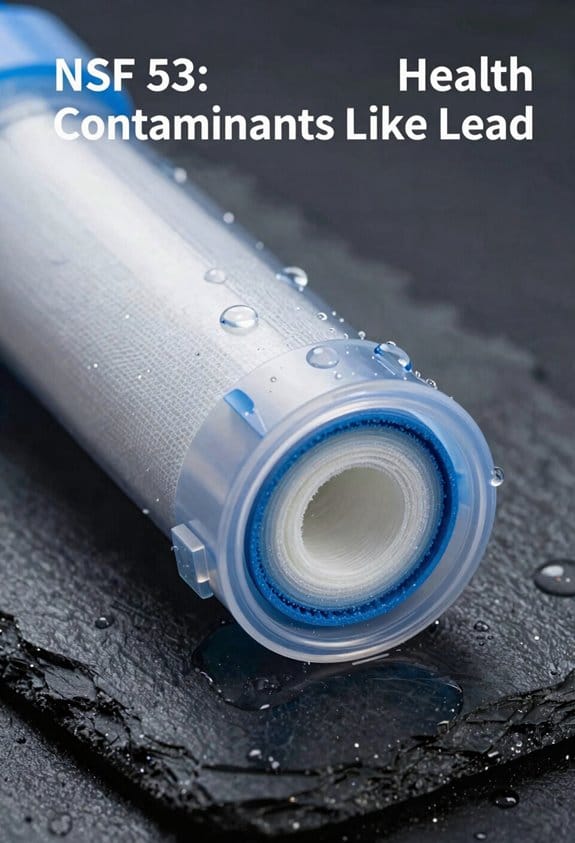
If you’re concerned about dangerous contaminants in your drinking water, NSF 53 certification is specifically designed to address those health risks. Unlike NSF 42, which targets taste and odor, NSF 53 focuses on harmful substances that can cause serious health impacts. Lead reduction is one of the most important protections this certification provides, since lead exposure can damage your nervous system and organs, especially in children.
When I look at NSF 53 certification, I’m checking that rigorous contaminant testing has verified the filter’s performance. This certification establishes specific exposure limits for each contaminant it covers, including lead, asbestos, volatile organic compounds, and Cryptosporidium. The standard guarantees that certified filters actually remove these health hazards to safe levels, giving you confidence in your water’s safety.
NSF 58: Reverse Osmosis and Dissolved Solids
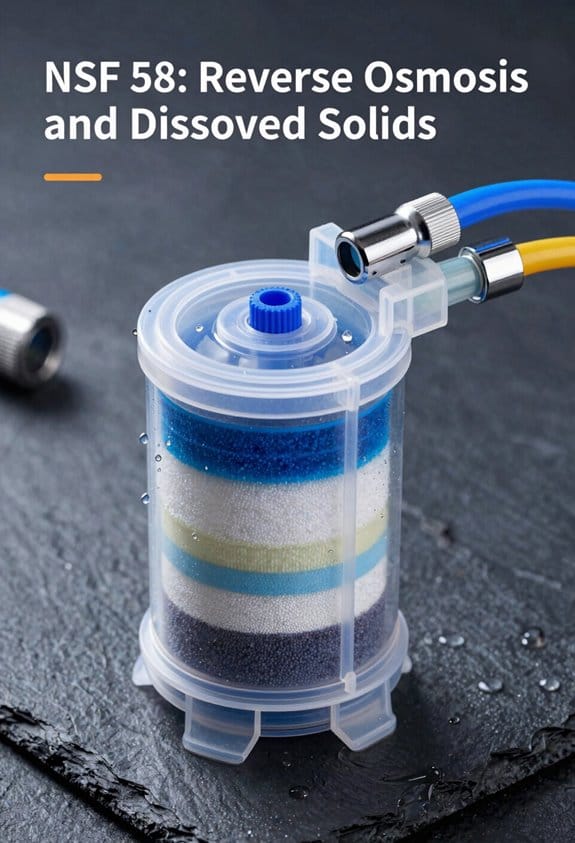
Removing dissolved solids from your drinking water requires a different filtration approach than what NSF 42 and 53 certifications cover, which is where NSF 58 certification becomes important. NSF 58 specifically validates reverse osmosis systems, which use high-pressure semi-permeable membranes to remove dissolved solids, or TDS, from your water. Unlike carbon filters that work through adsorption, reverse osmosis forces water molecules through a membrane so small that dissolved salts, minerals, and other particles can’t pass through. NSF 58 certification covers contaminants including nitrate, arsenic, radium, and fluoride. If you’re concerned about total dissolved solids reduction in your drinking water, look for NSF 58 certification on point-of-use reverse osmosis systems to verify performance claims.
Verify Your Filter’s Actual Certification
Because marketing claims about water filters can be misleading, I’d recommend verifying exactly what contaminants your specific filter model actually removes before purchasing. Check labels on the product packaging or the manufacturer’s website for certification information. Request documentation directly from the company if details aren’t clearly listed. Look for the specific NSF/ANSI standard number—42, 53, or 58—along with the exact contaminants certified for removal. Don’t assume one certification covers everything; each standard addresses different concerns. For example, a filter certified for NSF 42 removes chlorine taste and odor but won’t reduce lead, which requires NSF 53 certification. Verify the model number matches the certified version, since companies sometimes certify one model while selling similar-looking alternatives that lack certification. This verification step makes certain you’re actually getting the protection you need.
Three Ways People Misread Certifications
Even after checking your filter’s certification label, it’s easy to misinterpret what those certifications actually mean, since the misleading marketing language around water filters often stretches the truth or leaves out important details.
First, people assume a certification covers all contaminants when it’s actually limited to specific ones listed on the label. Second, they believe one standard protects against everything, not realizing that NSF/ANSI 42 handles aesthetics while 53 addresses health risks. Third, assumed coverage leads consumers to think a certified filter removes dissolved salts, which only NSF/ANSI 58 reverse osmosis systems accomplish.
Always check which exact contaminants your filter certifies for, rather than trusting general claims about overall water quality improvement.
Frequently Asked Questions
Can a Single Water Filter Receive Multiple NSF Certifications Simultaneously?
Yes, I’m shocked too—a filter can actually earn multiple certifications simultaneously through concurrent testing. You’ll find filters proudly displaying NSF/ANSI 42, 53, and 58 badges when they’ve proven capabilities across different contaminant categories.
How Long Does an NSF Certification Remain Valid Before Needing Renewal?
I don’t find specific certificate duration details in my knowledge base. You’ll need to contact NSF directly, as the renewal process and how long certifications stay valid depend on NSF’s current policies and requirements.
Are NSF Certifications Required by Law or Purely Voluntary for Manufacturers?
NSF certifications aren’t legally required—ironically, you’d think water safety’d be mandated. Their legal status remains voluntary compliance; manufacturers choose certification to build consumer trust and differentiate products competitively.
What Happens if a Certified Filter Fails to Meet Promised Performance Standards?
If a certified filter fails, you’ve got warranty recourse through the manufacturer and potential legal liability claims. NSF certification doesn’t guarantee performance—it validates specific test results. You’re responsible for verifying the product meets your actual needs.
Do NSF Certifications Guarantee Contaminant Removal in All Water Conditions and Regions?
No, NSF certifications don’t guarantee removal in all conditions. They’re based on specific testing limitations and don’t account for regional variability in water composition, so your actual results may differ from certified claims.