As an Amazon Associate, we earn from qualifying purchases. Some links on this site are affiliate links at no extra cost to you. Our recommendations are based on thorough research and editorial judgment.

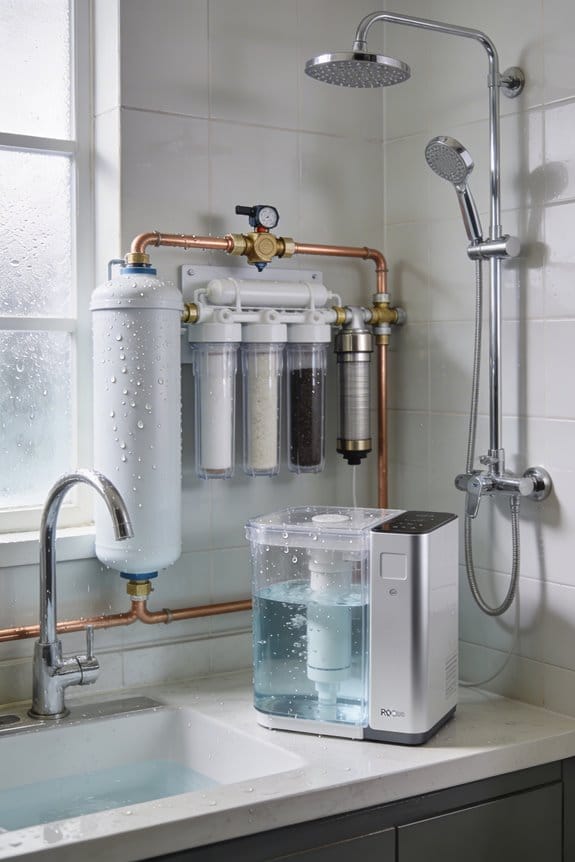
How Lead Gets Into Tap Water and Which Filters Actually Remove It

Lead enters your tap water mainly through old pipes, solder, and brass fixtures in homes built before 1986. Water acidity makes lead dissolve more easily from these sources. NSF and IAPMO certified filters remove up to 99 percent of lead; reverse osmosis systems and carbon block filters are your best options. Point-of-use filters protect specific taps like your kitchen sink, while whole-home systems protect everything. Understanding your home’s age and testing your water helps determine which solution fits your needs.
Key Takeaways
- Lead service lines, old solder, and brass fixtures are primary contamination sources in pre-1986 homes.
- NSF and IAPMO certified filters remove up to 99 percent of lead from tap water.
- Reverse osmosis and carbon block filters effectively remove lead but differ in cost and maintenance.
- Point-of-use filters protect specific faucets affordably, while whole-home systems require professional installation for comprehensive protection.
- Test water with EPA-approved kits; if levels exceed 15 ppb, replace fixtures and install certified filters.
Four Lead Sources in Your Tap Water
Since lead can enter your home’s water through multiple pathways, understanding where it comes from helps you take action to protect your family. Lead pipes connecting homes to water mains represent the primary source of contamination. Old solder used in plumbing before 1986 frequently contains lead that dissolves into water. Brass faucets and fixtures naturally leach lead over time through chemical reactions. Galvanized tanks in public fountains and certain plumbing systems also contribute to lead exposure. Homes built before 1986 face higher risk because regulations didn’t restrict lead-containing materials until that year. Identifying these sources in your home’s plumbing system helps determine which filtration methods you’ll need to protect your drinking water effectively.
Which Filters Actually Remove Lead: NSF and IAPMO Standards Explained
When you’re shopping for a water filter, you’ll notice labels like “NSF certified” or “IAPMO approved,” but what do these certifications actually mean for lead removal? These organizations test filters rigorously to verify their effectiveness. NSF certification and IAPMO testing both confirm that a filter can remove up to 99 percent of lead from your tap water. The difference lies in their testing methods and scope. NSF International focuses on health and safety standards, while IAPMO (International Association of Plumbing and Mechanical Officials) emphasizes plumbing material compatibility. When you see either certification on a filter, you’re getting independent verification that it works. Look for these labels specifically on reverse osmosis systems and certified carbon block filters, which represent your most reliable options for lead removal at home.
Reverse Osmosis vs. Carbon Filters: Which Works Better?
How do you choose between two filter types that both remove up to 99 percent of lead? I’d say it depends on your specific needs and circumstances. Reverse osmosis systems use RO membrane efficiency to force water through tiny pores, removing lead and other contaminants effectively. However, they’re expensive and waste water during filtration. Carbon block filters work differently, using activated carbon to absorb lead particles from your tap water. While they’re more affordable and easier to install, carbon block lifespan typically ranges from three to six months, requiring frequent replacement. If you want lower maintenance and don’t mind spending more upfront, reverse osmosis works well. For budget-conscious households, certified carbon filters provide reliable protection at a lower cost, though you’ll replace them regularly.
Filters for One Tap or Your Whole Home: Which Do You Need?
Once you’ve decided which filter type works best for your situation, you’ll face another decision: whether to install a filter on a single tap or protect your entire home’s water supply.
Point-of-use filters target specific faucets, typically your kitchen sink where you drink and cook. They’re affordable and easy to install, but they won’t protect other taps. Whole-home systems filter all incoming water, including showers and laundry, though they require professional installation and maintenance.
Consider your priorities: if you’re mainly concerned about drinking water, a single-tap filter suffices. However, whole-home systems provide all-encompassing protection and can include water softening capabilities. Keep in mind that whole-home filters may reduce water flow rate slightly, depending on the system’s specifications and your home’s water pressure.
Why Pre-1986 Pipes and Fixtures Leach the Most Lead
Because lead regulations didn’t exist before 1986, manufacturers widely used lead in pipes, solder, and brass fixtures without restriction, creating a widespread contamination problem that persists today. Lead soldering connected plumbing joints in older homes, releasing lead into water over decades. This legacy plumbing remains in approximately 15–22 million American homes, particularly those built before the Safe Drinking Water Act amendments. Pre-1986 brass fixtures contain up to 8 percent lead, while galvanized iron pipes deteriorate faster when water’s mineral content is low. The combination of aging infrastructure and corrosive water conditions accelerates lead leaching. Today, homes with these older systems face markedly higher contamination risks than newer installations with lead-free materials.
Why Acidic Water Pulls More Lead From Pipes
While pre-1986 pipes and fixtures create the initial lead contamination problem, the water itself plays a pivotal role in determining how much lead actually enters your drinking glass. Water with high acidity—meaning low pH levels—triggers a chemical reaction that dissolves metal from pipes and fixtures. This process, called metal solubility, allows lead to leach more readily into your water supply. Conversely, water with higher mineral content provides natural pH buffering, which protects pipes from corrosion. Water systems must balance this chemistry carefully. When stagnant water sits in pipes for extended periods, acidic conditions worsen lead dissolution. The Lead and Copper Rule requires water systems to control corrosivity, yet many communities still struggle maintaining proper pH levels to minimize lead exposure.
Is Your Neighborhood Affected by Lead Contamination?
Lead contamination doesn’t affect all neighborhoods equally—your risk depends on several factors specific to your community and home. Older neighborhoods with homes built before 1986 face higher exposure risks, since lead service lines were commonly installed then. Lower-income areas show twice the likelihood of detectable lead in tap water compared to wealthier neighborhoods. Community surveys and neighborhood mapping efforts help identify contaminated areas, revealing patterns of lead distribution across cities. You can check your local water utility’s Lead and Copper Rule reports, which contain tap sampling data from high-risk sites. Contacting your water department directly provides information about your specific address and whether lead service lines exist in your area.
Test Your Tap Water and Replace Fixtures: An Action Plan
Once you’ve identified whether your neighborhood carries a higher lead risk, the next step involves taking direct action to protect your household. I’d recommend starting with home testing using an EPA-approved kit, which reveals your specific lead levels. If results exceed 15 parts per billion, fixture replacement becomes necessary. You’ll want to replace brass faucets and fixtures, since they can leach lead into your water. Consider upgrading to lead-free alternatives certified by NSF or IAPMO. Additionally, have a professional inspect your pipes for lead solder, particularly if your home was built before 1986. Combining fixture replacement with certified point-of-use filters provides thorough protection while you address the underlying contamination sources.
Frequently Asked Questions
What Is the Safest Blood Lead Level for Young Children?
I’ll tell you directly: there’s no safe blood lead level for young children. Any detectable lead poses developmental risk, and I can’t identify an acceptable threshold below which experts consider exposure harmless to their developing brains.
How Much Tap Water Do Infants Consume Daily Compared to Adults?
I’ll cut to the chase: infants consume 88 mL per kilogram of body weight daily, while you adults drink roughly 17 mL per kilogram. That’s over five times more water relative to their daily intake.
Why Do Lower-Income Neighborhoods Experience Twice the Detectable Lead Exposure?
I’ll tell you why: housing segregation has historically concentrated lower-income communities in older neighborhoods with aging infrastructure. They’re receiving less infrastructure funding, so their lead pipes aren’t replaced as quickly.
What Percentage of Public Fountains Exceed the 2 μG/L Lead Detection Level?
I’ve found that 21.4 percent of public fountains exceed the 2 μg/L detection limit—a striking coincidence that mirrors lead’s persistence across water sources. You’ll notice detection variability means some fountains pose greater risks than others.
How Does Hand-To-Mouth Behavior Increase Children’s Lead Exposure From Tap Water?
I’ll explain how hand-to-mouth behavior increases your child’s lead exposure. When kids engage in hand-to-mouth activities and mouthing toys that’ve contacted contaminated water, they’re directly ingesting lead particles, markedly raising their exposure risk.


