As an Amazon Associate, we earn from qualifying purchases. Some links on this site are affiliate links at no extra cost to you. Our recommendations are based on thorough research and editorial judgment.

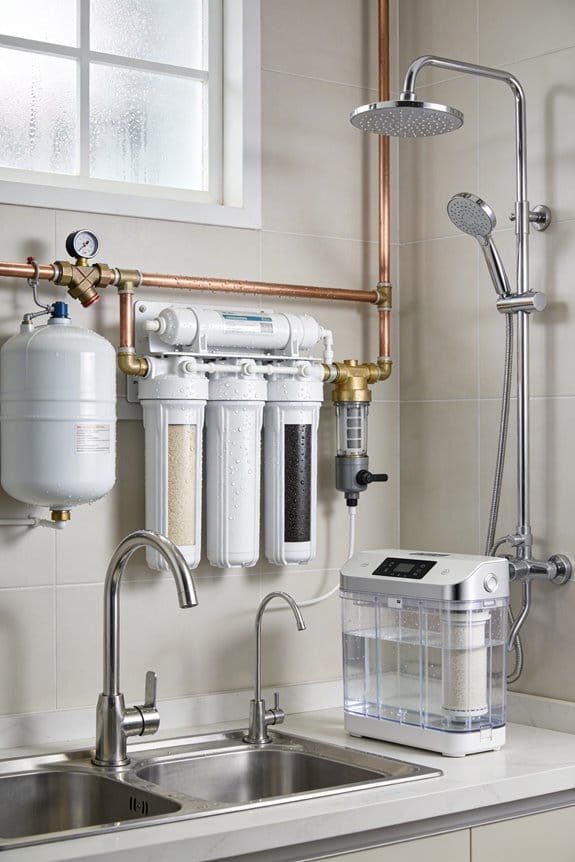
How Pharmaceutical Traces End Up in Tap Water and What Filters Help

Pharmaceuticals enter your tap water when people flush unused medications, excrete drug metabolites, or improper disposal contaminates groundwater. Leaking septic systems, agricultural runoff, and manufacturing discharge also contribute. Conventional treatment plants can’t remove these dissolved compounds because they’re designed for bacteria and sediment, not complex drug molecules. While carbon filters help somewhat, advanced options like reverse osmosis or ultraviolet oxidation work better. Testing through your local water utility reveals what’s actually in your supply, and understanding specific contamination sources helps determine your best protection strategy.
Key Takeaways
- Flushed medications, human excretion, leaking septic systems, and agricultural runoff introduce pharmaceuticals into water supplies and groundwater.
- Conventional wastewater treatment plants fail to remove dissolved pharmaceutical compounds effectively due to their complex chemical structures.
- U.S. Geological Survey detected medications in 80% of stream samples; over 41 million Americans consume treated water with pharmaceutical residues.
- Advanced filters like reverse osmosis remove pharmaceuticals more effectively than basic carbon filters, which often prove inadequate alone.
- Drug takeback programs at pharmacies and hospitals, plus proper disposal methods, prevent medications from entering water systems via flushing.
Are Pharmaceuticals Really in Your Drinking Water?
When you turn on your tap and fill a glass of water, you’re probably not thinking about the medications that might be in it, yet scientific evidence suggests that pharmaceuticals are indeed present in many drinking water supplies across the United States and worldwide. A U.S. Geological Survey detected medications in 80% of stream samples from 30 states, with over 41 million Americans potentially consuming treated drinking water containing pharmaceutical residues. These include antibiotics, antidepressants, and heart medications. However, public awareness remains limited due to regulatory gaps that don’t require pharmaceutical contamination testing. Detected concentrations typically measure in nanograms per liter, thousands of times lower than therapeutic doses, though long-term exposure effects warrant investigation.
How Much Risk Do These Trace Amounts Pose?
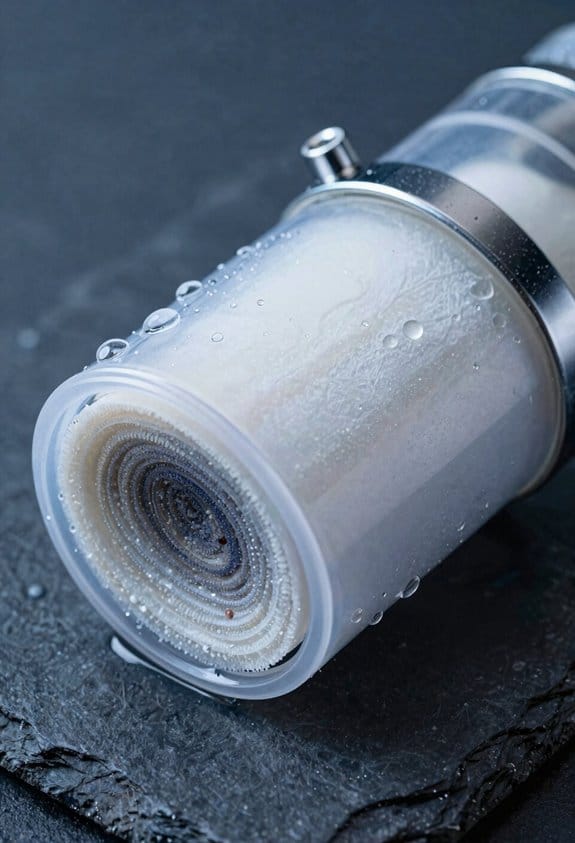
Although pharmaceutical traces exist in drinking water supplies across the country, the actual risk they pose depends on several factors including the concentration levels, the type of medication, and how long you’re exposed to them. Current research shows detected amounts are typically thousands of times lower than therapeutic doses, which suggests minimal immediate danger. However, scientists remain concerned about long term exposure to these compounds at low concentrations. Low dose interactions between multiple medications in water could potentially affect vulnerable populations, including infants and people with compromised immune systems. While regulatory agencies continue monitoring these substances, most experts agree that the risks from pharmaceutical traces are currently considered acceptable compared to other water contaminants.
The Most Common Medications Found in Tap Water
Several medications consistently show up in tap water supplies across the United States, and understanding which ones they’re most likely to be they are can help you grasp the scope of pharmaceutical contamination. Common detections include antidepressant metabolites, which are byproducts created when your body breaks down psychiatric medications. You’ll also find veterinary antibiotics from livestock farming, along with pain relievers like ibuprofen and naproxen. Heart medications such as ACE inhibitors and calcium-channel blockers appear regularly in water samples. Additionally, oral contraceptives and caffeine have been identified in treated drinking water nationwide. Carbamazepine, an anti-seizure drug, persists through conventional treatment methods because standard filtration doesn’t remove it effectively. These pharmaceuticals represent the medications most frequently prescribed in communities where contamination occurs.
Where Pharmaceuticals Enter Drinking Water
Now that you understand which medications pollute our water supplies, it’s important to know how they actually get there in the first place. Pharmaceuticals enter our drinking water through several pathways. When people flush unused medications down toilets, they travel through wastewater treatment plants that aren’t designed to remove them. Leaking septic systems also allow drug residues from human waste to seep into groundwater. Pharmaceutical manufacturing plants discharge effluent containing extremely high concentrations directly into waterways. Agricultural runoff introduces veterinary medications from livestock into nearby water sources. Additionally, landfills containing discarded medicines leach pharmaceuticals into soil and groundwater. These multiple entry points make pharmaceutical contamination a widespread problem affecting water supplies globally.
Why Treatment Plants Can’t Remove Drugs
Because conventional wastewater treatment plants were designed decades ago to remove visible pollutants like bacteria and sediment, they simply weren’t built to filter out pharmaceutical active ingredients, which are microscopic chemical compounds that dissolve completely in water. The chemical complexity of medications makes them resistant to standard treatment processes. While chlorine can break down some drugs like acetaminophen, it barely affects others like carbamazepine. Additionally, microbial transformation during treatment sometimes creates new compounds rather than eliminating pharmaceuticals entirely. Conventional methods achieve roughly 90% reduction for ibuprofen and naproxen, yet prove nearly ineffective against diclofenac. Because treatment effectiveness varies dramatically by drug type, no single approach removes all pharmaceutical contaminants from our water supplies.
Why Pharmaceutical Plants Are the Biggest Source
Pharmaceutical manufacturing plants discharge wastewater containing 10 to 1,000 times higher concentrations of drugs than standard treatment facilities release, making them the primary source of pharmaceutical pollution in our water systems. This industrial discharge poses a significant problem because these plants aren’t required to remove active pharmaceutical ingredients before releasing wastewater into rivers and streams. The contamination spreads downstream as far as 30 kilometers from the source, affecting drinking water supplies for communities in the affected areas. Regulatory gaps allow manufacturers to avoid accountability for their environmental impact. Without strict regulations requiring proper treatment of manufacturing waste, pharmaceutical facilities continue releasing untreated effluent containing massive quantities of unused medications and chemical byproducts directly into our water systems.
Can Your Water Filter Remove Pharmaceutical Residues?
Given the widespread presence of pharmaceutical residues in tap water, many people turn to water filters hoping to reduce their exposure, but the effectiveness of standard home filtration systems remains disappointingly limited. Most conventional filters, including basic carbon filters, can’t adequately remove pharmaceuticals like carbamazepine and diclofenac because these compounds require specific treatment processes.
Advanced filtration methods, such as reverse osmosis and activated carbon with sufficient contact time—the duration water remains in the filter—show better results. However, membrane fouling, where particles accumulate on filter surfaces and reduce efficiency, creates maintenance challenges. While some filters reduce certain medications by 75%, no single home system reliably removes all pharmaceutical residues. Your water filter’s effectiveness depends on the specific contaminants present and the technology used, making professional water testing essential for understanding your actual exposure.
What Advanced Filters Work Better Than Carbon?
Several advanced filtration technologies can outperform standard carbon filters when it comes to removing pharmaceutical residues from tap water. Nanofiltration benefits include smaller pore sizes that trap more pharmaceutical molecules than activated carbon alone can capture. Advanced oxidation processes use chemical reactions to break down stubborn compounds like carbamazepine and diclofenac that resist conventional treatment. Reverse osmosis systems push water through extremely tight membranes, removing up to 99% of contaminants. Ultraviolet light combined with oxidation destroys pharmaceutical structures at the molecular level. Ion exchange resins can target specific drug compounds by attracting and binding them. While these technologies cost more initially, they provide superior protection against the trace pharmaceuticals that conventional filters miss.
How to Test Your Water for Drugs
Now that you understand which advanced filters work best for removing pharmaceutical residues, you might wonder how to find out what’s actually in your tap water. Home testing kits offer an initial screening, though they’re limited in detecting specific drugs. For accurate results, you’ll need lab confirmation through certified water testing facilities that use specialized equipment like liquid chromatography. Contact your local water utility about community sampling programs, which often test for pharmaceuticals at no cost. Source tracking helps identify where contamination originates—whether from nearby hospitals, manufacturing plants, or agricultural areas. Professional testing typically costs between fifty and several hundred dollars, depending on the number of compounds analyzed, but provides definitive data about pharmaceutical presence in your water supply.
Safe Pill Disposal and Next Steps
Because improper medication disposal represents a major source of pharmaceutical contamination in water systems, understanding how to safely dispose of unused drugs is one of the most effective actions you can take to protect your local water supply. Many communities offer drug takeback programs at pharmacies, hospitals, and police stations where you can drop off medications anonymously. If no takeback option exists near you, the FDA recommends mixing unused pills with unpalatable substances like coffee grounds or cat litter, placing them in a sealed bag, and throwing them in household trash. Community outreach initiatives increasingly highlight these disposal methods to reduce environmental contamination. By choosing proper disposal over flushing or pouring medications down drains, you’re actively preventing pharmaceuticals from entering water treatment systems that can’t currently remove them effectively.
Frequently Asked Questions
Do Pharmaceutical Concentrations in Drinking Water Vary Significantly Between Different Geographic Regions?
Yes, they do vary substantially. I’ve found that concentrations depend on urban gradients, population density, and seasonal variation in your area. Local prescription patterns and treatment plant capabilities also create regional differences in what you’re exposed to.
How Do Veterinary Antibiotics in Water Contribute to Antibiotic-Resistant Bacteria Development in Humans?
Veterinary antibiotics create selective pressure in aquatic environments, allowing resistant bacteria to thrive. I’d explain that horizontal gene transfer then spreads resistance genes between bacterial species, potentially reaching human pathogens through water consumption.
Can Pharmaceutical Residues Bioaccumulate in the Human Body Through Chronic Low-Level Water Exposure?
I can’t definitively tell you yes or no based on current research, but cellular accumulation and metabolite persistence in your body remain concerns scientists are investigating regarding chronic low-level pharmaceutical water exposure.
What Are the Long-Term Health Effects of Consuming Trace Pharmaceuticals Over Decades?
I’ll tell you that long-term effects remain under investigation, though scientists worry about endocrine disruption and neurodevelopmental risks from chronic low-level exposure. We’re fundamentally conducting an uncontrolled experiment on ourselves.
How Do Landfill Leachates and Agricultural Sludge Reintroduce Pharmaceuticals Into Water Supplies?
Landfill runoff leaches pharmaceuticals into groundwater and surface water supplies. Sludge contamination occurs when wastewater treatment plants apply contaminated sludge as fertilizer, reintroducing pharmaceutical residues directly into agricultural soil and nearby water systems.