As an Amazon Associate, we earn from qualifying purchases. Some links on this site are affiliate links at no extra cost to you. Our recommendations are based on thorough research and editorial judgment.

How to Choose Between a Whole House Filter and an Under Sink Filter

I’d choose a whole house filter if I’m protecting all my home’s plumbing and appliances from sediment and chlorine, or an under sink filter if I’m mainly concerned about drinking and cooking water quality. Well water with sediment? Whole house works best. City water with potential lead or PFAS? Under sink targets those specific threats. Consider your water type, budget, and which contaminants matter most—though combining both systems offers the strongest protection across your entire home.
Key Takeaways
- Whole house filters protect all water sources throughout your home; under sink filters target only drinking and cooking water at one tap.
- Well water with sediment requires whole house filtration; city water concerns about lead demand under sink filters for concentrated protection.
- Whole house systems cost $1,000–$4,000 installed but need fewer replacements; under sink filters cost $300–$800 with more frequent cartridge changes.
- Professional installation is typically required for whole house systems; under sink filters often support DIY installation, reducing labor expenses.
- Combine both systems for layered defense: whole house removes sediment and chlorine; under sink captures fine contaminants like lead and PFAS.
Whole House vs. Under Sink: What Each System Actually Does
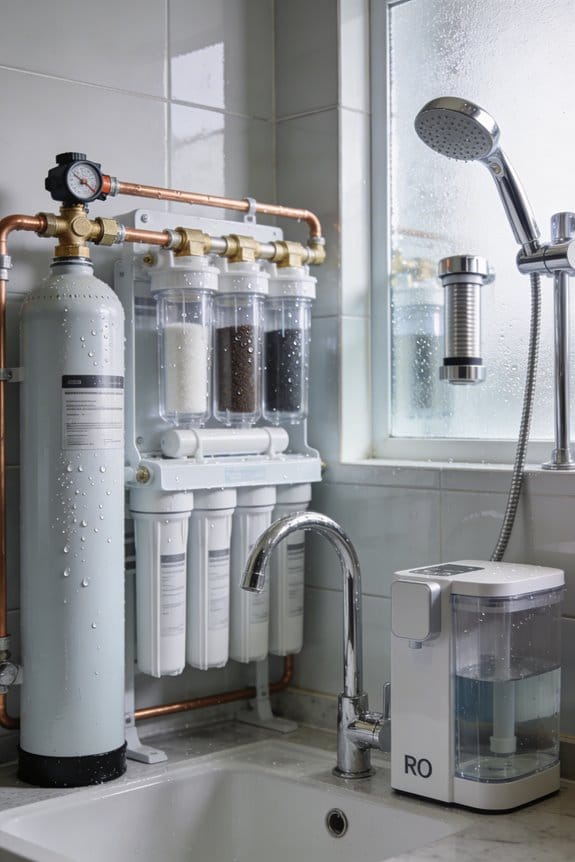
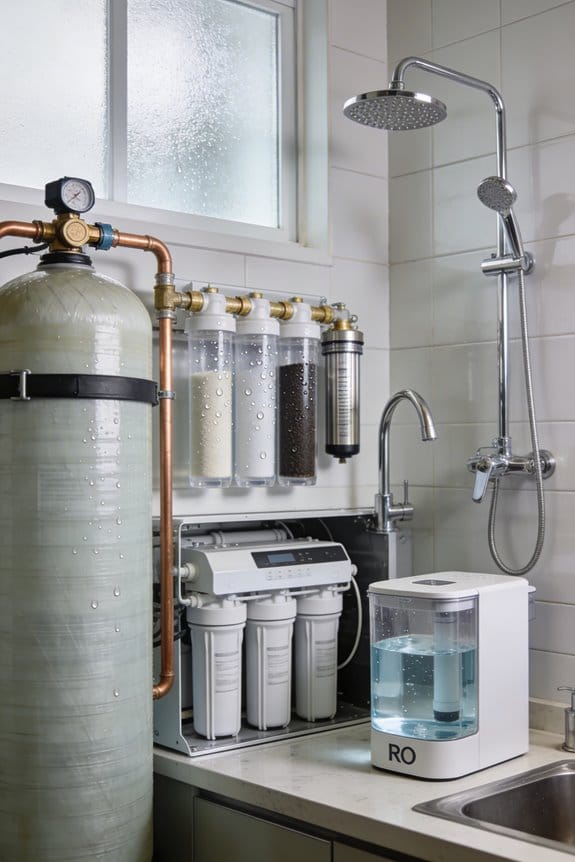
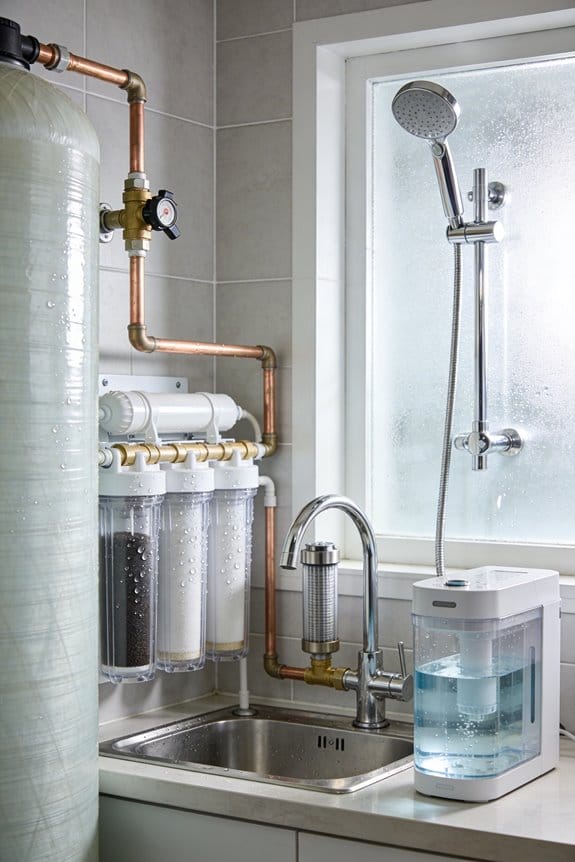
When you’re deciding between water filtration systems, it helps to understand how each one works at a fundamental level. A whole house filter treats all water entering your home at the main line, protecting every faucet, shower, and appliance. In contrast, an under sink filter targets only the water at your kitchen tap, filtering drinking and cooking water specifically.
The flow dynamics differ markedly between these systems. Whole house filters maintain consistent pressure throughout your home, while under sink models may reduce water flow since they filter more thoroughly. Installation space matters too—whole house systems require space near your water meter, whereas under sink filters fit compactly beneath your cabinet. Each approach serves different needs based on your priorities and living situation.
Which System Fits Your Home and Water Type
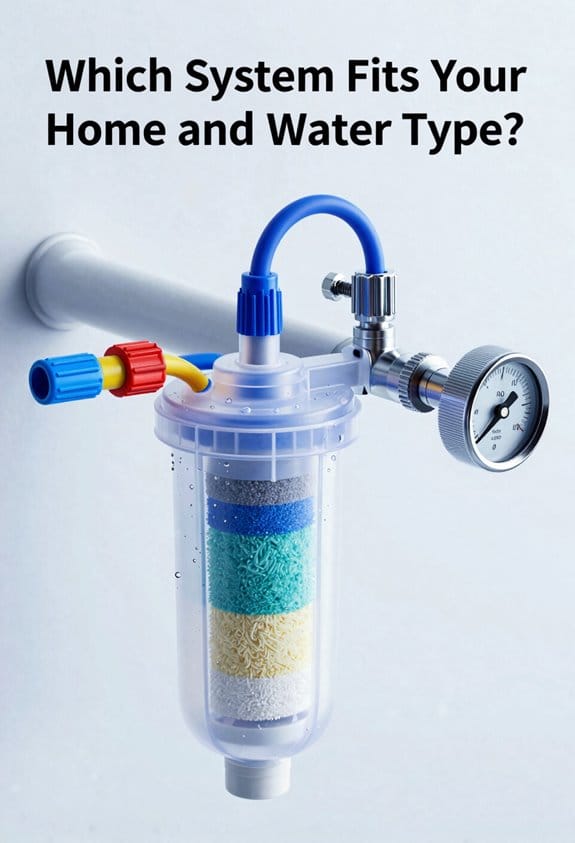
Your home’s water source and current water quality play essential roles in determining which filtration system makes the most sense for you. If you have well water with sediment issues, a whole house filter protects your entire plumbing system and appliances by filtering at the entry point. For city water users concerned primarily about drinking and cooking water, an under sink filter offers targeted protection for lead and other fine contaminants. Consider your pipe size when installing a whole house system, since larger diameter pipes require appropriate flow rates. If water hardness troubles you, whole house systems address this concern throughout your home, while under sink units focus solely on one faucet. Your specific water quality determines whether all-encompassing or targeted filtration serves your household best.
Whole House or Under Sink: Installation and Maintenance Costs
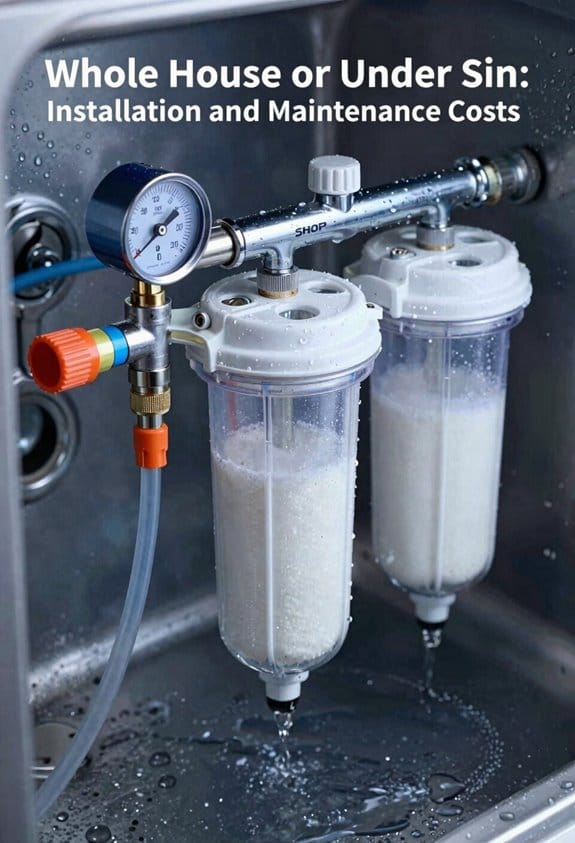
The upfront investment and long-term expenses of each filtration system vary substantially, making cost comparison an important part of your decision. Whole house systems typically cost $1,000–$4,000 installed, requiring professional installation due to their installation complexity at your main water line. Under sink filters run $300–$800 and often support DIY installation, reducing labor costs markedly. However, replacement frequency differs considerably between systems. Under sink filters need replacing every 6–12 months, accumulating costs over time. Whole house filters require less frequent replacements, typically annually or every 2–3 years depending on water quality. While under sink systems cost less initially, whole house systems may prove more economical long-term if you factor in fewer replacements and protection for your entire home’s appliances and infrastructure.
Whole House or Under Sink: Prioritize by Contaminant Type
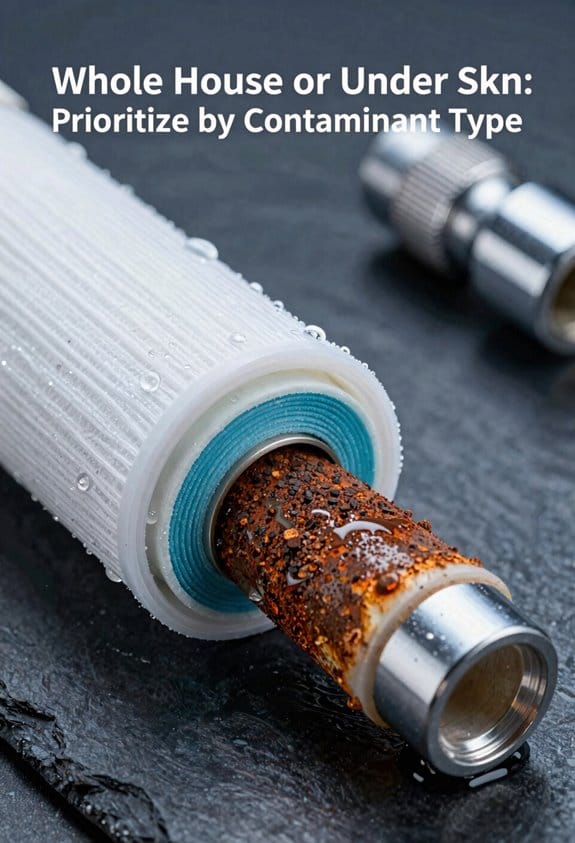
Contaminant selection plays a crucial role in determining which filtration system best serves your household’s needs, since different water quality issues require different filtering approaches. When you map your home’s contaminant profile through testing, you’ll identify which exposure pathways pose the greatest risks to your family.
Whole house systems excel at removing sediment, chlorine, and iron, making them ideal if you’re concerned about overall water quality throughout your home. Under sink filters, however, target specific contaminants like lead, PFAS, nitrates, and arsenic with greater precision at your drinking water source.
If you’ve tested your water and found fine particles or chemical contaminants in your drinking water specifically, an under sink filter provides concentrated protection. For broader sediment issues affecting your entire plumbing system and appliances, whole house filtration addresses the problem thoroughly.
When to Use Both Systems Together
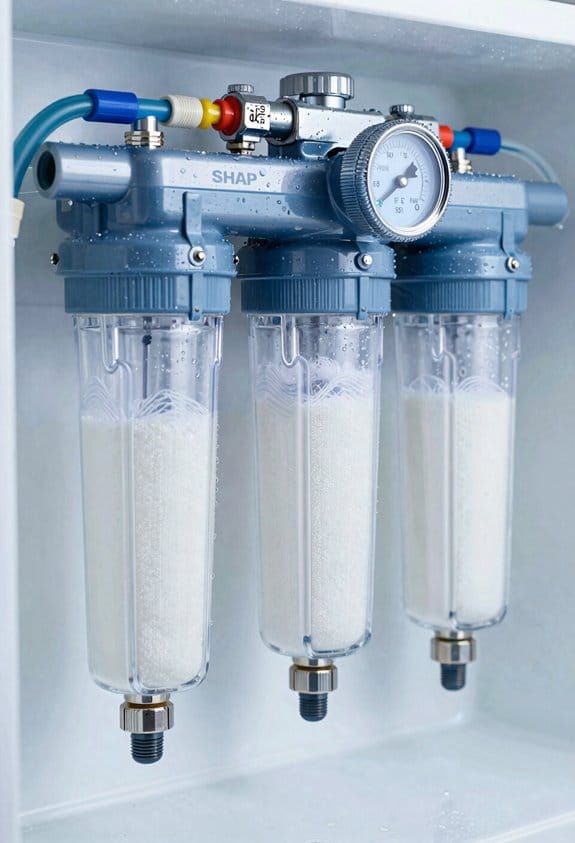
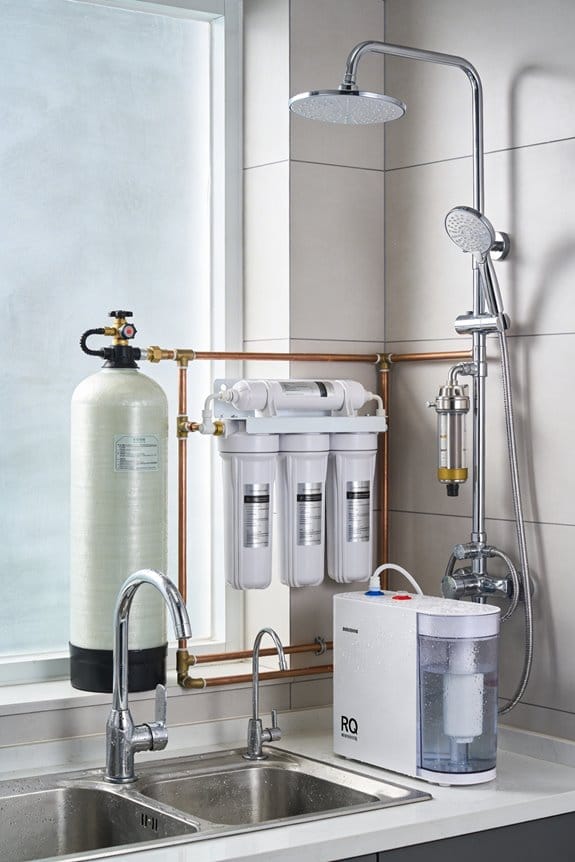
Combining whole house and under sink filters creates a layered defense that tackles water quality problems from multiple angles, since each system handles different contaminant challenges in complementary ways. I’d recommend this combined protection approach if you’re dealing with well water or aging pipes that contain both sediment and fine contaminants. Your whole house system removes larger particles and chlorine throughout your home, while your under sink filter provides layered filtration for drinking and cooking water, capturing smaller threats like lead and PFAS. This strategy protects your appliances and plumbing while ensuring your drinking water meets the highest standards. Though it requires more investment upfront, you’re getting thorough water quality coverage that addresses every concern simultaneously.
Frequently Asked Questions
Can I Install a Whole House Filter Myself, or Do I Absolutely Need a Plumber?
You’ll likely need a plumber for whole house installation because it requires accessing your main water line and involves complex plumbing. DIY attempts risk leaks and voiding warranty coverage, making professional installation worthwhile.
How Often Should I Replace Filters in Each System Type?
Whole house filters function fairly frequently—typically every 6-12 months depending on water quality and cartridge maintenance. Under sink systems require more regular replacements, often every 6 months, since their filter lifespan is shorter due to finer filtration demands.
Will an Under Sink Filter Affect Water Pressure at Other Faucets?
No, an under sink filter won’t affect your other faucets. You’ll only experience flow reduction at that specific tap due to localized drawdown. Your remaining faucets maintain normal water pressure throughout your home.
Do Whole House Filters Require Electricity to Operate?
You might worry whole house filters drain your electricity bill, but most don’t require power. However, some models with motorized valves or UV sterilization do need electricity for peak contaminant removal.
Can I Upgrade From Under Sink to Whole House Later?
Yes, you can upgrade from under sink to whole house later. I’d recommend checking your plumbing compatibility first, as future expansions require proper water line access at your home’s entry point for seamless installation.