As an Amazon Associate, we earn from qualifying purchases. Some links on this site are affiliate links at no extra cost to you. Our recommendations are based on thorough research and editorial judgment.

How to Know If Your Home Needs a Whole House Water Filtration System

You’ll know your home needs whole-house filtration if you notice strong chlorine odors, visible discoloration, or rust-colored stains on faucets. Unusual tastes, white mineral deposits, and inconsistent water quality despite municipal treatment also signal problems. Hard water leaves chalky spots on dishes and slick film on skin, while sediment clogs showerheads. These signs suggest contaminants like heavy metals, bacteria, and pesticides are entering your pipes. A centralized filtration system protects your appliances, health, and wallet simultaneously—and there’s much more to discover about how these systems work.
Key Takeaways
- Visible discoloration, sediment, rust stains, or white mineral deposits on fixtures indicate water quality issues.
- Unusual tastes, odors beyond chlorine, or inconsistent quality despite municipal treatment signal contamination concerns.
- White spots on dishes, slick skin film, or scale buildup suggest hard water requiring filtration.
- Chlorine odor, heavy metals, bacteria, and pesticides pose health risks through regular consumption and absorption.
- Reduced appliance efficiency, shortened water heater lifespan, and clogged faucets result from unfiltered water damage.
Signs of Poor Water Quality in Your Tap Water
How can you tell if your tap water needs filtration? Several observable signs indicate poor water quality. A strong chlorine odor suggests chemical treatment residue, while visible discoloration or sediment in your water signals contamination. You might notice rust-colored stains or white deposits accumulating on faucets and showerheads, which indicate mineral buildup or corrosion. Unusual tastes or smells beyond chlorine often point to contaminants like pesticides or bacteria. Heavy metals such as lead and mercury, though invisible, pose serious health risks. If you experience inconsistent water quality despite municipal treatment, your home’s plumbing may be corroding. These indicators suggest that standard municipal filtration isn’t adequately protecting your water supply, making a whole-house filtration system worth considering for your family’s safety and health.
Why Whole-House Filtration Is the Real Solution

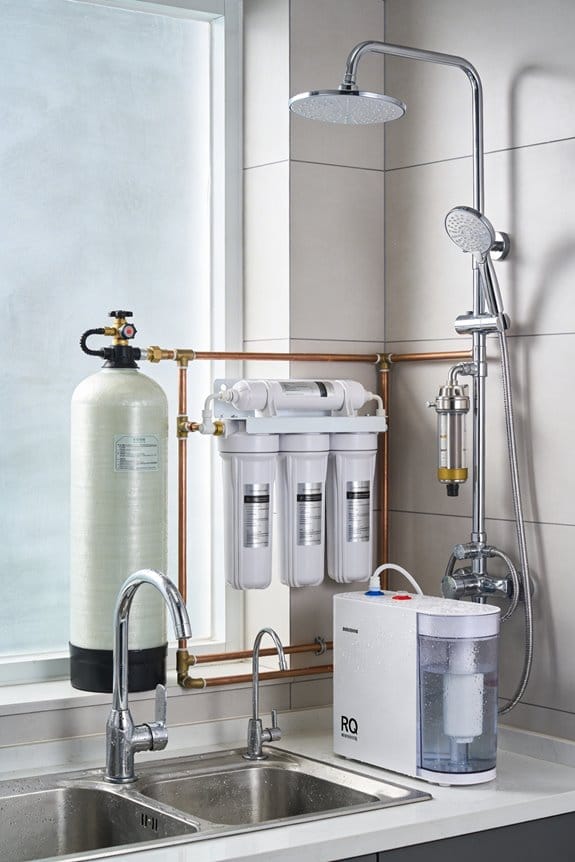
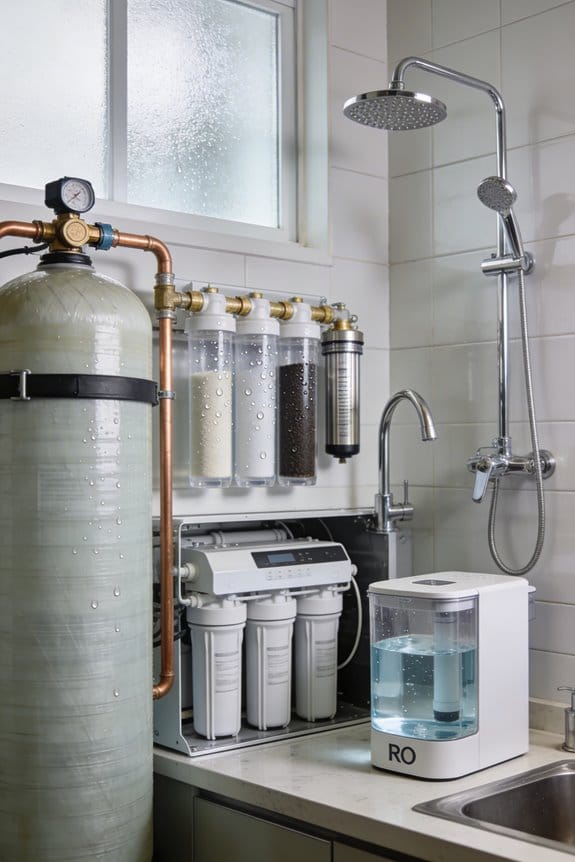
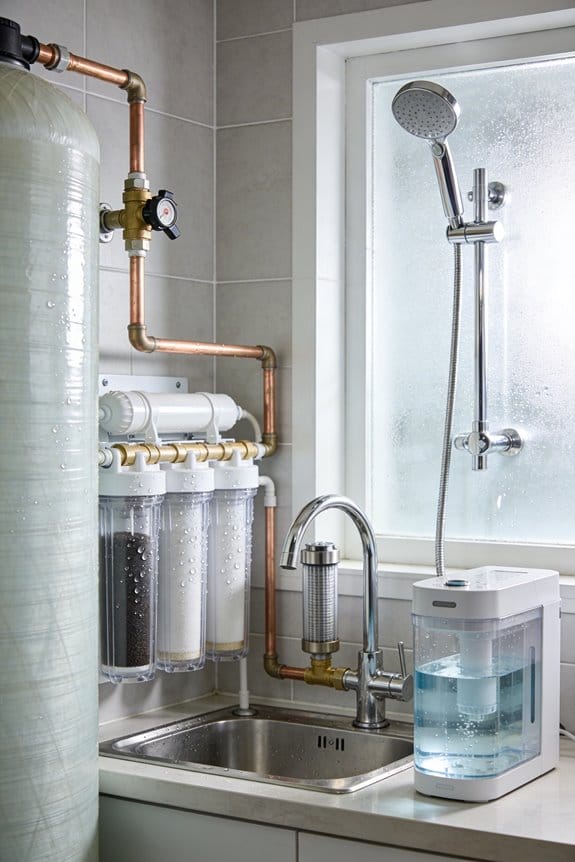
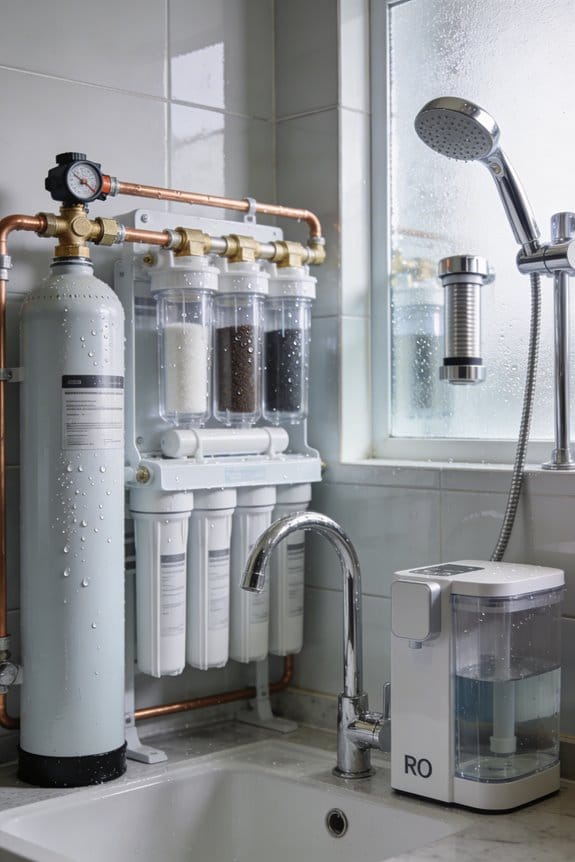
While identifying water quality problems is the first step, understanding why a whole-house filtration system addresses these issues thoroughly is equally important. Unlike point-of-use filters that only treat water at one tap, a whole-house system provides centralized purification for your entire home. This means every faucet delivers filtered water, protecting your appliances, plumbing, and family simultaneously. The consistent flow of treated water prevents scale buildup that damages water heaters and washing machines, extending their lifespan considerably. Additionally, centralized filtration reduces your reliance on bottled water, eliminating hundreds of plastic bottles yearly. By treating water at the source before it enters your home’s pipes, you’re investing in all-encompassing protection rather than piecemeal solutions.
Why Unfiltered Water Damages Your Health
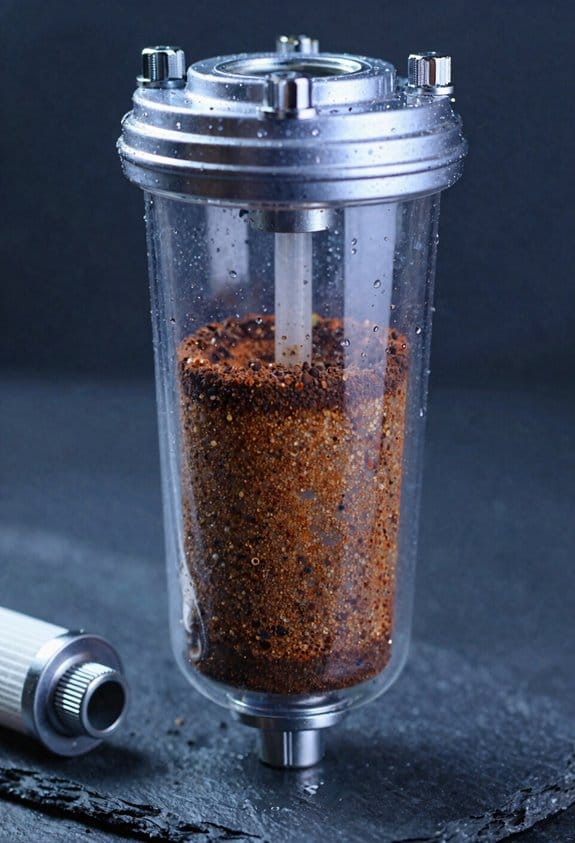
The consequences of consuming unfiltered water extend beyond taste and appearance, affecting your body’s systems in ways you might not immediately notice. When you drink contaminated water, harmful substances like chlorine, heavy metals, and bacteria can enter your bloodstream through chemical absorption, gradually accumulating in your tissues. These contaminants may trigger immune suppression, weakening your body’s natural defense mechanisms against illness. Over time, exposure to pesticides and VOCs can damage your organs and increase inflammation. Even if symptoms aren’t obvious immediately, repeated exposure creates long-term health risks. Your family deserves water that’s genuinely safe, not just water that meets minimum EPA standards. Whole-house filtration removes these threats thoroughly, protecting everyone’s health at every tap throughout your home.
Hard Water and Sediment: The Hidden Threat to Your Appliances
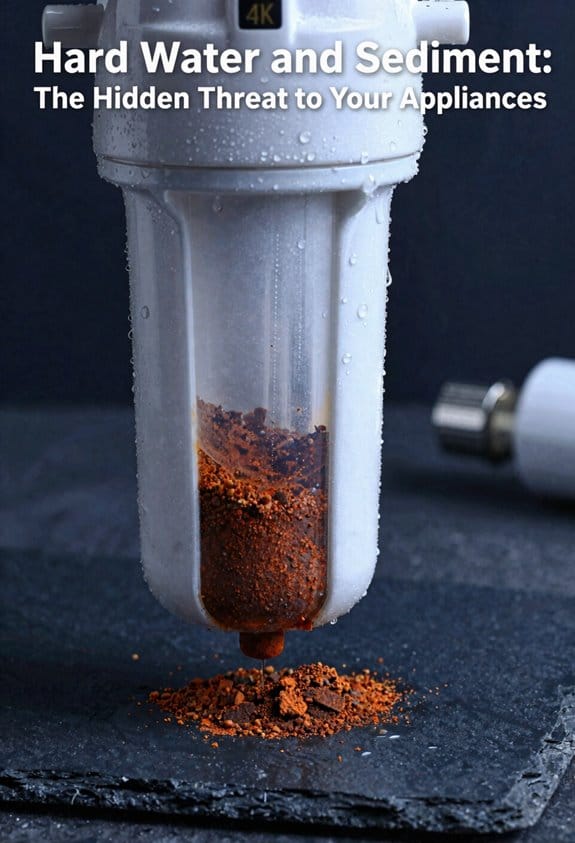
If you’ve noticed white, chalky spots on your dishes or felt a slick film on your skin after showering, you’re experiencing the effects of hard water and sediment—minerals and particles that damage your home’s plumbing and appliances over time. Hard water contains dissolved calcium and magnesium that accumulate as scale buildup inside pipes, water heaters, and washing machines. This buildup reduces efficiency and shortens appliance lifespan to 8-10 years instead of the typical 12-15 years. Sediment clogs faucets and showerheads, while scale prevents heat transfer in water heaters, forcing them to work harder. Scale prevention through whole-house filtration directly supports appliance longevity, reducing repair costs and energy waste markedly while protecting your home’s plumbing infrastructure from corrosion and mineral deposits.
Why Whole-House Filtration Beats Bottled Water
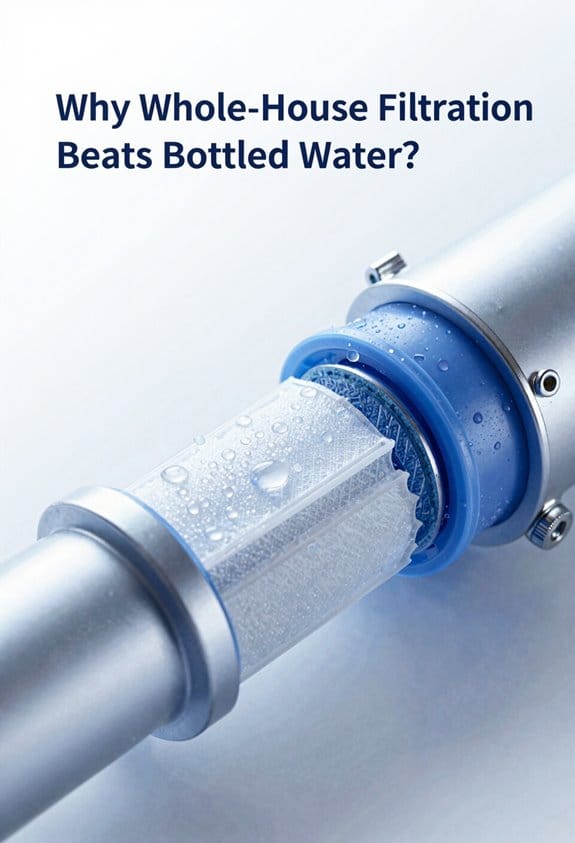
Beyond protecting your appliances from scale and sediment, you’ll want to take into account where your drinking water actually comes from—and whether paying for bottled water makes financial or environmental sense. The average American buys approximately 167 disposable bottles yearly, spending $1,200 to $1,800 annually. A whole-house filtration system offers significant cost savings, recovering its installation expense within two years through reduced bottled water purchases. Additionally, filtered tap water provides taste improvement by removing chlorine, chloramines, and contaminants that affect flavor. You’ll also eliminate the environmental burden of plastic waste, since 80 percent of single-use bottles end up in landfills where they decompose over 450 years. Installing filtration delivers both financial and ecological benefits.
How Whole-House Systems Pay for Themselves
Investing in a whole-house filtration system might seem expensive upfront, but the financial payoff arrives faster than you’d expect. You’ll see long term savings by eliminating bottled water purchases, which cost between $1,200 and $1,800 annually. A quality system reduces that expense by approximately 90 percent. Additionally, maintenance reduction becomes significant when filtered water prevents scale buildup and mineral deposits in your pipes and appliances. Hard water damages water heaters, reducing their lifespan to 8-10 years instead of their potential 12-15 years. Your washing machine and dishwasher require fewer repairs when sediment doesn’t accumulate inside them. Most whole-house systems recover their initial investment within two years through these combined savings alone.
The Environmental Case for Choosing Whole-House Filtration
When you consider the plastic waste generated by single-use water bottles, the environmental impact becomes staggering. Americans discard roughly 167 bottles per person annually, with 80% ending up in landfills where they take 450 years to decompose. By installing a whole-house filtration system, you’ll markedly reduce plastic consumption and minimize your carbon footprint. Instead of purchasing bottled water repeatedly, you’re using filtered tap water from every faucet in your home. This shift eliminates transportation emissions associated with bottling and distributing water. In 2019 alone, whole-house filtration systems displaced 1.2 billion single-use bottles from the waste stream. Modern filtration technologies offer minimal ecological impact while delivering cleaner water, making them a practical choice for environmentally conscious households seeking sustainable alternatives.
Frequently Asked Questions
What Types of Contaminants Do Whole-House Systems Remove That Point-Of-Use Filters Cannot?
I’ll tell you that 80% of yearly plastic bottles end in landfills. Whole-house systems remove microbial contaminants and dissolved gases throughout your home, whereas point-of-use filters only treat water at single taps, leaving your appliances and pipes vulnerable.
How Often Do Whole-House Filtration Systems Require Maintenance and Filter Replacement?
I’d recommend replacing filters every 6-12 months, depending on your water quality and usage. You’ll also want seasonal flushing to maintain peak performance. Your specific filter lifespan depends on sediment levels and contaminant concentration in your home’s water supply.
Are Whole-House Systems Suitable for Both Municipal Water and Well Water Sources?
Yes, I’d recommend whole-house systems for both municipal and well water sources. They’re designed for municipal compatibility while effectively addressing well water’s unique contaminants like sediment, bacteria, and minerals, ensuring all-encompassing protection regardless of your water source.
What Is the Typical Installation Cost and Complexity for Whole-House Filtration Systems?
Like a medieval scribe cataloging progress, I’ve found installation typically costs $1,000–$3,000. You’ll want careful contractor selection and a brief installation timeline—usually one day. It’s an investment I’d recommend.
Do Whole-House Systems Reduce Water Pressure or Flow Rate in the Home?
Modern whole-house systems shouldn’t noticeably reduce your water pressure if properly sized. I’ve found that pressure loss depends on filter type and flow dynamics. Quality systems maintain adequate pressure while effectively filtering your home’s entire water supply.