As an Amazon Associate, we earn from qualifying purchases. Some links on this site are affiliate links at no extra cost to you. Our recommendations are based on thorough research and editorial judgment.

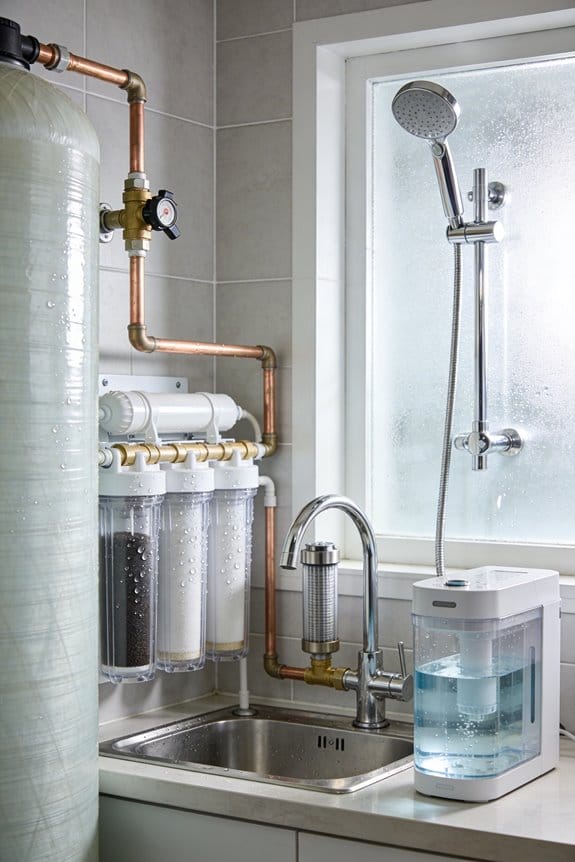
How a Whole House Water Filter Works and What It Actually Does

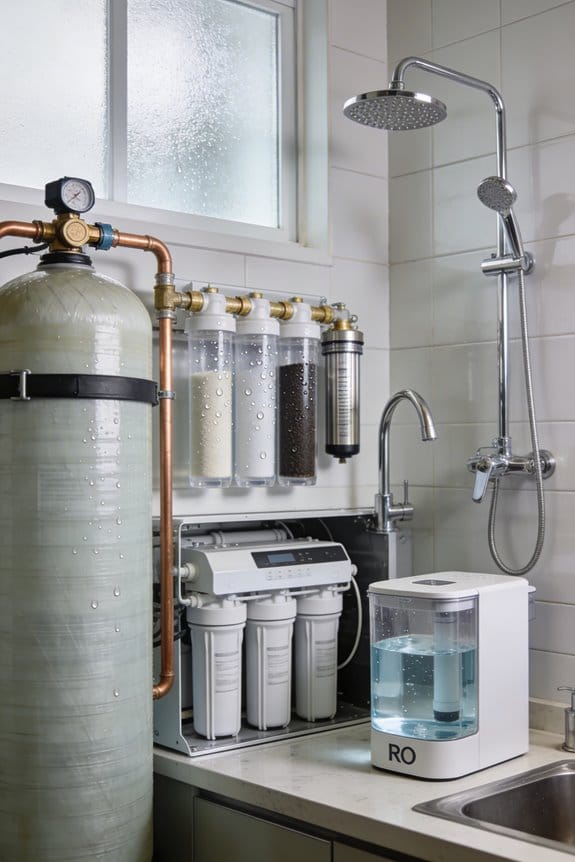
A whole house water filter works by installing at your main water line and pushing all incoming water through three filtration stages before it reaches your taps. First, a sediment pre-filter traps sand and rust particles. Then, KDF media and activated carbon remove heavy metals like lead and chlorine. Finally, coconut-shell carbon polishes the water clean. This protects every faucet, appliance, and shower in your home simultaneously, eliminating roughly 95 contaminants that affect your water quality and health. Understanding the specific maintenance steps keeps your system running efficiently.
Key Takeaways
- Whole house filters install at main water entry points, treating all household taps and appliances simultaneously with three-stage filtration.
- Stage 1 sediment pre-filter captures particles; Stage 2 KDF media inhibits bacteria; Stage 3 activated carbon removes chlorine and odors.
- System removes approximately 95 contaminants including lead, chromium-6, asbestos, herbicides, sediment, and rust from drinking and bathing water.
- Filters protect appliances by reducing scale buildup and preventing stains, extending equipment lifespan and maintaining efficiency throughout the home.
- Cartridge replacements and quarterly flushing maintain performance; decreased pressure or cloudy water indicates when cartridges need replacement.
What a Whole House Water Filter Is and Why It Matters
Imagine turning on any faucet in your home, whether it’s in the kitchen, bathroom, or laundry room, and having clean, filtered water flow out immediately—that’s what a whole house water filter does. Unlike point-of-use filters that treat water at a single tap, this system connects at your main water entry point, filtering water before it branches throughout your home. This all-encompassing approach protects your health impacts by removing contaminants like lead, chlorine, and sediment from every outlet. Beyond personal wellness, whole house filters support water conservation by reducing scale buildup in appliances, which extends their lifespan and efficiency. By treating water at the source, you’re investing in cleaner water for drinking, bathing, and household use simultaneously.
How the Three-Stage Filtration Process Works
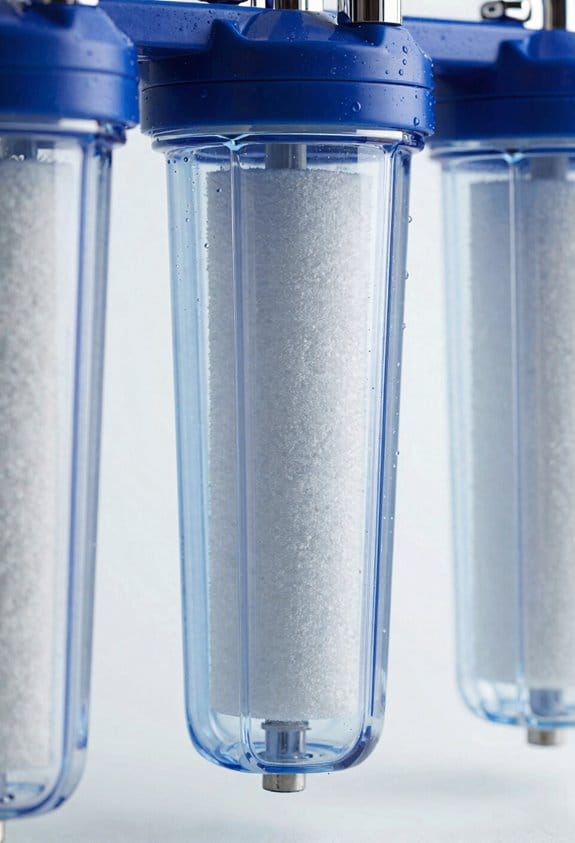
The effectiveness of a whole house water filter relies on three distinct stages that work together to remove different types of contaminants from your water supply. In stage one, a 5-micron sediment pre-filter captures sand, silt, clay, and rust particles before they reach deeper media. Stage two introduces flow dynamics as water moves through KDF media simultaneously with activated carbon, where the media chemistry enables copper-zinc compounds to inhibit bacteria and algae growth. Stage three features catalytic coconut-shell activated carbon that traps remaining contaminants through its porous structure, eliminating chlorine taste and odor. This multi-stage approach guarantees thorough filtration, with post-carbon polishing removing residual impurities so clean water reaches every household tap.
What Contaminants Does It Actually Remove?
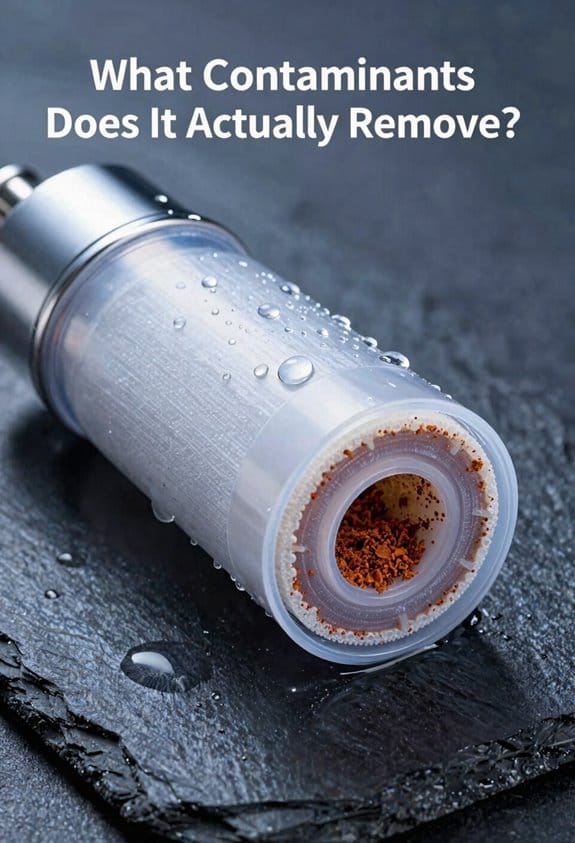
While you might assume all water filters work the same way, whole house systems actually target a surprisingly wide range of contaminants that affect your home’s water quality. These systems remove heavy metals like lead and chromium-6, which can harm your health over time. They also eliminate chlorine, sediment, rust, and sand that damage appliances and create stains. For microbial control, the copper-zinc KDF media inhibits bacteria and algae growth, preventing contamination throughout your pipes. The activated carbon stage traps additional impurities, including asbestos and herbicides. Together, these stages eliminate roughly 95 different contaminants, addressing everything from rotten egg smells to visible particles. This all-encompassing approach means you’re protecting your family’s health and extending your appliances’ lifespan simultaneously.
Which Contaminants Matter Most for Your Home?
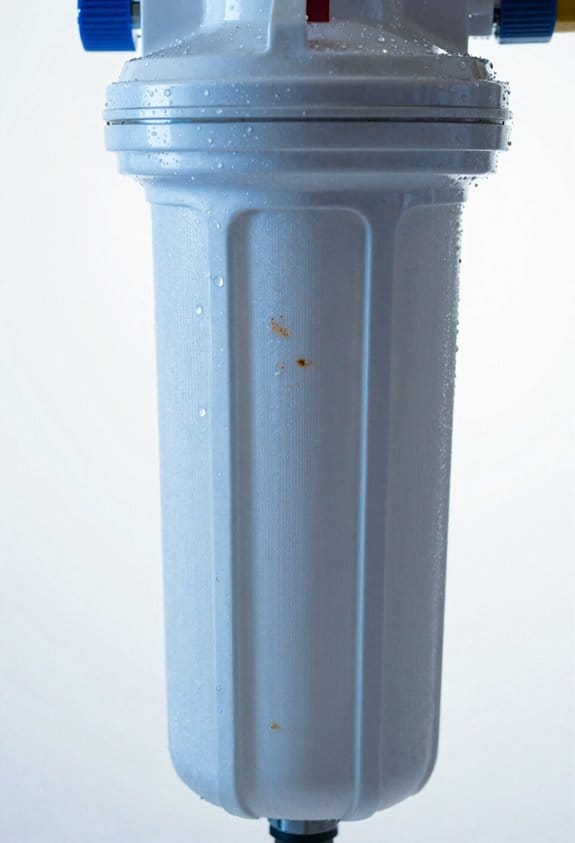
Not every contaminant in your water poses the same threat to your home, which means prioritizing removal efforts can save you money and effort. Lead and sediment rank among the most damaging because they cause plumbing corrosion and appliance wear. Seasonal runoff introduces sand, silt, and debris that clog pipes and fixtures. Chlorine affects skin and hair quality during showers, while rust stains damage laundry and bathroom surfaces. Bacteria growth shortens filter lifespan and compromises water safety. Your specific priorities depend on your water source—well water typically requires different attention than municipal supplies. Testing your water first helps identify which contaminants matter most for your situation, allowing you to choose filtration stages that address your actual needs rather than unnecessary ones.
Installing at Your Main Water Line: Step-by-Step
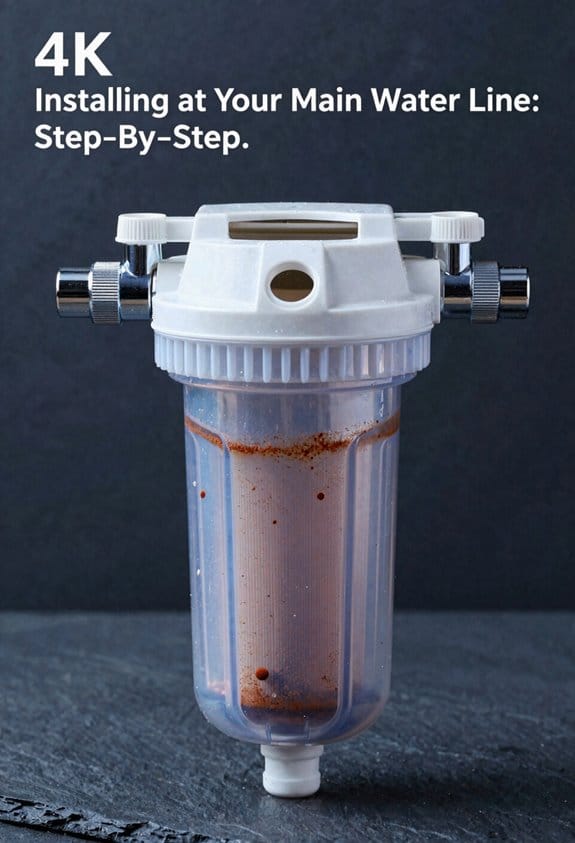
Installing your whole house water filter at the main water line requires careful planning and attention to detail, since this single connection point controls water quality throughout your entire home. Before you begin, I recommend shutting off your main water supply and draining the line to prevent leaks. Next, consider pipe sizing—you’ll need connectors that match your existing plumbing diameter for a secure fit. Follow proper shutoff sequencing by closing valves in order to maintain system integrity. Attach the filter head to your mounting bracket on the wall, then connect supply lines with the included pressure regulator. This regulator protects your system from excessive pressure. Finally, turn your water back on gradually, checking all connections for leaks before resuming normal household use.
Water Filter Maintenance: Replacement, Purging, and Care
Once you’ve successfully installed your whole house water filter at the main water line, your work isn’t finished—you’ll need to keep up with regular maintenance to make sure it continues delivering clean water throughout your home. Replace filter cartridges and O-rings periodically, following your system’s recommended schedule. Purge sediment buildup through the ball valve in spin-down filters to prevent clogs. Apply silicone lubricant to O-rings during replacements, ensuring proper seals. Conduct seasonal checks to monitor water pressure and filter performance. Keep warranty tracking documentation organized, as it covers defects and replacements. These maintenance tasks protect your investment and extend your filter media’s lifespan to one million gallons, guaranteeing consistent water quality for your household.
Why Every Tap Benefits From Whole-House Filtration
While point-of-use filters like pitcher or faucet filters address water quality at a single location, whole-house water filters work differently by treating water at your home’s main entry point, before it branches out to all your taps and appliances. This all-encompassing approach means you’re not limited to filtered water in one room. Every shower, sink, and appliance receives the same high-quality water. You’ll notice reduced water bills because your pipes and water-using appliances experience less buildup from sediment and minerals. Additionally, consistent water pressure flows throughout your home since the multi-stage filtration system maintains peak pressure levels. Rather than installing separate filters at multiple locations, a single whole-house system efficiently protects your entire household while improving water quality everywhere you need it.
Maintenance Issues and Simple Fixes
To keep your whole-house water filter working effectively, you’ll need to perform regular maintenance tasks that prevent common problems like reduced water pressure, slow flow rates, and contaminated water reaching your taps. Seasonal flushing removes accumulated sediment from the pre-filter bowl, which improves water flow and extends cartridge life. You should purge the system quarterly using the spin-down valve. Leak detection is equally important, so inspect connection points and O-rings monthly for visible moisture or drips. Replace worn O-rings with silicone-lubricated versions to maintain proper seals. When you notice decreased pressure or cloudy water, check if cartridges need replacement. These straightforward maintenance steps keep your filtration system operating at peak performance throughout the year.
Frequently Asked Questions
How Long Does a Whole House Water Filter Cartridge Typically Last Before Replacement?
I’d say your cartridge typically lasts up to one million gallons before you’ll need replacement. The filter lifespan depends on water quality and usage. When it’s time for cartridge disposal, I recommend following local guidelines for proper recycling.
Can a Whole House Filter Handle High Water Pressure Without Damage or Leaks?
Yes, I’ve found that whole house filters handle high pressure well. They include pressure regulators and are rated to 75 PSI maximum. I recommend checking seal integrity regularly—silicone lubricant on O-rings maintains pressure relief effectiveness and prevents leaks.
What Is the Cost Difference Between Whole House and Point-Of-Use Filter Systems?
I’ll be brutally honest—whole house systems cost me a fortune upfront, but their installation cost offset by massive maintenance savings absolutely demolished my point-of-use expenses within months.
Does a Whole House Filter Reduce Water Flow Rate or Water Pressure Noticeably?
I’d say you’ll notice minimal flow reduction if the system’s properly installed. Most quality whole-house filters cause negligible pressure drop. The pressure regulator and sediment pre-filter protect against significant flow loss.
Can You Install a Whole House Filter Yourself, or Do You Need Professional Help?
I’ll help you install a whole house filter yourself if you’re handy with basic plumbing. You’ll need to check local codes first, but DIY installation is straightforward with the valve-in-head design and included mounting brackets.