As an Amazon Associate, we earn from qualifying purchases. Some links on this site are affiliate links at no extra cost to you. Our recommendations are based on thorough research and editorial judgment.

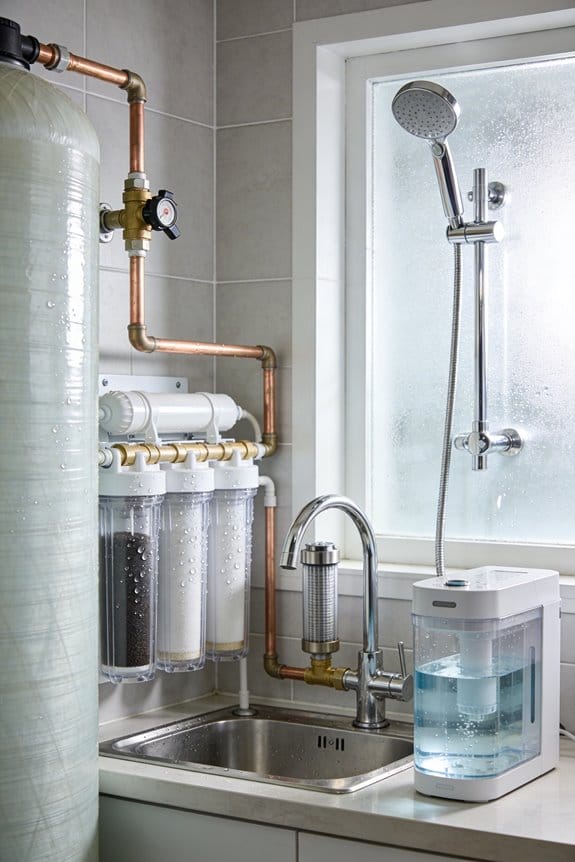
What Flow Rate You Need in a Whole House Water Filter for Your Home Size

Most homes need a service flow rate between 15–20 GPM to handle peak simultaneous water use without sacrificing filtration quality. I recommend measuring your household’s actual flow rate by timing how long it takes to fill a known-volume container at your main water entry point. Your filter’s service flow rating—not its maximum flow—determines whether you’ll maintain consistent pressure during showers, laundry, and kitchen use together. Understanding the difference between service and maximum flow rates, along with your specific fixture demands, helps you select the right system for your home’s needs.
Key Takeaways
- Measure your home’s flow rate using a container and timer at the main water entry point, then calculate GPM using Q = V/t.
- Most households require a minimum service flow rate of 15 GPM to handle peak simultaneous usage from bathrooms, kitchens, and laundry.
- Tank size should match daily consumption: four people need 300–400 gallons daily; larger families require 500+ gallons for adequate capacity.
- Select filters rated at or above your peak demand; slightly oversized systems provide pressure buffering and accommodate future household water needs.
- Service flow rates maintain filtration efficiency for daily use, while maximum flow rates reduce contaminant removal effectiveness during short-term, high-volume demands.
Signs Your Filter Isn’t Delivering Enough Water
When your whole house water filter starts to slow down, you’ll notice it right away—water pressure drops at your faucets, showers don’t flow as strongly as they used to, and filling bathtubs takes longer than normal. This low pressure indicates that your filter media has become fouled with accumulated contaminants, restricting water passage through the system. The slow output you’re experiencing means the filter isn’t delivering adequate flow rate for your household’s needs. Multiple signs reinforce this problem: appliances fill slowly, outdoor hoses lack their usual force, and simultaneous water use in different areas causes noticeable pressure loss. These symptoms suggest your filter requires immediate backwashing or replacement to restore proper service flow rate and prevent further system degradation.
What Your Flow Rate Actually Means (Service vs. Maximum)
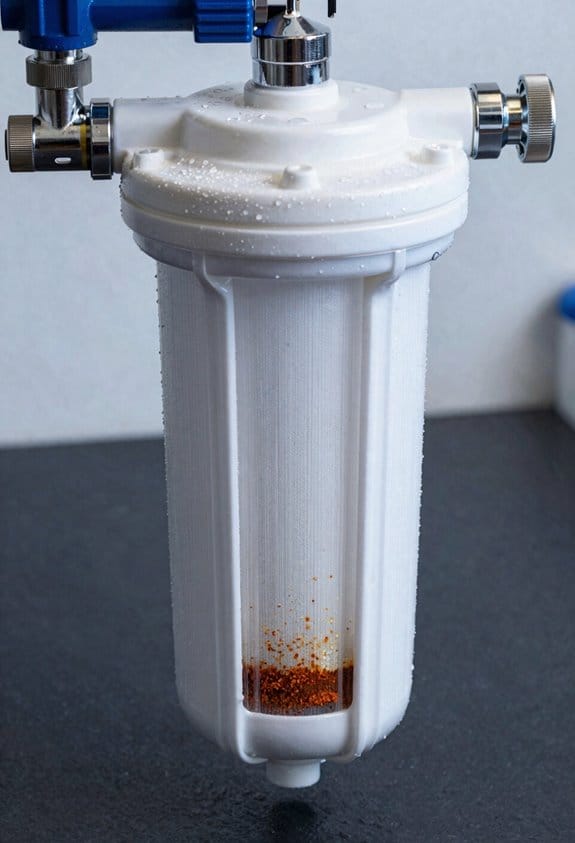
Because manufacturers list different flow rate values for water filters, I need to explain what these numbers actually represent and how they affect your system’s performance. Service flow rate indicates the continuous GPM your filter can handle while maintaining maximum efficiency during extended use like filling tanks or irrigation systems. This rate represents the optimal balance where water spends adequate time contacting filter media for effective contaminant removal. Maximum flow rate, however, shows the highest GPM possible before service limits are exceeded. Operating at maximum flow creates efficiency tradeoffs—you’ll get more water, but filtration quality drops markedly. I recommend using service flow rates for daily operations, reserving maximum flow only for occasional, short-term needs when contaminant removal matters less than water volume.
Calculate Your Home’s Flow Rate in Three Steps
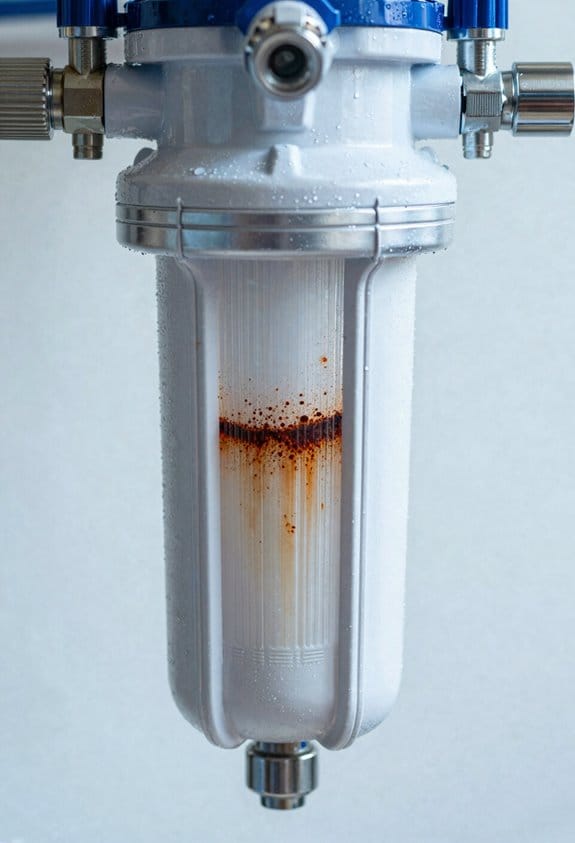
Now that you understand the difference between service and maximum flow rates, it’s time to determine your home’s actual water flow rate so you can select the right whole house filter system. I’ll walk you through simple calculate methods that don’t require special equipment. First, perform household mapping by identifying your main water entry point and locating your meter. Second, use the volumetric measurement method: collect water in a container of known volume, then time how long it takes to fill. Third, convert your results to gallons per minute using the formula Q = V/t, multiplying by 60 to convert from seconds to minutes. These straightforward steps reveal whether your home needs a standard or high-capacity filter system for peak performance.
Match Your Tank Size to Your Daily Demand
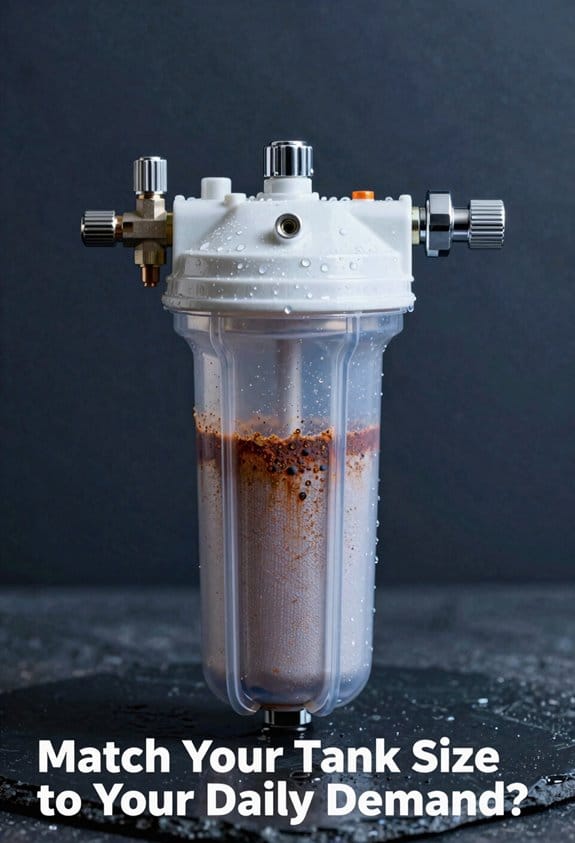
Selecting the right tank size requires understanding how your household’s daily water consumption aligns with the filter system’s capacity to deliver clean water at adequate flow rates. I’ve found that tank sizing depends on your daily demand, which varies based on family size and usage patterns. A household with four people typically uses 300-400 gallons daily, while larger families may need 500+ gallons. Your tank diameter directly determines the cross-sectional area available for filtration, which influences how much water you can process efficiently. I recommend calculating your peak hourly usage, then selecting a tank that supports both your maximum flow rate requirements and continuous service flow rate. This guarantees you’ll have sufficient clean water available when you need it most, without compromising filtration efficiency or system reliability.
Picking the Right Filter Media for Your Flow Rate
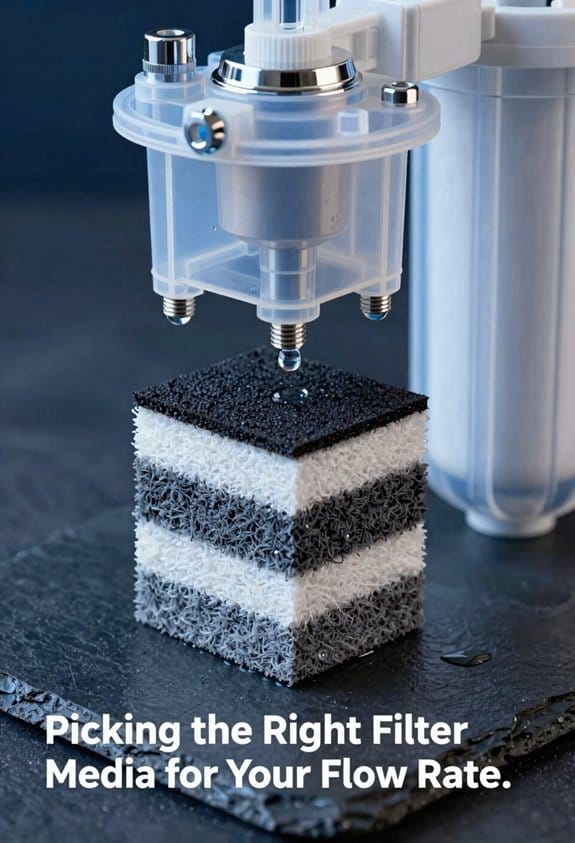
Once you’ve determined your tank size and daily water demand, the next step involves matching your filter media to the flow rate requirements your household needs. Different media types have specific capabilities that determine how much water they can handle effectively. I recommend checking your chosen media’s service flow rate, which tells you the ideal GPM per square foot of filter surface. Media compatibility with your system’s specifications guarantees proper installation and performance. You’ll also want to verify pressure tolerance limits, since exceeding them can damage the media or reduce filtration quality. Consider sand, carbon, or specialized media based on your contaminants and flow demands. Manufacturer guidelines provide exact specifications for each media type, helping you select the best option for your home’s water needs.
Backwash Flow Rate: Why It Matters for Longevity
Because filter media accumulates contaminants over time, backwashing—the process of reversing water flow through your filter—becomes essential for maintaining your system’s performance and extending media lifespan. I recommend understanding that proper backwash flow rates differ markedly from service flow rates, requiring separate calculations based on your specific media type.
When you backwash at correct flow rates, you’re performing critical preventive maintenance that restores your filter’s original condition. This media rejuvenation process flushes trapped particles and contaminants, preventing premature fouling that would otherwise compromise your water quality. Inadequate backwash flow rates leave residual debris embedded in the media, reducing filtration efficiency over time.
Following manufacturer guidelines for your filter media composition guarantees you achieve peak backwash performance. Regular backwashing at specified flow rates directly extends your system’s operational lifespan and maintains consistent water treatment effectiveness throughout your home.
Flow Rate Needs by Room and Appliance
Different areas of your home and specific appliances require varying flow rates to function properly, which means your whole house water filter must deliver adequate water volume to meet these simultaneous demands. Your bathroom demands typically range from 2.5 to 5 GPM when showers and toilets operate together. Kitchen sinks need approximately 2 to 3 GPM for effective use. Laundry requirements consume about 3 to 5 GPM during washing cycles. When you’re running multiple fixtures simultaneously—showering while laundry operates, for example—your filter system must maintain sufficient flow throughout your home. Most households need a minimum service flow rate of 15 GPM to accommodate peak usage periods without sacrificing water pressure or filtration efficiency.
Select Your Whole House Filter by Flow Capacity
Matching your filter system’s flow capacity to your household’s actual water demands guarantees you’ll maintain adequate pressure during peak usage while preserving filtration effectiveness. I recommend selecting a filter rated for your home’s maximum simultaneous water needs, which I calculated from the previous section’s room-by-room analysis. Proper pipe sizing ensures water travels efficiently from your filter to every fixture without pressure drops. Peak buffering—your system’s ability to handle sudden demand spikes—requires adequate flow capacity beyond minimum requirements. When I compare filter options, I verify the GPM rating matches or exceeds my household’s peak demand. This approach prevents compromised water pressure and maintains consistent filtration performance. A slightly oversized filter accommodates future additions while sustaining system reliability throughout extended use periods.
Frequently Asked Questions
How Often Should I Test My Whole House Filter’s Actual Flow Rate?
I’d recommend you perform annual checkups on your filter’s flow rate, with seasonal monitoring during heavy usage periods. This guarantees you’re catching efficiency drops early and maintaining peak system performance throughout the year.
Can I Install Multiple Filters in Series to Increase Overall Flow Capacity?
I’d recommend parallel installation over series connection to increase flow capacity. Series setup actually reduces flow, while parallel looping lets me split water through multiple filters simultaneously, maintaining pressure and boosting overall system throughput effectively.
What Temperature Changes Affect Water Flow Rate Through Filter Systems?
I’ll tell you that temperature effects markedly impact your filter’s performance through viscosity changes. Cold water thickens, increasing resistance and reducing GPM flow, while warm water flows faster but may compromise filtration efficiency.
How Do Water Pressure Fluctuations Impact My Filter’s Performance and Efficiency?
Have you considered how pressure swings affect your filter’s longevity? Pressure variability accelerates cartridge wear, reducing filtration efficiency and lifespan. Inconsistent pressure forces excessive strain on media, compromising your system’s performance and requiring premature replacement.
Is My Current Plumbing Infrastructure Adequate for Upgraded Filter System Demands?
I’ll assess your plumbing compatibility by evaluating your pipe sizing against your upgraded filter’s flow demands. You’ll need adequate diameter pipes to handle increased GPM without pressure loss or system strain.


