As an Amazon Associate, we earn from qualifying purchases. Some links on this site are affiliate links at no extra cost to you. Our recommendations are based on thorough research and editorial judgment.

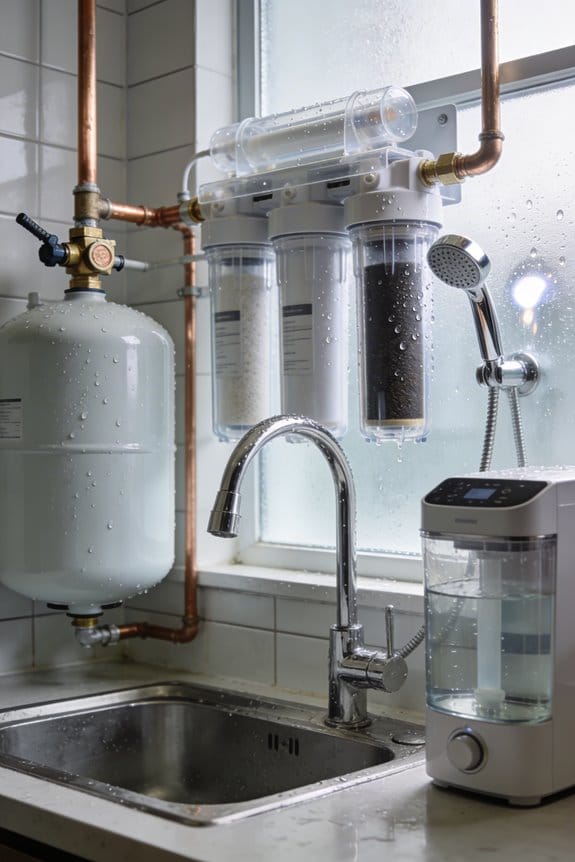
How to Detect a Leak in an Under Sink or Whole House Filter System

I can detect leaks in my under-sink or whole house filter system by watching for visible signs like discolored cabinets, musty odors, water pooling, or higher water bills. I’ll perform quick DIY tests using a pressure gauge on my water meter or adding food coloring near connections to spot leaks. For early warning, I can install moisture sensors under sinks and near water heaters that alert my phone. If these methods don’t reveal hidden leaks, professional equipment like acoustic correlators or thermal imaging becomes necessary to locate problems behind walls or deep in pipes.
Key Takeaways
- Check for discolored cabinets, musty odors, or water pooling around filter housings and pipes.
- Use the dye test: add food coloring near suspected connections to observe movement toward water droplets.
- Monitor your water meter for two hours with all fixtures off to detect hidden leaks.
- Install point sensors or moisture detectors under sinks to receive smartphone alerts when moisture detected.
- Call a professional plumber if leaks are hidden behind walls or require acoustic or thermal imaging detection.
Recognize the Signs: Visible Clues You Have a Leak
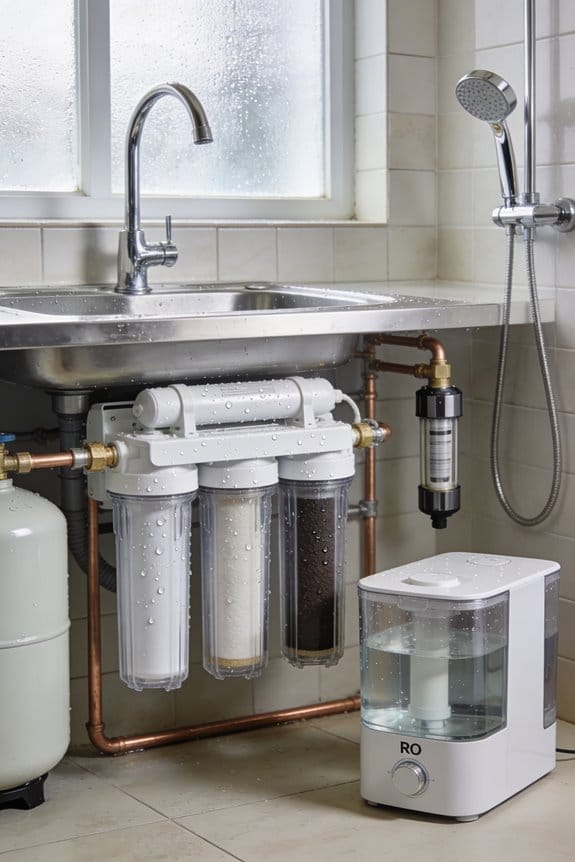
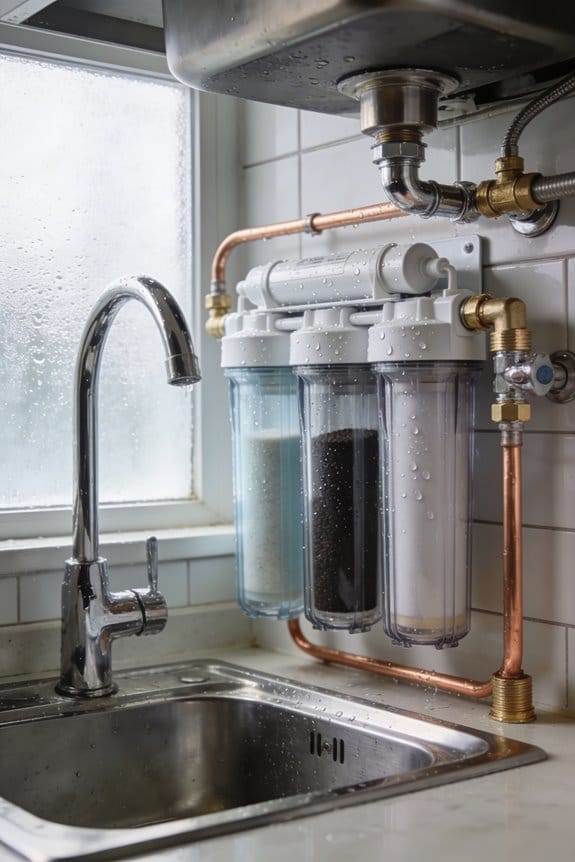
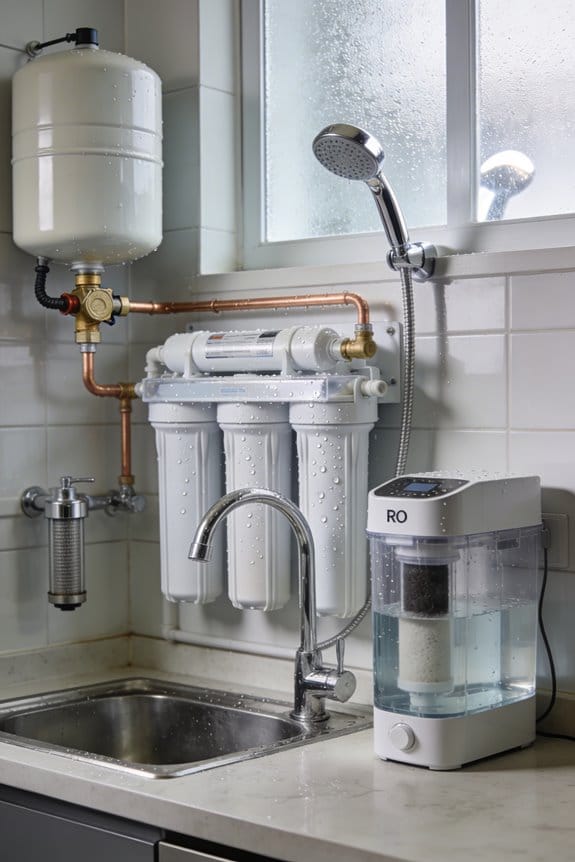
Before you invest in sophisticated detection technology, you can often spot leak problems yourself by looking for common warning signs around your sink or water filtration system. Check your cabinet floors and walls for discolored cabinets, which indicate water exposure over time. A musty odor beneath your sink signals moisture accumulation and potential mold growth. Look for water pooling around pipes or filter housings, and notice if your water bills increase unexpectedly. Inspect visible pipes for corrosion, rust stains, or mineral deposits that suggest leaking water. If you observe soft spots in flooring or peeling paint near your filtration system, these indicate sustained moisture problems. Early detection through visual inspection prevents costly water damage and helps you determine whether professional assessment is necessary.
Quick DIY Leak Tests You Can Do Right Now
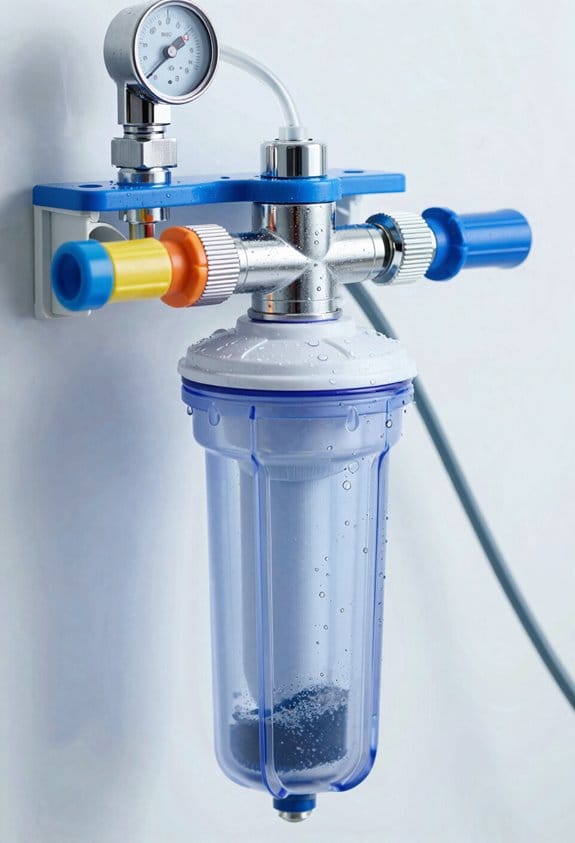
Once you’ve identified suspicious signs like discoloration or musty odors, I can help you perform straightforward tests at home to confirm whether a leak actually exists before calling a professional plumber.
The pressure gauge method involves checking your water meter, then turning off all water fixtures for two hours. If your meter reading changes, you’ve likely got a leak. For under-sink filters, use a dye test by adding food coloring near suspected connection points. If the dye moves toward water droplets, you’ve found your leak source.
You can also inspect visible pipes and joints with a flashlight, looking for moisture accumulation or water stains. These simple tests help you determine whether professional intervention is necessary.
Point Sensors and Moisture Detectors for Early Warning
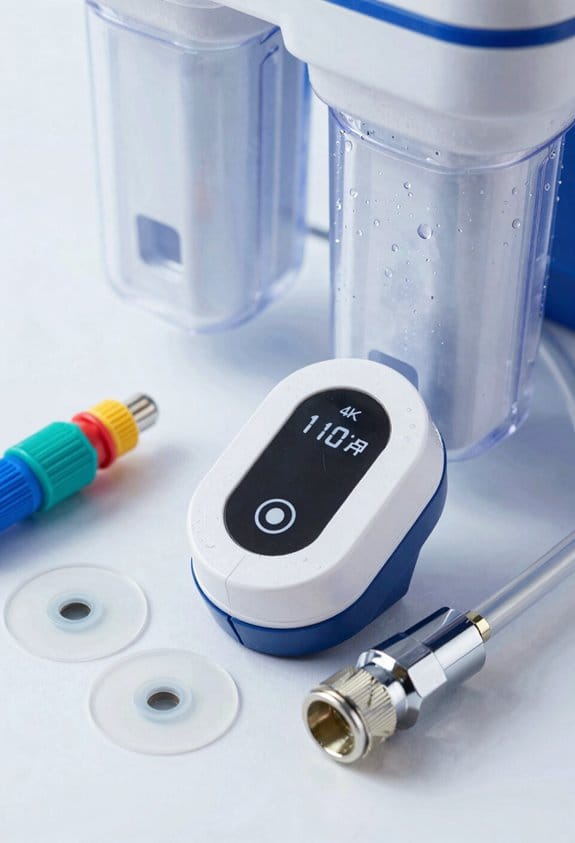
While your DIY tests can confirm whether a leak exists, point sensors and moisture detectors offer continuous protection that works even when you’re away from home or asleep. These devices use electrochemical or capacitive technology to identify moisture before significant damage occurs. Strategic sensor placement under sinks, near water heaters, and along potential leak pathways maximizes detection effectiveness. When moisture reaches the sensors, they trigger alerts on your smartphone or emit audible warnings. Battery maintenance guarantees your detectors stay operational, so check and replace batteries every six to twelve months. Smart detector devices in puck-sized formats monitor specific areas for moisture accumulation, providing peace of mind through constant surveillance that DIY tests simply cannot replicate.
Flow Monitoring: Detecting Leaks Through Water Usage Patterns
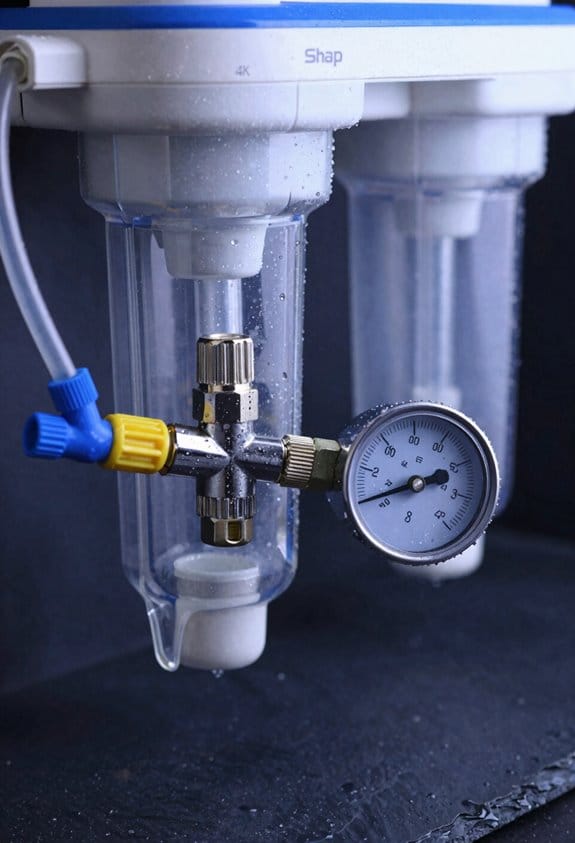
Flow monitoring systems detect leaks by analyzing how water moves through your plumbing, identifying patterns that reveal whether water is flowing normally or continuously leaking somewhere in your system. These systems establish baseline profiling by recording your typical water usage over several weeks, creating a reference point for normal consumption. Once established, the system compares current usage against this baseline, flagging significant deviations that suggest a leak. Seasonal variation also matters—your system learns that summer usage differs from winter patterns. Smart detectors monitor flow rates continuously, distinguishing between sustained leaks and normal demand intervals. When the system identifies unusual water flow persisting during times you’re not using water, it alerts you immediately through your smartphone, enabling quick action before damage occurs.
When Professional Leak Detection Equipment Becomes Necessary
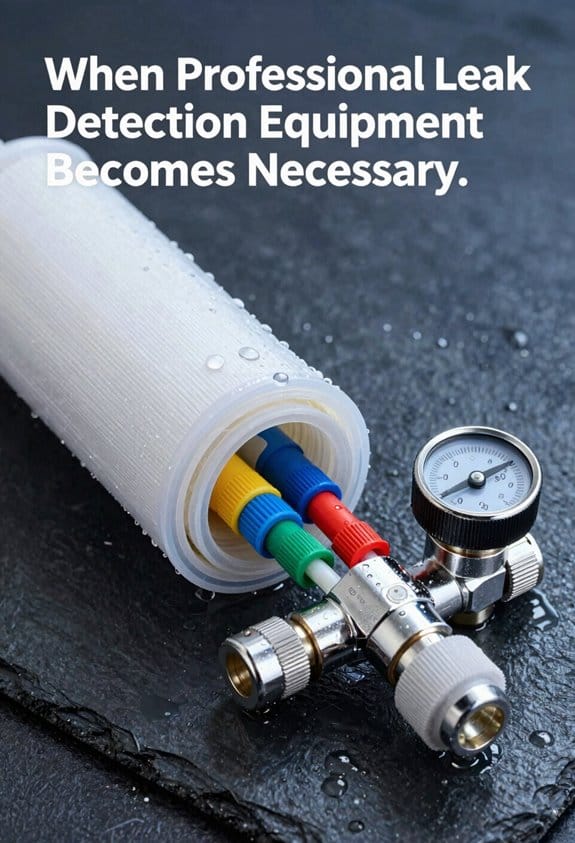
Although basic leak detection methods like monitoring your water meter and looking for visible signs of moisture can catch obvious problems, many leaks hide behind walls, under floors, or deep within your plumbing system where you can’t see them. When standard approaches fail to locate a leak, professional diagnostics become necessary. Plumbers use advanced tracers like helium gas combined with specialized detection equipment to identify hidden leaks with precision. Acoustic correlators listen for water escaping from pipes, while thermal imaging cameras reveal temperature variations indicating moisture. These professional-grade tools pinpoint leak locations accurately, preventing unnecessary demolition and costly damage. If you’ve exhausted basic detection methods without success, consulting a professional guarantees thorough identification and timely repair.
Frequently Asked Questions
How Much Does Professional Leak Detection Equipment Cost for Residential Use?
I’ll be honest—professional leak detection equipment typically runs $300–$1,500 for residential use. You’ve got budget-friendly DIY kits starting around $50–$200, or you can explore rental budgets through local equipment shops for short-term needs.
Can Moisture Sensors Prevent Water Damage Before Leaks Cause Structural Problems?
Yes, moisture sensors work like an early warning system that stops damage before it starts. I’d recommend placing them strategically for early detection and preventive maintenance, which’ll protect your home’s structural integrity effectively.
What Is the Difference Between Point Sensors and Flow Monitoring Systems?
Point sensors I place strategically in leak-prone spots for immediate alerts, while flow monitoring systems I use to track overall water usage patterns. Point sensors offer faster response times; flow systems detect sustained leaks over time.
How Often Should I Test My Under-Sink Filter System for Leaks?
Your under-sink filter system’s health hinges on consistent vigilance. I’d recommend weekly inspections to catch problems early, coupled with seasonal testing for thorough pressure checks and visual assessments ensuring peak performance year-round.
Are Smart Leak Detectors Compatible With All Plumbing Systems and Filter Types?
Smart leak detectors aren’t universally compatible. I’d recommend checking a compatibility checklist with your filter manufacturer before purchasing. You’ll also want to verify battery requirements match your system’s power capabilities and monitoring needs.