As an Amazon Associate, we earn from qualifying purchases. Some links on this site are affiliate links at no extra cost to you. Our recommendations are based on thorough research and editorial judgment.

How Often You Need to Change the Filters in an Under Sink System

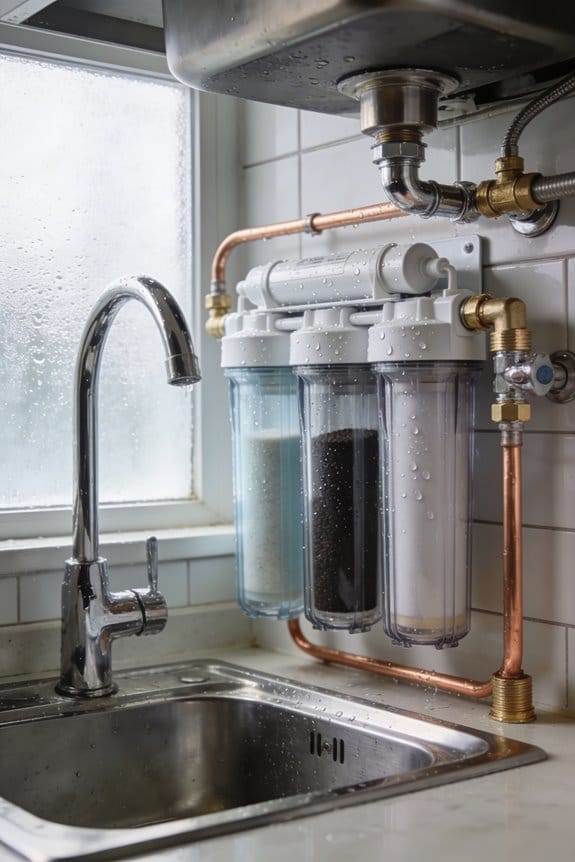
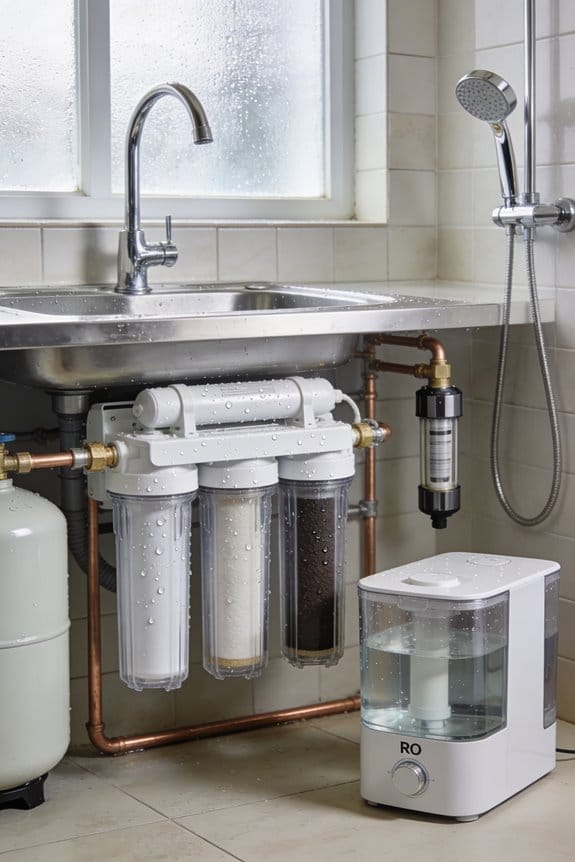
Most under-sink filters need replacing every six to twelve months, though your household’s water usage and local water quality markedly affect this timeline. Carbon filters typically last six to twelve months, while sediment filters last six to nine months. Reverse osmosis membranes can last around two years. You’ll know it’s time to replace them when you notice reduced water flow, cloudiness in your tap water, or unpleasant odors. Understanding which specific filter component you’re servicing helps determine the right replacement schedule for your system.
Key Takeaways
- Most under-sink filters require replacement every six to twelve months, though specific timelines vary by filter type.
- Carbon filters typically last six to twelve months, while sediment filters last six to nine months before degradation.
- Higher household water usage, poor source water quality, and well water accelerate filter saturation and require more frequent changes.
- Replace filters immediately if you notice reduced water flow, cloudiness, odors, or visible sediment in your tap water.
- Commercial systems need replacement every four to six months due to higher daily water demand compared to residential use.
How Often Should You Replace Under-Sink Filters?
Most under-sink water filters need replacement every six to twelve months, though the exact timing depends on several factors specific to your household. Your filter lifespan varies based on water usage and quality in your area. Families using more water will need replacements sooner than smaller households. If your neighborhood has poor water quality, you’ll replace filters more frequently. I recommend setting replacement reminders on your calendar to maintain consistent maintenance. Different filter types have varying lifespans: carbon filters typically last six to twelve months, while sediment filters last six to nine months. Checking your owner’s manual provides manufacturer-specific intervals for your system. Monitoring water flow and using chlorine test strips helps you determine when replacement is necessary, ensuring your water stays clean and safe.
Why Water Quality and Usage Affect Replacement Frequency
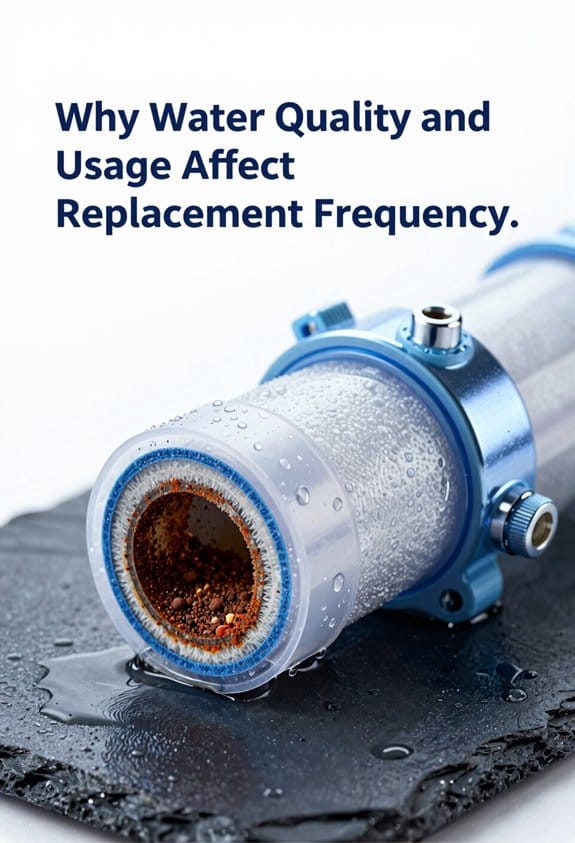
Your water quality and household usage directly determine how quickly your under-sink filters become saturated and lose effectiveness. If you have a larger family or higher water consumption, your filters work harder and clog faster, requiring replacements every six months or less. Conversely, smaller households with lower usage can extend intervals to twelve months. Poor water quality from your neighborhood or well also accelerates filter degradation. I’d recommend source testing to identify contaminants in your supply, which helps predict replacement timing. Your household habits matter considerably—frequent water use combined with sediment-heavy or chemically-treated water means more frequent changes. Monitor your specific situation rather than following generic timelines, ensuring you maintain peak water quality year-round.
Signs Your Filter Needs Replacing Right Now
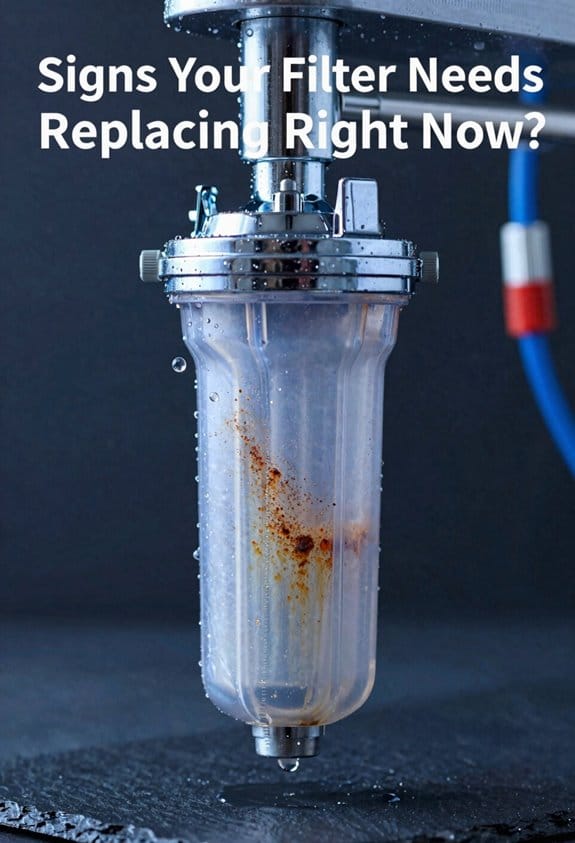
Rather than waiting for your scheduled replacement date, I recommend watching for specific warning signs that indicate your filter has become too saturated to work properly. Reduced water flow is one of the clearest indicators that your filter needs changing. You might also notice visible sediment in your tap water, which suggests the filter can’t trap particles anymore. Odor detection is another important signal, especially unpleasant smells coming from your faucet. Additionally, if you observe increased appliance repairs or spotting on dishes, your filter likely isn’t removing contaminants effectively. You can use chlorine test strips to detect chlorine breakthrough, meaning your carbon filter has stopped working. When you notice any combination of these signs, don’t delay replacement.
Which Under-Sink Filter Type Lasts Longest?
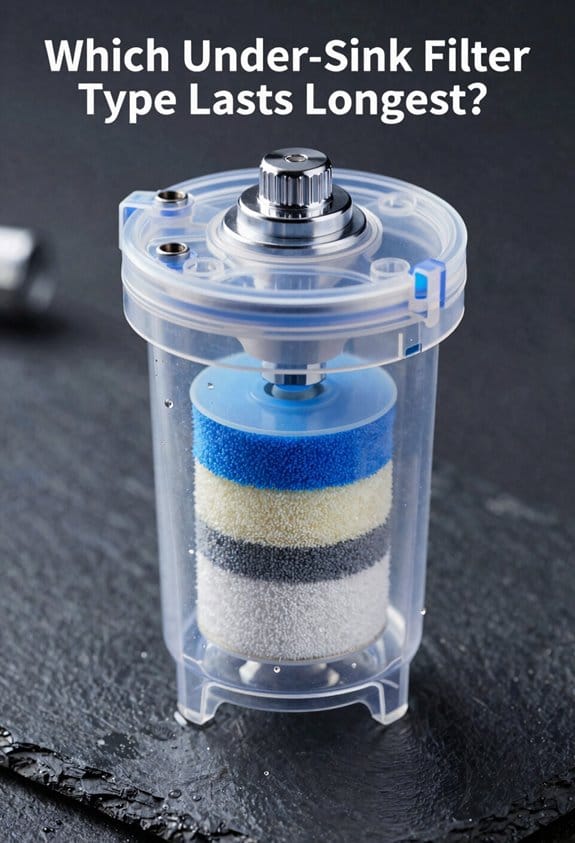
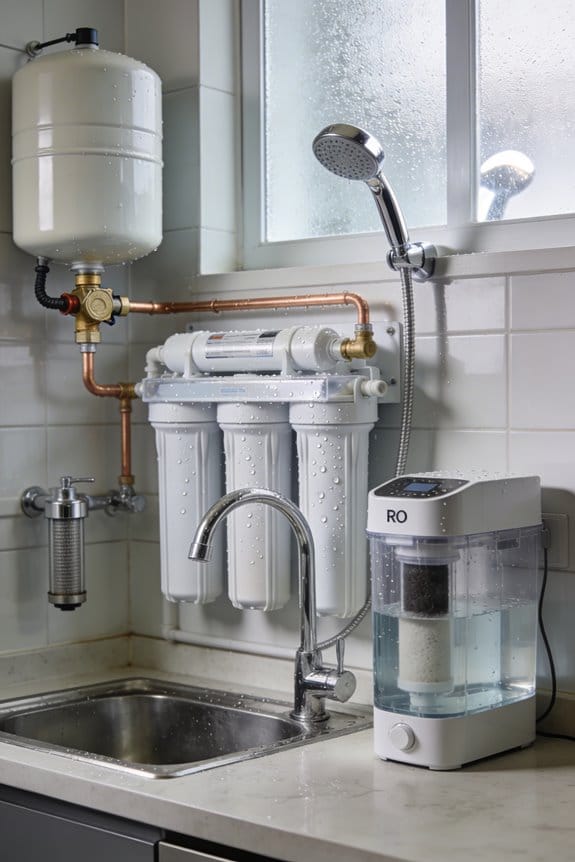
Comparing the lifespans of different under-sink filter types reveals that reverse osmosis membranes outlast other common filter varieties, typically lasting around two years before requiring replacement. In contrast, activated carbon filters generally need changing every six to twelve months, making them shorter-lived than their reverse osmosis counterparts. Sediment prefilters fall somewhere in the middle, lasting six to eighteen months depending on your water quality and usage patterns. Postfilters, which work with reverse osmosis systems, endure approximately one year per one thousand gallons filtered. Understanding these differences helps you plan your maintenance schedule effectively. Since reverse osmosis membranes provide the longest service life, they represent a more economical choice for households seeking less frequent replacements, though initial system costs may be higher than simpler filter types.
Do Residential and Commercial Filters Follow Different Schedules?
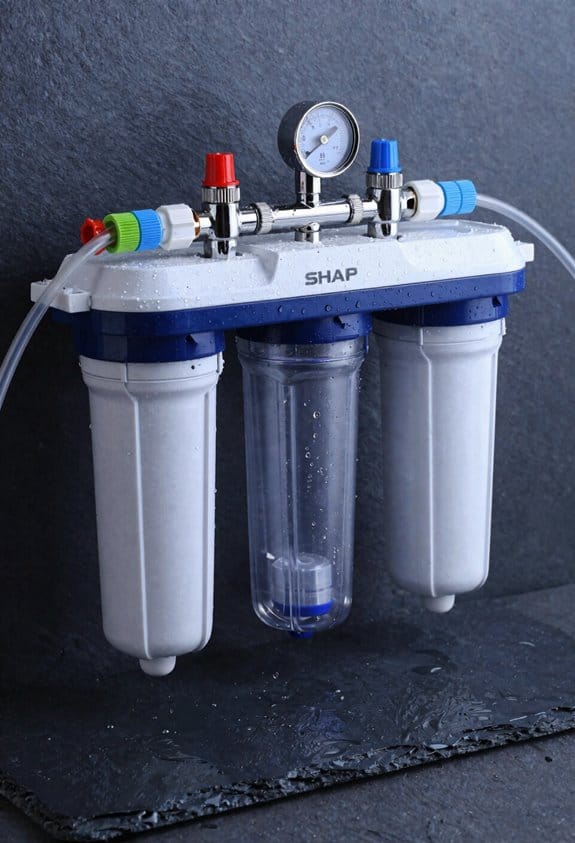
Because water usage and contamination levels differ markedly between home and business environments, residential and commercial under-sink filters operate on distinctly different replacement schedules. I’d recommend that you replace residential filters every six to twelve months, while commercial schedules demand changes every four to six months due to higher water demand and contaminant exposure.
Commercial systems process considerably more water daily, causing filters to saturate faster. Additionally, warranty differences exist between residential and commercial products. Many commercial filters carry shorter warranty periods that reflect their accelerated usage patterns. Residential warranties often extend longer since homeowners use less water overall.
Understanding your setting’s specific requirements helps you maintain peak water quality and system performance. I suggest consulting your filter’s manual for exact replacement intervals tailored to your environment.
Monitor Your Filter Performance Between Replacements
Even though replacement schedules provide a useful guideline, I’d recommend that you actively monitor your filter’s performance throughout its lifecycle to catch problems before they develop. Start with flow tracking—notice whether water pressure decreases noticeably from your tap, since reduced flow indicates a clogged or saturated filter. Performance logging helps you document changes over time, allowing you to identify patterns specific to your household’s water usage and quality. Watch for signs like cloudiness, odd odors, or discolored water, which signal contamination breakthrough. You can also use chlorine test strips to detect when carbon filters stop working effectively. By staying alert to these indicators, you’ll know when replacement is truly necessary rather than simply following calendar dates.
Build a Replacement Calendar You’ll Actually Follow
Most homeowners find that monitoring performance alone isn’t enough to stay on top of filter replacements, so I recommend creating a specific replacement calendar tailored to your household’s situation. I suggest using color coded calendaring systems where you mark replacement dates in distinct colors for each filter type. Set monthly reminders on your phone or email to check your calendar, ensuring you don’t miss important dates. By recording your installation dates and calculating replacement timelines based on your household’s water usage, you’ll develop a personalized schedule. This approach transforms filter maintenance from a forgotten task into a manageable routine that protects your water quality and system performance consistently.
How Dirty Filters Damage Water Quality and Appliances
Neglecting filter replacements consistently leads to serious consequences that extend beyond your faucet, affecting both the water you drink and the appliances in your home. When filters become saturated with contaminants, bacterial proliferation can occur, compromising your water’s safety and taste. Additionally, clogged filters allow mineral scaling to build up in your pipes and appliances like dishwashers and coffee makers, forcing them to work harder and wear out faster. This accelerated deterioration means you’ll face expensive repairs or replacements sooner than expected. Poor water quality from dirty filters also reduces your system’s effectiveness at removing harmful substances. By maintaining a consistent replacement schedule, you’ll protect both your health and your household investments while ensuring your water remains clean and safe for daily use.
Frequently Asked Questions
What Is the Average Labor Cost to Professionally Replace Under-Sink Water Filters?
I’d tell you that when you’re hiring a technician to replace your under-sink filters, you’re typically looking at around $138 in labor costs. Technician hourly rates vary, but installation fees generally fall within this average range for standard replacements.
Can I Group Multiple Filter Replacements Together to Save on Service Costs?
Yes, you can save money through batch scheduling. Since labor averages $138 per visit, I’d recommend grouping your whole-house and under-sink replacements for shared maintenance. This consolidates trips and reduces overall service costs substantially.
What Warranty Coverage Do Culligan RO Systems Include for Membranes?
I’ll tell you that Culligan RO systems include a one-year warranty plus an additional year on membranes. That’s your warranty duration for membrane protection. You’re looking at solid prorated coverage there.
How Can Chlorine Test Strips Help Determine When Filters Need Replacement?
I’ll use chlorine test strips like a detective hunting for clues in your water. Through strip calibration and chlorine monitoring, I’ll detect when your filter’s effectiveness fades, signaling it’s time for replacement.
How Often Should Alkalizers Be Replaced in Under-Sink Filtration Systems?
I’d recommend replacing your alkalizer every four years to maintain ideal pH stability. This extended alkalizer lifespan means you’ll enjoy consistently balanced water quality without frequent replacements, making it a cost-effective component of your system.