As an Amazon Associate, we earn from qualifying purchases. Some links on this site are affiliate links at no extra cost to you. Our recommendations are based on thorough research and editorial judgment.

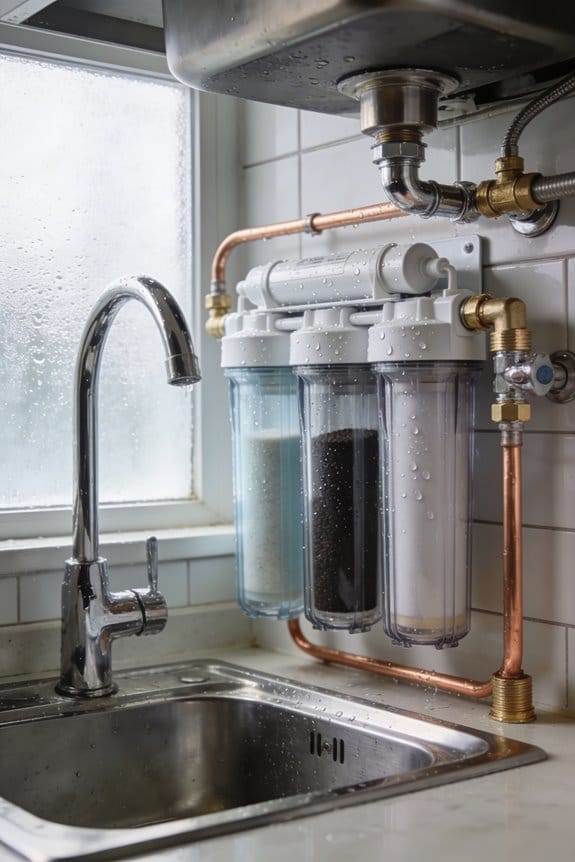
What Is the Difference Between a 3-Stage and 5-Stage Under Sink Filter

A 3-stage under-sink filter removes sediment, chlorine, and heavy metals through three core filtration steps, while a 5-stage system adds extra carbon and refinement stages that provide marginal taste improvements but don’t markedly boost overall contaminant removal compared to the simpler design. The 3-stage costs less upfront, installs easier, and requires less maintenance. However, 5-stage systems offer enhanced protection for your membrane over time. Understanding which suits your specific water quality and budget takes a closer look.
Key Takeaways
- 3-stage systems are simpler and more affordable ($120–$400 upfront, $60–$150 annually) with easier installation and maintenance requiring fewer cartridge replacements.
- 5-stage systems add extra carbon filtration for enhanced taste refinement and membrane protection, but don’t significantly improve overall contaminant removal performance.
- 3-stage units are more compact (4.7 x 14.6 x 14 inches) and fit tighter cabinet spaces compared to bulkier 5-stage configurations.
- Both remove heavy metals equally well, eliminating barium and strontium at 100% rates; 5-stage’s extra carbon mainly reduces membrane fouling burden over time.
- Flow rate differs by stage count: 3-stage non-RO systems achieve ~1.01 GPM, while single-stage filters reach 1.5–3.0 GPM due to less filtration work.
What Makes 3-Stage and 5-Stage Filters Different
When you’re shopping for an under-sink water filter, you’ll notice that manufacturers offer both 3-stage and 5-stage systems, and while they might sound similar, they’re actually quite different in how they work. The 3-stage setup uses sediment, carbon, and reverse osmosis or ultra-filtration stages. The 5-stage system adds an extra carbon block and post-taste refining filter. This means 5-stage systems provide additional filtration layers, though not necessarily superior results. Both follow filter branding standards for quality assurance. Material compatibility matters when choosing between them, since different housings accommodate various filter cartridge types. The extra stages in 5-stage systems focus on protecting the membrane and refining taste, while 3-stage systems deliver reliable performance at lower costs and complexity.
Contaminant Removal: 3-Stage vs. 5-Stage Performance
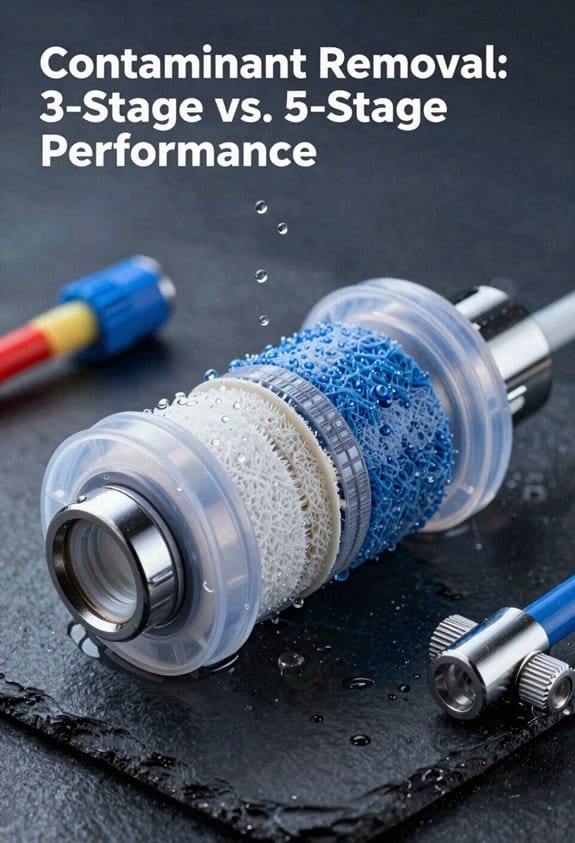
Because both systems use different filtration sequences, their ability to remove contaminants varies in meaningful ways. Three-stage filters excel at removing sediment, chlorine, and lead through their sediment, carbon, and membrane stages. They achieve notable fluoride efficacy and reduce nitrate reduction by approximately 23 percent. Five-stage systems enhance pre-reverse osmosis filtration with an additional carbon block, which marginally reduces the burden on the main membrane. However, five-stage systems don’t markedly outperform four-stage setups in overall contaminant removal. Both configurations effectively eliminate barium and strontium at 100 percent rates. The five-stage’s extra carbon primarily refines residual taste rather than dramatically improving contaminant elimination, making the performance difference less substantial than the stage count suggests.
Cost Comparison: Upfront and Annual Filter Expenses
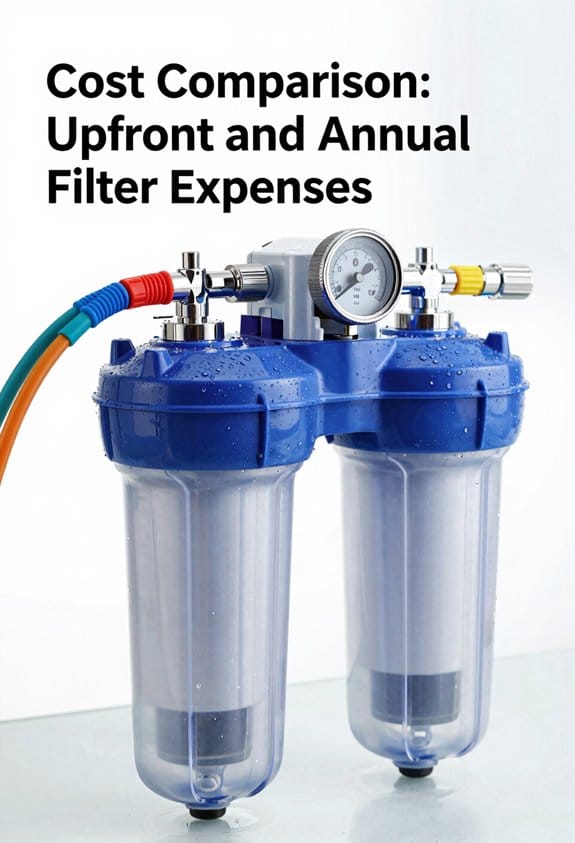
Most 3-stage under-sink filters require an initial investment between $120 and $400, depending on the specific model and whether it includes a reverse osmosis membrane. Annual filter replacement costs typically range from $60 to $150, making maintenance affordable for most households.
5-stage systems generally cost more upfront but don’t provide superior performance compared to 4-stage models. When evaluating replacement schedules, you’ll find that both systems require cartridge changes at similar intervals, usually every 6 to 12 months depending on water quality and usage.
Warranty differences between the two often favor 3-stage filters, which frequently include longer coverage periods due to simpler designs. However, 5-stage systems may offer extended warranties that justify their higher initial cost for some consumers seeking additional protection.
Installation and Maintenance: Which Is Easier?
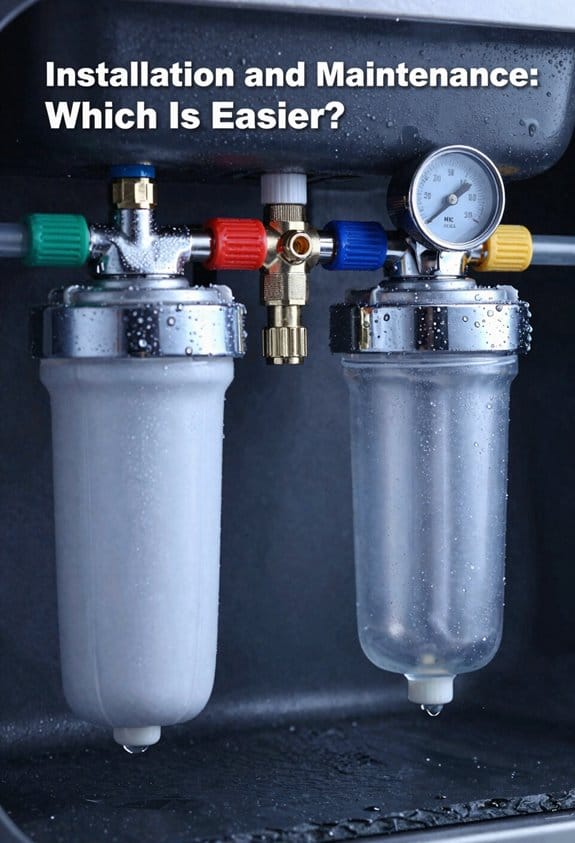
Beyond the financial considerations of filter costs, understanding how simple or complex installation and maintenance are can greatly influence your choice between 3-stage and 5-stage systems.
I’ve found that 3-stage under-sink filters are considerably easier to install than their 5-stage counterparts. You’ll need only basic wrench tools and can typically complete installation in under an hour without professional help. The simpler design means fewer connection points where problems might occur.
Maintenance follows the same straightforward pattern. Filter cartridges twist in and out easily on both systems, but the 3-stage requires replacing fewer components during its filter lifespan. With five stages, you’re managing more cartridges and more frequent replacements, which translates to increased maintenance time and complexity. This simplicity makes 3-stage systems ideal if you prefer minimal hands-on upkeep.
Flow Rate: Does Your Water Pressure Matter?
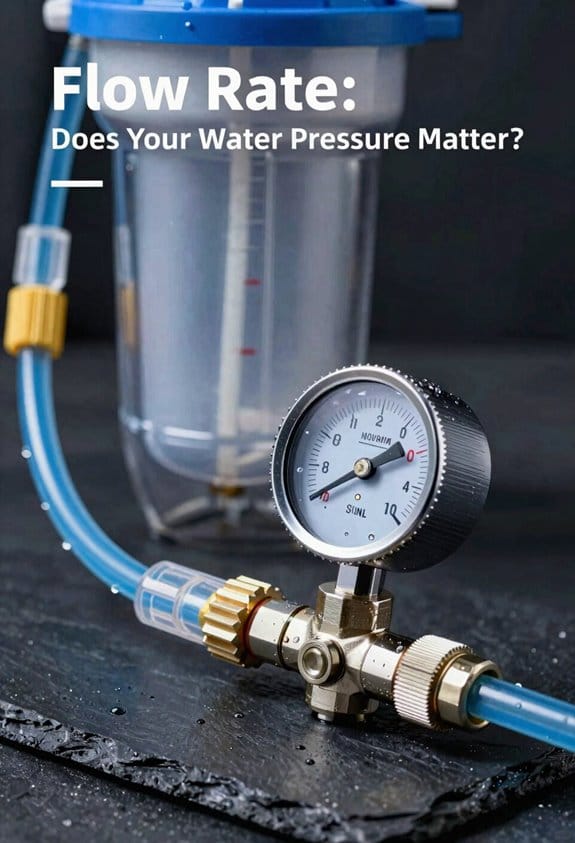
When you’re deciding between a 3-stage and 5-stage under-sink filter, the flow rate—measured in gallons per minute (GPM)—matters more than you might think, and it’s directly tied to your water pressure. A 3-stage non-RO system typically achieves 1.01 GPM, which is roughly half your standard faucet flow. Under-sink models generally flow between 1.0 and 2.0 GPM, while single-stage filters reach 1.5 to 3.0 GPM because they require less filtration work.
Your pipe diameter and pressure regulator influence these rates markedly. Multi-stage systems slow water delivery due to finer filtration layers. The 5-stage maintains similar rates to 4-stage RO setups, so you won’t sacrifice performance choosing between them based on flow alone.
Heavy Metals and Dissolved Solids: Which System Wins?
Heavy metals like lead, uranium, and barium pose serious health risks, and dissolved solids—minerals that remain dissolved in water—affect both taste and safety, making the choice between 3-stage and 5-stage systems crucial for your household. The 3-stage system eliminates barium and strontium at 100% in tested models, while also removing uranium and reducing copper by 99.39%. However, the 5-stage system excels through enhanced metal sequestration, featuring an additional carbon block that reduces membrane fouling. This extra filtration stage protects the RO membrane by capturing more heavy metals and dissolved solids before they reach it. While both systems perform admirably, the 5-stage offers superior protection against mineral buildup and contaminant accumulation over extended use periods.
RO vs. Non-RO: Does Technology Type Trump Stage Count?
While the number of filtration stages matters, the fundamental technology you choose—reverse osmosis (RO) or non-RO filtration—often has a more significant impact on what your water system can actually remove. A 3-stage non-RO system retains beneficial minerals and maintains your water’s pH, making it ideal if you prioritize system compatibility with your plumbing. However, RO systems excel at removing up to 99.99% of contaminants, including heavy metals and dissolved solids. Consider your warranty terms carefully; RO systems typically require tank replacement, while non-RO filters need simpler cartridge changes. Ultimately, your choice between RO and non-RO technology determines performance far more than adding extra stages to either system.
3-Stage or 5-Stage: Which Fits Your Home and Budget?
Since choosing between a 3-stage and 5-stage under-sink filter depends on your specific needs and financial situation, I’ll help you evaluate what makes sense for your household. Your water chemistry determines which system works best; if you’re concerned mainly about sediment and chlorine, a 3-stage handles that effectively at $120–$400. However, if your water contains heavy metals or dissolved solids, a 5-stage provides enhanced filtration. Space requirements matter too—3-stage units are compact at 4.7×14.6×14 inches, fitting tight cabinets easily. Budget-conscious homeowners benefit from 3-stage systems, which cost less upfront and require affordable annual maintenance around $60–$150. Consider your water quality report and available under-sink space before deciding, since both systems eliminate major contaminants reliably.
Frequently Asked Questions
How Long Do Filter Cartridges Typically Last Before Requiring Replacement?
I’d say most filter cartridges last 6-12 months depending on water quality and usage. Your replacement frequency depends on cartridge lifespan—I’d check your system’s manual, but annual replacements are typical, costing $60–$150 yearly.
Can a 3-Stage Filter Remove Bacteria and Colloids From Tap Water?
I’ll tell you that yes, a 3-stage filter can remove bacteria and colloids. The ultra-filtration stage reduces bacteria and colloids effectively, though you’ll want bacterial testing to confirm your specific water’s contaminant levels for colloid filtration performance.
What Is the Environmental Impact of Water Waste in RO Systems?
I’ve found that RO systems waste roughly three gallons for every one gallon produced. This water discharge markedly increases your carbon footprint, making non-RO 3-stage filters environmentally friendlier alternatives.
Are Twist-In Filter Cartridges Compatible Across Different 3-Stage and 4-Stage Brands?
I can’t guarantee twist-in cartridge compatibility across different brands. You’ll need to check your system’s specific cartridge sizing and threading specifications—they’re often proprietary, so I’d verify before purchasing replacement filters.
Does a Non-Ro 3-Stage Filter Preserve Beneficial Minerals Better Than RO?
Yes, I’d say a non-RO 3-stage filter preserves beneficial minerals better than RO systems. You’ll notice improved mineral retention and taste enhancement since non-RO doesn’t strip dissolved solids like reverse osmosis does.