As an Amazon Associate, we earn from qualifying purchases. Some links on this site are affiliate links at no extra cost to you. Our recommendations are based on thorough research and editorial judgment.

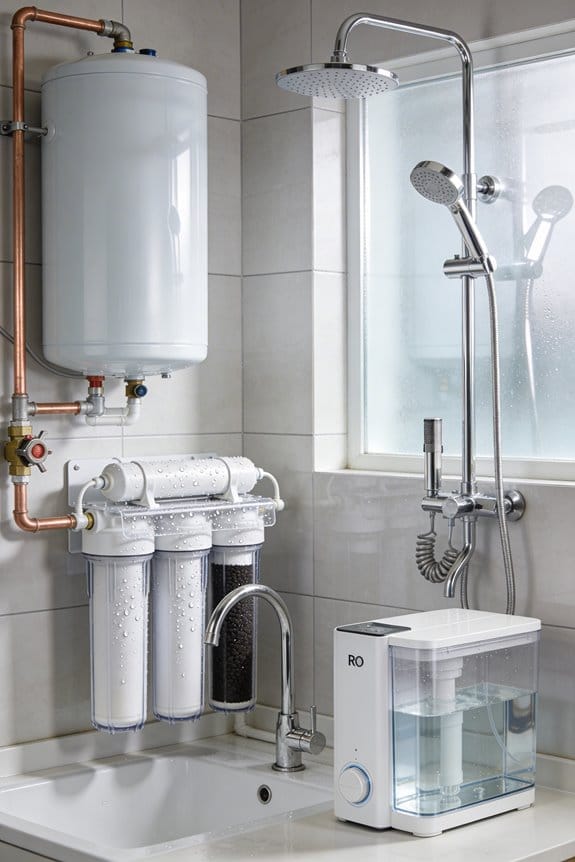
How Long a Shower Filter Cartridge Lasts Before Needing Replacement

Your shower filter cartridge typically lasts three to twelve months, depending on several factors. Water quality matters considerably—hard or heavily chlorinated water depletes filters faster. Household size and shower frequency also impact lifespan; a family of four usually replaces cartridges around six months, while single residents might extend them to twelve months. Different filter types vary too: KDF filters last longest at up to twelve months, while carbon filters average three to six months. Understanding your specific situation reveals exactly when replacement becomes necessary.
Key Takeaways
- Typical shower filter cartridges last 3–12 months, with most households replacing them around 6 months.
- KDF-55 filters offer the longest lifespan at up to 12 months; carbon filters last 3–6 months.
- Hard water, heavy chlorination, and frequent use can shorten cartridge life to just 3–4 months.
- Warning signs include reduced water pressure, chlorine smell, discolored water, and visible sediment on cartridges.
- Routine rinsing every 2–4 weeks and vinegar soaks every 2–3 months extend filter cartridge lifespan.
How Long Shower Filter Cartridges Actually Last: 3–12 Months Explained
While you might assume that once you’ve installed a shower filter cartridge, you won’t need to think about it for years, the reality is quite different. Most cartridges last between 3 and 12 months, depending on the filter type and your water quality. Carbon filters typically last 3–6 months, while KDF-55 filters can reach 12 months. Your household size and shower frequency greatly impact lifespan; a family of four should expect replacement around the 6-month mark. When considering installation tips, simply follow your filter’s manual for proper setup. Regarding cost comparison, investing in a higher-quality filter initially may reduce replacement frequency, ultimately saving money despite higher upfront expenses.
Water Quality, Usage, and Household Size: What Really Cuts Filter Life
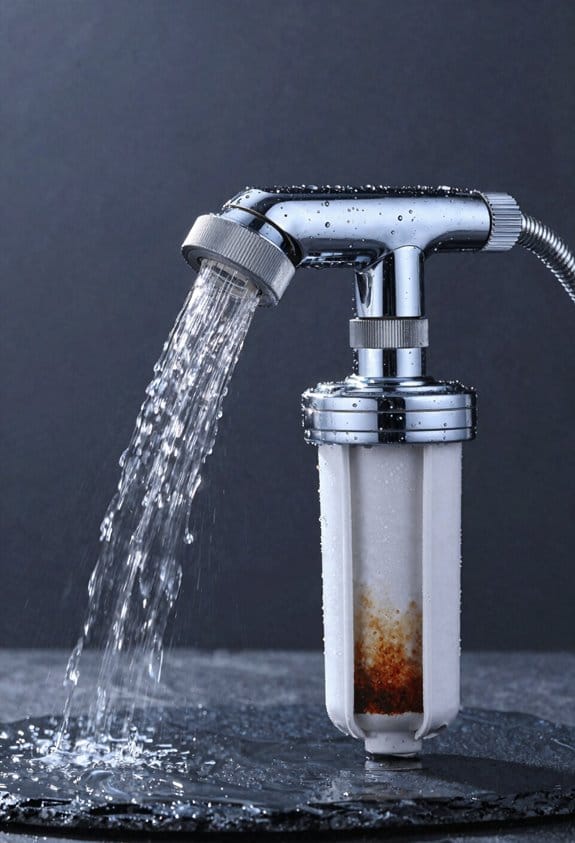
The reality of filter replacement isn’t one-size-fits-all, because three major factors—water quality, how often you shower, and how many people live in your household—directly determine how quickly your cartridge becomes saturated with contaminants. Your water source matters greatly; hard water or heavily chlorinated supplies overwhelm filters faster than clean water does. Usage patterns reveal another vital element: a family of four taking daily showers depletes a filter in roughly six months, while a single person might stretch cartridge life to twelve months. Shower frequency compounds these effects, as each additional shower accelerates saturation. Understanding your household density helps predict replacement timing. When you combine high water hardness, frequent shower usage, and multiple residents, you’re looking at three to four month intervals rather than the typical six-month guideline.
5 Signs Your Shower Filter Needs Replacement Now
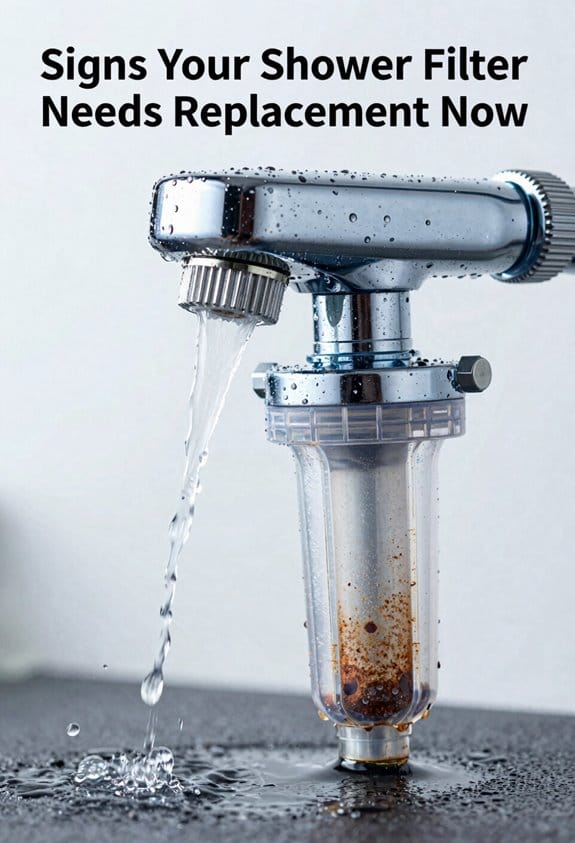
Rather than waiting for a calendar reminder, your shower filter itself will tell you when it’s time for a new cartridge through several clear warning signs. Reduced water pressure is often the first clogged indicator you’ll notice, signaling that sediment and contaminants have accumulated inside the filter. Pay attention to odor detection—if your water starts smelling like chlorine again or develops an unpleasant musty scent, the filter’s effectiveness has declined. You might also observe discolored water or notice that your skin feels less clean after showering. Visible sediment on the cartridge or a color change in the filter material itself confirms saturation. When you spot any of these signs, replacement can’t wait, as expired filters no longer remove harmful contaminants effectively.
Maintenance Habits That Extend Your Filter’s Lifespan
Regular maintenance habits can markedly extend your shower filter’s lifespan, helping you get the most value from your investment. I recommend routine rinsing of your cartridge every two to four weeks under cold water for thirty to sixty seconds, which prevents sediment buildup and maintains water flow. Additionally, deep cleaning your filter every two to three months using vinegar soaks proves highly effective at removing mineral deposits and bacteria. Simply soak your filter head in a vinegar-water solution for thirty minutes to one hour, clearing stubborn blockages that restrict performance. These straightforward practices markedly delay saturation, keeping your filter functioning most effectively longer. By committing to consistent maintenance, you’ll notice improved water pressure, better filtration effectiveness, and ultimately extend your cartridge’s useful life considerably beyond the standard replacement timeline.
KDF vs. Carbon vs. Vitamin C: Which Replacement Filter Lasts Longest
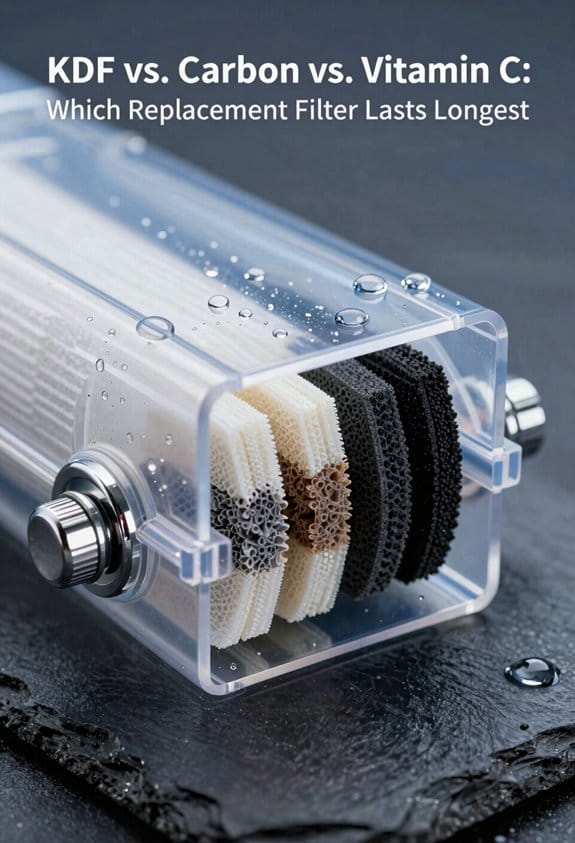
While consistent maintenance keeps your current filter performing well, understanding which filter type you’re using matters greatly because different materials have vastly different lifespans. KDF longevity generally extends 6-12 months, making it a durable choice for most households. Carbon adsorption filters typically last 3-6 months since they saturate faster when removing chlorine and odors. Vitamin C filters are the shortest-lived option, lasting only 2-3 months because they’re specialized for specific contaminant removal. Multi-stage filters combining KDF or carbon offer moderate lifespans of 3-6 months. Your water quality, shower frequency, and household size influence these timelines markedly. Harder, more chlorinated water reduces any filter’s effectiveness faster. Choosing KDF means fewer replacements yearly, while carbon provides reliable mid-range performance and affordability.
Frequently Asked Questions
What Health Risks Occur if I Use an Expired Shower Filter Cartridge?
Studies show expired filters lose 40% effectiveness within weeks. You’ll face skin irritation from chlorine exposure and potential respiratory issues from inhaled contaminants. I’d recommend replacing cartridges every 3-6 months for peak protection.
How Often Should I Rinse My Shower Filter Cartridge Between Replacements?
I’d recommend you rinse your cartridge every 2-4 weeks under cold water for 30-60 seconds as part of your maintenance schedule. This regular rinse frequency keeps your filter performing at peak efficiency between replacements.
Can Vinegar Cleaning Extend My Shower Filter’s Lifespan Significantly?
While vinegar cleaning won’t dramatically extend your filter’s life, it’s like giving your cartridge a temporary reprieve. Regular vinegar soaks combat microbial regrowth and maintain vinegar efficacy, but you’ll still replace it within the standard 3-6 month window.
What Specific Bacteria or Mold Grows in Clogged Shower Filters?
I’ve found that clogged shower filters commonly harbor legionella colonization and aspergillus growth. You’ll want to replace your cartridge promptly since these organisms thrive in saturated, stagnant filter environments where moisture accumulates.
Does Filter Replacement Frequency Differ for Hard Water Versus Soft Water?
Yes, I’d replace your filter more frequently with hard water. Hard water’s minerals saturate cartridges faster than soft water does, so you’re looking at shorter intervals. I’d check yours every 3-4 months if you’ve got hard water.