As an Amazon Associate, we earn from qualifying purchases. Some links on this site are affiliate links at no extra cost to you. Our recommendations are based on thorough research and editorial judgment.

What Filtered Shower Water Does for People With Eczema or Sensitive Skin

Filtered shower water removes chlorine and minerals that damage your skin’s protective barrier, reducing itching, redness, and dryness within weeks. Chlorine strips natural oils and increases moisture loss, while hard water minerals clog pores and trap irritants. Carbon filters, KDF media, and vitamin C filters each target these problems differently. When you combine filtered showers with fragrance-free cleansers and timely moisturizing, you’ll notice the most dramatic improvements. Understanding which filter type matches your specific water issues unleashes faster results.
Key Takeaways
- Filtered shower water removes chlorine that disrupts the skin barrier and strips natural oils from sensitive skin.
- Reducing hard water minerals prevents soap residue buildup that clogs pores and increases transepidermal water loss in eczema-prone skin.
- Most users notice reduced itching within two to three weeks of consistent filtered shower use combined with barrier-boosting skincare.
- Carbon and KDF multi-stage filters offer affordable, easy-to-install protection without plumbing expertise or ongoing professional maintenance requirements.
- Filtered water helps restore the skin barrier when combined with fragrance-free cleansers, lukewarm temperatures, and immediate post-shower moisturizing.
How Chlorine Damages Your Skin Barrier
When you take a shower, the water touching your skin isn’t as pure as you might think—it contains chlorine, a chemical that many water treatment facilities add to kill harmful bacteria and keep tap water safe to drink. However, this same chlorine damages your skin barrier in multiple ways. It disrupts the stratum corneum, your skin’s outermost protective layer, at the cellular level, triggering cellular inflammation and irritation. Chlorine also causes lipid disruption by stripping away your skin’s natural oils, which are essential for maintaining moisture. This damage increases transepidermal water loss, meaning your skin loses water more rapidly and struggles to stay hydrated. The result: your skin becomes increasingly dry and vulnerable with each shower, creating a damaging cycle that worsens over time.
Why Hard Water Worsens Eczema
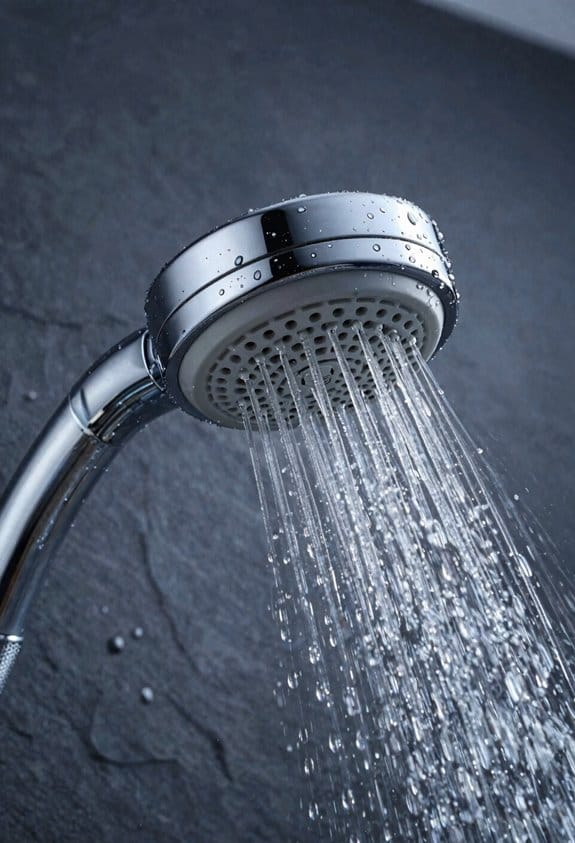
While chlorine damages your skin barrier through chemical disruption, hard water compounds the problem by attacking your skin in different ways. Hard water contains calcium and magnesium minerals that interfere with how your skin functions. When these minerals interact with soap, mineral precipitation occurs, leaving a film on your skin that clogs pores and traps irritants. Additionally, soap adsorption happens when minerals bind to cleansing products, reducing their effectiveness and leaving residue behind. This mineral buildup increases transepidermal water loss, meaning your skin loses moisture faster. Research shows that children living in hard water areas experience higher rates of atopic dermatitis. The combination of chlorine and hard water minerals creates an especially harsh environment for sensitive or eczema-prone skin.
Shower Filters vs. Water Softeners: Which Solves Your Problem?
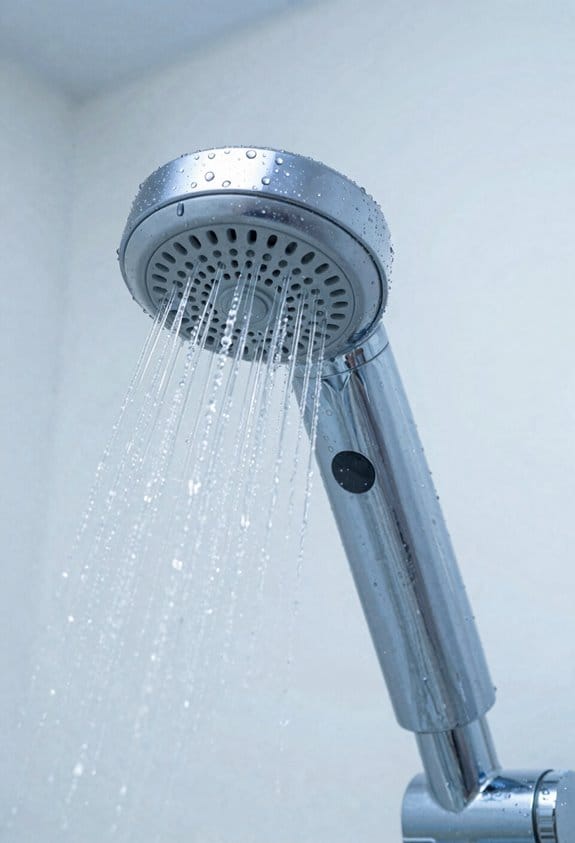
How do you decide between installing a shower filter and investing in a whole-home water softener? The cost comparison matters greatly. Shower filters cost $30–$100 initially with replacement cartridges every 6–12 months, making them budget-friendly. Whole-home softeners range from $1,000–$3,000 installed, though they address hard water throughout your entire house. Installation complexity also differs markedly. Shower filters screw onto existing showerheads, requiring no plumbing expertise. Water softeners demand professional installation and ongoing maintenance. For targeted eczema relief, shower filters work well when chlorine’s your main concern. However, if hard water minerals severely affect your skin, a whole-home softener provides complete protection, treating water at the source before it reaches any faucet.
Which Shower Filter Type Works Best for Your Skin?
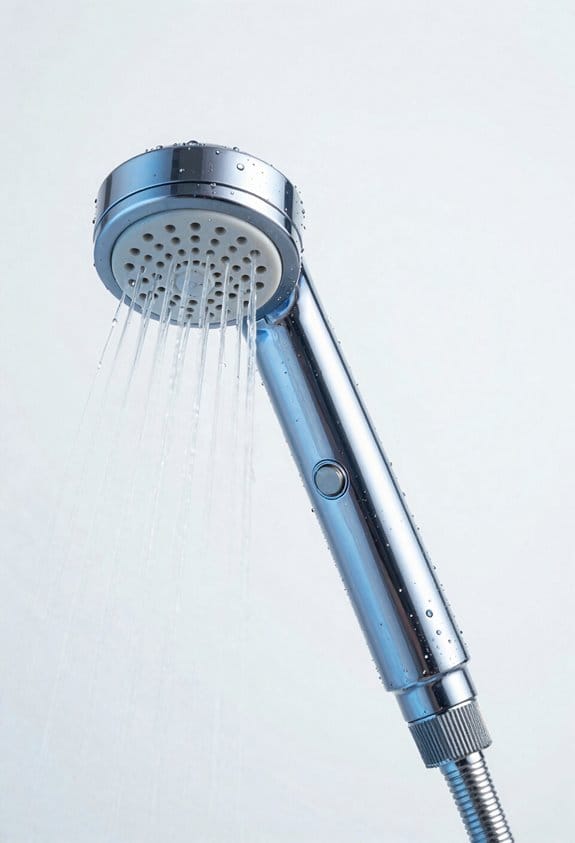
Not all shower filters perform equally, and choosing the right one depends on understanding what each type removes from your water. Carbon filters excel at reducing chlorine and odors, making them affordable and effective for most people. KDF media removes chlorine plus certain heavy metals, and pairing it with carbon boosts results. Vitamin C filters neutralize chlorine gently, though they need regular replacement. Ceramic filtration removes particles and bacteria, improving water clarity. Multi-stage filters combining KDF, activated carbon, and vitamin C provide the best protection for sensitive skin. Consider your flow rate preference too—some filters reduce water pressure noticeably. Ultimately, matching the filter type to your specific water quality concerns guarantees you’re addressing your skin’s actual needs effectively.
How Quickly Filtered Water Improves Eczema
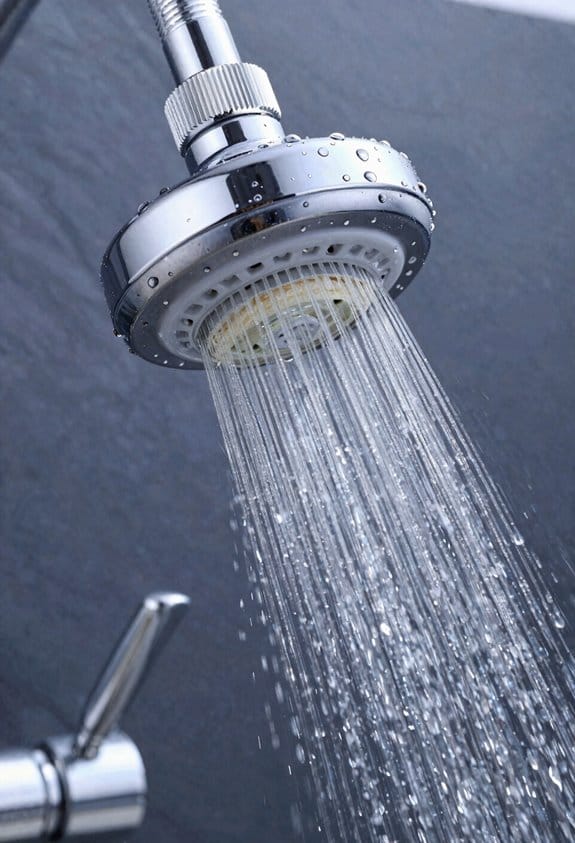
Once you’ve selected the right filter for your water quality concerns, you’ll likely wonder when you might actually notice your skin feeling better. Timeline expectations vary depending on your skin’s sensitivity level and the severity of your eczema. Most people experience symptom milestones within two to three weeks of consistent filtered shower use. You might notice reduced itching first, followed by decreased redness and dryness as your skin barrier gradually repairs itself. Some individuals see improvements within days, while others require a full month of filtered showers before noticing significant changes. Remember that shower filtration works best when combined with proper moisturizing routines and gentle cleansers, so patience and consistency matter greatly for optimal outcomes.
Your 14-Day Eczema Reset: Filtered Water + Skincare Essentials
If you’re ready to address eczema from multiple angles simultaneously, a coordinated two-week approach combining filtered shower water with targeted skincare practices can create measurable improvements. Your daily routines should prioritize barrier boosting through specific steps: use fragrance-free cleansers that won’t irritate compromised skin, shower in lukewarm water rather than hot, and moisturize within three minutes while skin remains slightly damp to lock in hydration. Install a carbon or KDF filter on your showerhead to reduce chlorine exposure during this reset period. This combination addresses water quality while strengthening your skin’s protective layer through consistent care. Many people notice visible changes within two to three weeks when they combine these elements intentionally.
Whole-Home Water Softening as an Alternative to Shower Filters
While a showerhead filter addresses chlorine exposure during bathing, whole-home water softening tackles the broader problem of hard water minerals throughout your entire house, offering a more all-encompassing solution for eczema management. These systems use ion-exchange technology to swap calcium and magnesium for sodium or potassium, transforming hard water into gentler water that improves soap cleansing and reduces skin irritation. Installation considerations include hiring a professional plumber, determining your water hardness level, and selecting appropriate system capacity for your household size. Long term maintenance requires periodic cartridge replacement and regular system checks to guarantee peak performance. While more expensive than showerhead filters, whole-home softeners benefit your entire plumbing system, skin, and hair simultaneously.
Frequently Asked Questions
Can Chlorine Exposure From Swimming Pools Trigger or Worsen Eczema in Children?
I’d say pool chlorine and swim chemicals aren’t consistently linked to triggering childhood eczema, though they can cause skin flare-ups in sensitive kids. Shower water exposure poses greater concern than swimming-related eczema triggers.
Do Shower Filters Remove All Types of Water Contaminants or Just Chlorine?
I’m not going to sugarcoat it—shower filters aren’t miracle workers. They’ve got limited filter performance against the full contaminant spectrum. They’re champions at chlorine removal, but they won’t catch everything lurking in your water.
How Often Should I Replace My Shower Filter Cartridge for Optimal Effectiveness?
I’d recommend replacing your shower filter cartridge every 6-12 months, depending on your water quality and usage. Regular cartridge maintenance guarantees peak filter lifespan and consistent chlorine removal for your sensitive skin’s protection.
Can Filtered Shower Water Help With Eczema That Doesn’t Respond to Topical Treatments?
Like a missing puzzle piece, filtered shower water can be transformative when topicals fail. I’ve seen hard water trigger immune responses that filtration helps calm, especially when combined with dermatologist-recommended treatments for stubborn eczema.
Is Bottled Water Safe to Use as a Rinse for Sensitive Skin After Showering?
Yes, bottled water’s safe for sensitive skin rinses. I’d recommend it as a quick comfort trick after hard-water showers to minimize mineral interaction. Bottled rinses help reduce residual irritants, though they’re most effective when combined with proper moisturizing.