As an Amazon Associate, we earn from qualifying purchases. Some links on this site are affiliate links at no extra cost to you. Our recommendations are based on thorough research and editorial judgment.


How a Whole House Filter Protects Your Appliances From Scale Buildup

I’ll install a whole house filter at your main water entry point to remove hard minerals before they reach your water heater and appliances. The filter uses multiple stages—sediment removal, chlorine elimination, and anti-scale cartridges that convert minerals into non-sticking crystals. This prevents buildup on heating elements, reduces energy waste by up to 25%, and extends appliance lifespan. While cartridge systems cost less upfront, media-based systems last longer overall. Understanding your specific water conditions helps determine which option delivers better long-term value.
Key Takeaways
- Whole house filters installed at the main water entry remove hard minerals before reaching any appliances or pipes throughout your home.
- Anti-scale cartridges convert calcium and magnesium into non-sticking crystals that resist clinging to water heater elements and other surfaces.
- Scale prevention reduces energy consumption by improving heat transfer efficiency, lowering utility bills immediately after installation and scale removal.
- Multi-stage filtration removes sediment and contaminants that contribute to scale buildup, protecting dishwashers, washing machines, and plumbing simultaneously.
- Treating water at the source prevents damage more effectively than addressing individual fixtures after scale has already accumulated and caused harm.
What Scale Does to Your Water Heater (and Why You Should Care)
When hard water flows through your water heater, mineral deposits called scale gradually accumulate on the heating elements inside the tank, and I’ll explain why this matters for your home. Scale buildup causes reduced heat transfer, meaning your heating element must work harder to warm water. This extra strain increases energy costs and reduces efficiency notably. Additionally, sediment accumulation insulates the heating element, forcing it to reach higher temperatures and wear out faster. Over time, this damage shortens your water heater’s lifespan considerably. The stress on internal components can eventually lead to complete system failure. Installing a whole house filter removes hard minerals before they reach your water heater, protecting this essential appliance and maintaining peak performance for years.
How Do Whole House Filters Actually Stop Limescale?

Because whole house filters work at the point where water enters your home, they stop limescale before it ever reaches your appliances, and I want to explain how they accomplish this. These systems use several methods to prevent mineral buildup. Polyphosphate dosing releases protective compounds that coat hard minerals, preventing them from sticking to pipes and equipment. Galvanic polarization disrupts the crystal formation process, converting minerals into forms that won’t accumulate. Additionally, multi-stage filtration removes sediment and contaminants that contribute to scale development. By addressing the problem at your water’s entry point, whole house filters protect every faucet, appliance, and pipe simultaneously, making them more effective than treating individual fixtures after damage occurs.
Which Filtration Stages Remove Scale Most Effectively?

While whole house filters use multiple methods to prevent limescale, the third stage—the anti-scale cartridge—is where the most direct removal happens. This stage tackles existing scale through crystal conversion, transforming hard minerals like calcium and magnesium into non-sticking crystals that won’t cling to your pipes and appliances.
The first two stages prepare water by removing sediment and chlorine, but they don’t address scale directly. The anti-scale cartridge uses specialized media to accomplish what neither stage can do alone. By converting mineral crystals into different forms, this stage prevents buildup without requiring chemicals or salt. The result is effective scale prevention that protects your water heater, dishwasher, and washing machine from costly mineral damage.
How Much Can You Save on Energy Bills?

How much energy do you actually waste heating hard water filled with mineral buildup? Scale buildup forces your water heater to work harder, consuming more electricity or gas to reach desired temperatures. When minerals coat heating elements, they create an insulating barrier that reduces efficiency markedly.
A whole house filter prevents this accumulation, reducing stress on your heating system. Your energy savings begin immediately as your water heater operates more efficiently without scale interference. Studies show that removing existing scale and preventing future buildup can lower water heating costs substantially.
Beyond water heaters, utility reductions extend to dishwashers and washing machines. These appliances heat water more efficiently when mineral-free, decreasing overall household energy consumption. Installing a quality whole house filter translates directly into measurable energy savings on monthly utility bills.
Cartridge vs. Media Filters: Which System Is Right for You?

When you’re ready to install a whole house filter, you’ll encounter two primary options: cartridge-based systems and media-based filters, each offering distinct advantages depending on your household’s needs and budget. Cartridge cost is typically lower upfront, making them budget-friendly for homeowners wanting immediate protection. However, cartridges require replacement every 6-12 months or after 100,000 gallons.
Media-based filters offer a longer media lifespan, often extending several years with proper maintenance. Though they demand higher initial investment, they reduce replacement frequency and long-term expenses. Your choice depends on whether you prioritize lower upfront costs or prefer minimal maintenance and fewer replacements over time. Consider your water quality and household size when deciding which system fits your needs.
Getting Your Scale-Prevention Filter Installed: A Step-by-Step Guide
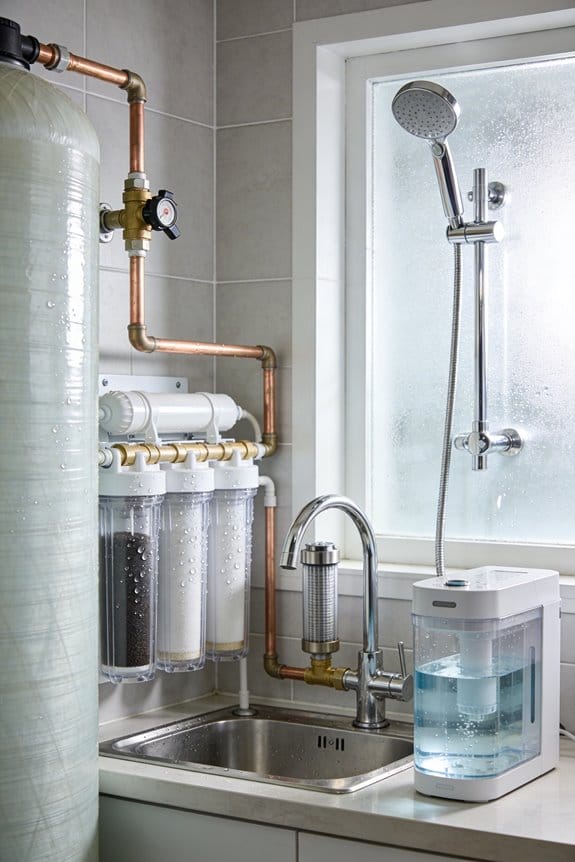
Once you’ve selected either a cartridge-based or media-based system, you’re ready to move forward with installation, which I’ll walk you through in this guide. First, I’ll shut off your main water supply and locate the optimal installation point, typically near where water enters your home. Next, I’ll install the filter housing using the ¾-inch connections compatible with copper, PEX, PVC, or CPVC pipes. I’ll secure the unit to a wall mount for stability, then insert your chosen filter cartridge or media into the housing.
Before starting, I recommend considering professional installation to guarantee proper setup and maintain your manufacturer’s warranty considerations. This protects your investment while assuring correct operation and maximum protection for your appliances.
Frequently Asked Questions
How Long Do Whole House Filters Last Before Needing Replacement?
I’ll help you understand your filter lifespan. Most whole house filters last 100,000 gallons or 6-12 months, depending on your water quality. Your replacement schedule depends on usage and contaminant levels in your water supply.
Are Whole House Filters Certified Safe for Drinking Water?
Yes, I can confirm whole house filters are certified safe for drinking water. They’re IAPMO R&T certified to NSF/ANSI/CAN 61 and 372 drinking water standards, meeting EPA requirements for your family’s protection.
Can Scale Prevention Filters Reduce Soap and Detergent Usage?
Yes, I’ve found they can. By removing minerals that interfere with soap’s effectiveness, you’ll get reduced lather and spot free rinsing. You’ll use up to 50% less detergent while cleaning better.
What Pipe Materials Are Compatible With Whole House Filter Systems?
I’ll give you the straight dope: our systems work seamlessly with ¾-inch copper piping and PEX compatibility. You’re also covered with PVC and CPVC options. Installation’s a breeze regardless of your existing setup.
Do Scale Prevention Filters Require Electricity, Salt, or Chemicals?
I’ll tell you straight: scale prevention filters don’t require electricity, salt, or chemicals. Unlike electronic descalers or magnetic cartridges, they use crystallization technology to prevent buildup naturally and efficiently.