As an Amazon Associate, we earn from qualifying purchases. Some links on this site are affiliate links at no extra cost to you. Our recommendations are based on thorough research and editorial judgment.

How to Explain Water Filter Certifications to Someone Who Has Never Bought One

Water filter certifications from independent organizations like NSF International verify that filters actually remove the contaminants manufacturers claim. Different standards target different problems: NSF 42 removes chlorine taste and odor, NSF 53 targets health hazards like lead and arsenic, and NSF 58 handles dissolved solids through reverse osmosis. I’d recommend checking your local water quality report, matching your specific contaminants to the appropriate standard, then verifying the certification exists in the organization’s database before purchasing. Understanding these standards helps you choose the right filter for your needs.
Key Takeaways
- Certifications from NSF, WQA, or IAPMO R&T prove independent testing verified the filter’s contaminant removal claims.
- NSF 42 removes aesthetic issues like chlorine taste; NSF 53 targets health contaminants like lead and arsenic.
- Match your water problems to the right standard using your local water utility’s quality report results.
- Always verify certifications by checking manufacturer documentation and official NSF, WQA, or IAPMO R&T databases before purchasing.
- Look for certification logos and standard numbers on product packaging; avoid relying solely on manufacturer marketing claims.
Why NSF Certifications Matter
When you’re shopping for a water filter, you’ll frequently encounter labels displaying NSF certifications, and understanding what these seals actually mean can help you make an informed decision about your drinking water. I find that these certifications matter because they represent independent testing by accredited organizations like NSF International, WQA, and IAPMO R&T. These bodies verify that filters actually remove the contaminants they claim to eliminate, providing you with health assurance. Rather than relying on manufacturer promises alone, you gain consumer trust knowing third-party experts have tested the product’s performance and material safety. Each certification standard, whether 42, 53, or 58, addresses specific contaminants through rigorous testing protocols, ensuring the filter meets established performance requirements.
NSF 42, 53, and 58: What Each Standard Removes
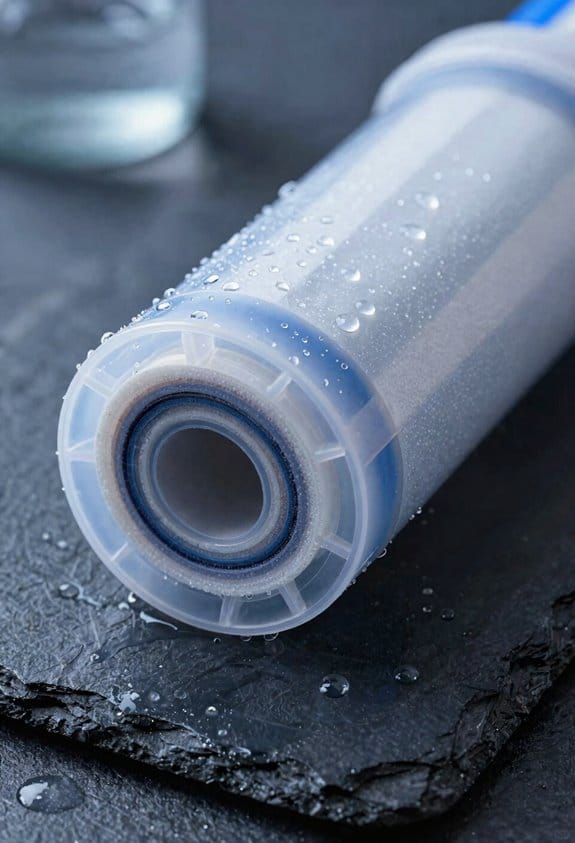
Why do some water filters carry an NSF 42 label while others display NSF 53 or 58, and what’s the actual difference between them? Each standard addresses different contaminant types. NSF 42 removes aesthetic impurities—things like chlorine taste, odor, and particulates that affect how your water looks and tastes. NSF 53 targets health-related contaminants such as lead, arsenic, and VOCs that pose genuine health risks. NSF 58 certifies reverse osmosis systems specifically, reducing total dissolved solids and inorganics like fluoride and nitrate. I’d recommend checking your filter’s label to see which standards it meets. If you want thorough protection, look for products certified to multiple standards, combining aesthetic and health-related contaminant removal.
Lead, Chlorine, Bacteria: Match Your Water Problem to a Standard
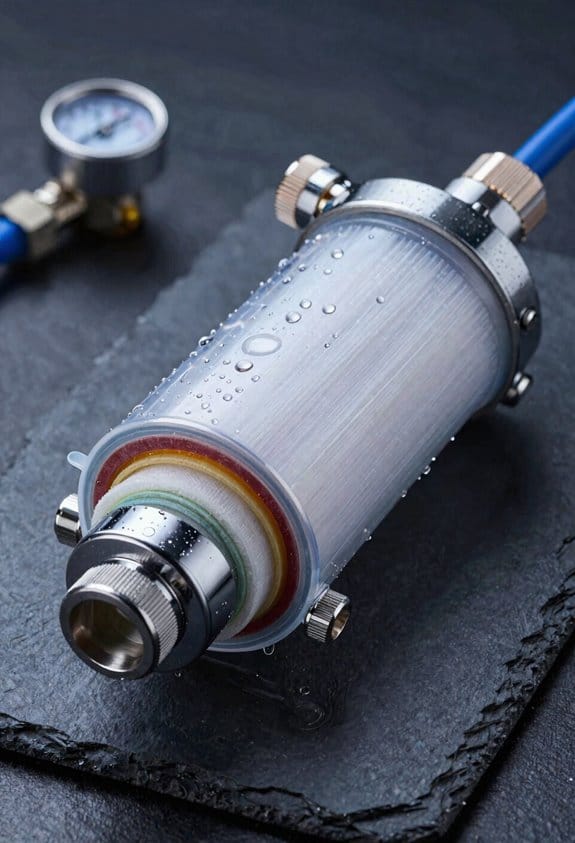
Now that you understand what each standard removes, the next step is identifying which certification matches your specific water quality concerns. If you’re worried about lead testing, you’ll want NSF/ANSI 53 certification, which specifically targets this health hazard. For chlorine taste issues, NSF/ANSI 42 handles aesthetic problems effectively. When bacterial safety matters—particularly in well water—NSF/ANSI 55 UV systems kill harmful microorganisms. Your filter selection depends entirely on your local water quality report. Contact your water utility for testing results, then match the contaminants you find to the appropriate standard. This approach makes certain you’re not paying for unnecessary certifications while guaranteeing your chosen filter addresses your actual water problems.
Read Certification Labels Like an Expert
Once you’ve matched your water problems to the right standard, the next challenge involves actually finding and understanding those certifications on product packaging. Look for the NSF, WQA, or IAPMO R&T logos and standard numbers like 42, 53, or 58 printed on labels. Don’t rely solely on brand claims, since manufacturers sometimes overstate filter capabilities without certification backing them. Check expiry dates on certification documentation, as standards get updated and older certifications may not reflect current requirements. Search the manufacturer’s website or contact them directly to verify specific contaminants listed for that product. Using the NSF, WQA, or IAPMO databases lets you confirm exactly what contaminants each filter removes, ensuring you’re purchasing genuine certified protection rather than marketing hype.
Verify Certifications Before You Buy
Before you purchase any water filter, I recommend taking a few extra minutes to verify that its certifications are legitimate, since counterfeit or outdated certifications can lead you to buy filters that don’t actually remove the contaminants you need. You can check databases maintained by NSF International, WQA, or IAPMO R&T to confirm a filter’s claimed certifications. Visit the manufacturer’s website or request documentation directly from the company to see specific contaminant reduction claims. Legitimate certifications include standard numbers like 42, 53, or 401 printed on product labels. If a company can’t provide clear documentation or their certification information doesn’t match database records, that’s a red flag. Taking this verification step makes certain you’re purchasing a filter that’s actually been tested and proven effective.
Frequently Asked Questions
Do All Three Certification Bodies Test Filters Using Identical Methods and Standards?
Yes, I can confirm all three bodies—NSF International, WQA, and IAPMO R&T—follow identical testing methods and standards alignment. There’s no testing variability between them; they’re all accredited to the same NSF/ANSI performance standards.
What’s the Difference Between WQA Gold Seal and IAPMO R&T Certifications?
I’d say WQA’s Gold Seal includes facility audits for ongoing quality, while IAPMO R&T specializes in RO systems and whole-house units with global recognition. Both use identical third-party testing to verify performance claims.
Can a Single Filter Meet Multiple Nsf/Ansi Standards Simultaneously?
Yes, I’ve found that single filters regularly achieve multiple certifications through cross certification. Their overlapping claims—like removing both aesthetic and health contaminants—allow one product’s all-encompassing testing scope to satisfy several NSF/ANSI standards simultaneously.
How Often Are Manufacturing Facilities Audited After Initial Certification?
I’ll tell you: most certified facilities undergo annual audits, though I’ve found that surprise inspections also occur to guarantee ongoing compliance. This dual-approach system—combining scheduled reviews with unannounced checks—keeps manufacturers accountable and maintains certification integrity.
What Emerging Contaminants Does Nsf/Ansi 401 Specifically Target?
NSF/ANSI 401 specifically targets 15 emerging contaminants, including pharmaceutical residues, pesticides, and PFAS removal capabilities. I’d recommend checking product labels to verify which contaminants your filter addresses.