As an Amazon Associate, we earn from qualifying purchases. Some links on this site are affiliate links at no extra cost to you. Our recommendations are based on thorough research and editorial judgment.


What Water Filtration System Should a First-Time Buyer Actually Start With

Start with a pitcher filter because it requires zero installation, costs little, and lets you test whether filtration actually helps your home. Pitcher filters remove common contaminants like lead and chlorine through NSF-certified cartridges that you replace every two to three months. They’re perfect for renters or anyone wanting low commitment. If you find pitchers inconvenient or need stronger filtration, you’ll discover which upgrade path—faucet-mounted, countertop, or under-sink—matches your specific situation.
Key Takeaways
- Test your water first through your local provider or certified lab to identify specific contaminants before selecting a filtration system.
- Pitcher filters offer zero installation and portability, making them ideal entry points for renters and those uncertain about commitment levels.
- Faucet-mounted filters provide simple upgrades requiring only minutes to install while removing chlorine, taste, and odor issues affordably.
- Evaluate your household size and daily water usage to determine if a portable pitcher or higher-capacity system better suits your needs.
- Consider your living situation: renters should prioritize portable options while homeowners can invest in under-sink or whole-house systems for better capacity.
How to Choose a Water Filter: The Decision Framework
Before you invest in a water filtration system, you’ll need to understand what contaminants are actually in your water, how many people you’re filtering for, and what type of system fits your living situation. Start with source testing through your local water provider or a certified lab, which reveals specific impurities like lead, PFAS, or chlorine. Next, consider your household size and daily water usage, since larger families need systems with higher flow rates. Finally, evaluate your living arrangement—renters benefit from portable pitchers, while homeowners can install permanent under-sink or whole-house systems. Understanding your maintenance schedule matters too, because some filters need replacing monthly while others last six months. This framework guarantees you’ll select the right filtration solution for your specific needs.
Pitcher Filters: The Low-Risk Entry Point

If you’re just starting your filtration journey, pitcher filters represent the most accessible and flexible option available to first-time buyers. I’d recommend them because they require zero installation, making them ideal for renters or anyone hesitant about commitment. The compact convenience of pitcher filters means you can move them between rooms or take them with you. Brita dominates this category with NSF-certified 3-in-1 filters that remove lead, chlorine, and microplastics effectively. Low maintenance cartridges need replacing every two to three months, depending on usage. While pitchers work well for individuals or small households, larger families might find constant refilling inconvenient. Annual costs remain budget-friendly, making this your lowest-risk entry point into water filtration.
Faucet-Mounted Filters: Simple Upgrades for Renters

When you’re ready to move beyond pitcher filters, faucet-mounted filters offer the next logical step in your filtration journey. These devices attach directly to your kitchen sink, eliminating the need for constant refilling while maintaining renter-friendly installation that requires no permanent modifications. Since they’re temporary lease-friendly solutions, you can remove them when moving without landlord concerns.
Faucet-mounted filters remove chlorine, bad tastes, and odors without reducing water flow rate. Brita and Pur Plus offer popular models available at Home Depot and Lowe’s. The Pur Plus Vertical Faucet Filter provides stronger contaminant removal than many pitchers. However, some models experience clogging issues or shorter cartridge lifespans. Installation takes minutes, and replacement cartridges cost less annually than pitcher filters, making this option ideal for budget-conscious renters seeking improved water quality.
Countertop Systems: When Pitchers Aren’t Enough
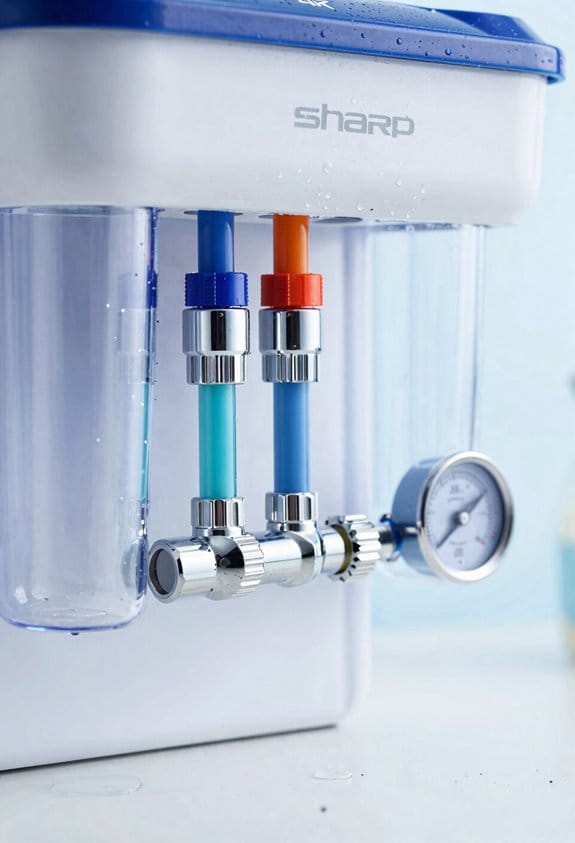
As your household’s water consumption grows or pitcher refilling becomes inconvenient, countertop filtration systems provide a significant upgrade in both capacity and filtration power. Models like the AquaTru Carafe, scoring 9.57, use reverse osmosis technology to remove contaminants effectively. The AquaTru Classic and Brondell three-stage systems offer excellent roasting compatibility with various kitchen setups without requiring installation. Countertop maintenance remains straightforward—you’ll replace filters periodically without complex plumbing work. British Berkefeld gravity filters, priced from $156, provide budget-friendly options using natural filtration. These systems deliver superior contaminant removal compared to pitchers, handling larger volumes while maintaining compact designs. Choose countertop filtration when you need improved water quality without permanent modifications to your home.
Under-Sink Filters: Moving Beyond Surface Solutions

Once you’ve determined that countertop systems don’t quite meet your household’s needs, under-sink filters represent the next logical step in your filtration journey. These systems install directly beneath your kitchen sink, providing filtered water on demand without occupying counter space. Before purchasing, you’ll need to take into account plumbing considerations like your existing pipe configuration and whether you’re comfortable with installation requirements or hiring a professional.
Space planning becomes essential since under-sink units require adequate room in your cabinet. Models like the Waterdrop G3 P800 and Cloud RO system offer excellent contaminant removal, scoring around 9.25 in performance ratings. The APEC ROES-50 Essence Series balances effectiveness with affordability. While installation demands more effort than pitcher alternatives, you’ll gain superior filtration capacity and convenience for regular daily use.
Whole-House Filters: Maximum Filtration for Every Tap
If you’re looking to protect your entire home’s water supply rather than just your kitchen sink, whole-house filtration systems offer all-encompassing protection at every faucet, shower, and appliance. These systems handle considerably higher water volumes, making them ideal for families who need consistent filtration throughout their home.
I’d recommend considering models like the SpringWell CF1, which delivers 9 gallons per minute for 1-3 bathrooms. The Home Master HMF3SDGFEC features massive housings designed for heavy-duty performance. What makes whole-house systems valuable is their ability to reduce pipe corrosion while protecting appliances from sediment and contaminants.
Though installation costs range from $600 to $4,200, seasonal maintenance becomes simpler since you’re managing one system rather than multiple filters. This approach prevents repeated filter replacements across your entire home.
Right-Size Your System: Flow Rate, Family Size, and Budget
Choosing the right water filtration system requires balancing three critical factors: how much water your household uses, how many people depend on filtered water, and what you can spend upfront and over time. Your occupancy patterns matter considerably—a family of four needs different capacity than a single person. Peak demand determines which system prevents bottlenecks during morning routines. Whole-house systems like the SpringWell CF1, rated at 9 gallons per minute, suit 1-3 bathrooms effectively. Smaller households might prefer under-sink or countertop options, which cost $150-$999 instead of $600-$4,200. Consider filter replacement frequency and cartridge expenses alongside initial investment. Match your system’s flow rate to your household’s actual water consumption patterns for peak performance and cost-efficiency.
Frequently Asked Questions
How Often Should I Test My Water for Contaminants Like PFAS and Lead?
I’d recommend annual testing for contaminants like PFAS and lead, though seasonal testing’s valuable if you’ve noticed water quality changes. Getting your water tested initially helps you choose the right filtration system for your specific needs.
What Does NSF Certification Actually Mean for Water Filter Performance?
NSF certification means I’m getting verified proof that a filter actually removes what it claims. I look for NSF standards that set certification limits for specific contaminants like lead or PFAS—it’s independent testing you can trust.
Can I Use Pitcher Filters While Traveling or Living Temporarily?
You’ll find pitcher filters are life’s temporary companions during your nomadic seasons. They’re genuinely portable pitchers requiring no installation—perfect for travel adapters and short-term living situations where you’d rather not commit to permanent fixtures.
How Do I Know if My Filter Cartridge Needs Replacement?
You’ll notice your filter needs replacing when water flow rate slows noticeably or taste changes despite filtering. Most cartridges last 2-3 months, though I’d check your specific model’s timeline for accuracy.
What’s the Environmental Impact of Disposable Filter Cartridges Versus Whole-House Systems?
I’d argue disposable cartridges generate mountains of plastic waste annually, while whole-house systems minimize replacements. Though whole-house filters carry higher initial energy footprints, they’re ultimately more environmentally responsible long-term.

