As an Amazon Associate, we earn from qualifying purchases. Some links on this site are affiliate links at no extra cost to you. Our recommendations are based on thorough research and editorial judgment.

What the Actual Difference Is Between a Water Filter and a Water Softener

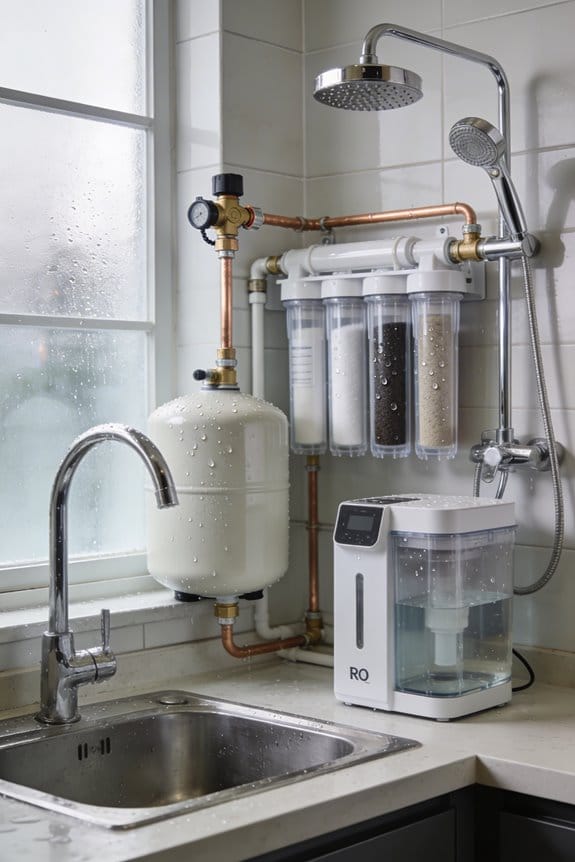
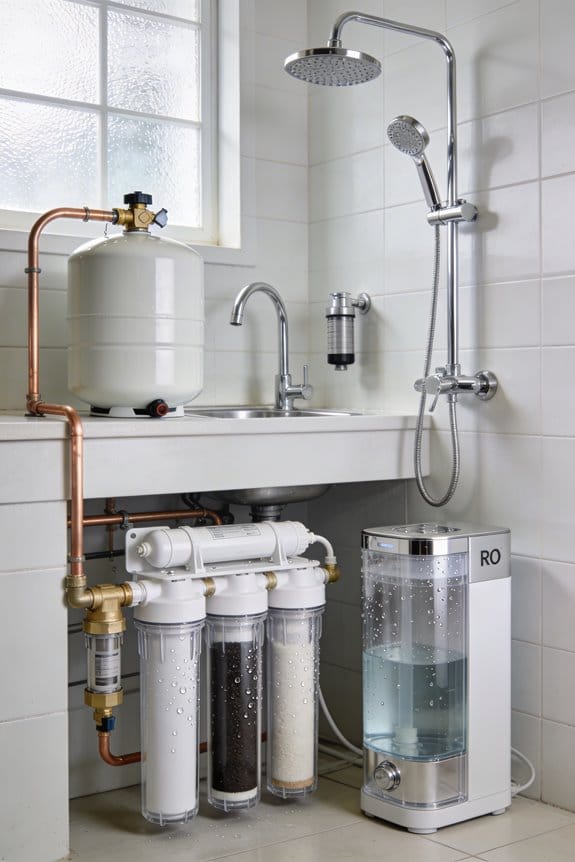
Water filters and softeners tackle different problems, so you’ll want to understand which one you need. Filters remove contaminants like bacteria, chemicals, and sediment that affect your health and water’s taste. Softeners, however, eliminate hard minerals such as calcium and magnesium that create scale buildup on fixtures and reduce soap effectiveness. Since neither system does what the other does, many homes benefit from both working together for cleaner, safer water throughout your entire plumbing system.
Key Takeaways
- Filters remove health hazards like chlorine, bacteria, and lead; softeners remove hard minerals like calcium and magnesium.
- Filters use layered media to physically trap contaminants; softeners use ion exchange with resin beads to capture minerals.
- Filters improve water taste and clarity; softeners prevent scale buildup on fixtures and appliances.
- Filters don’t address hardness; softeners don’t eliminate contaminants that pose health risks.
- Combined systems handle both contamination and hardness, requiring water testing to determine which solution your home needs.
When You Need a Filter vs. a Softener
Deciding between a water filter and a water softener comes down to identifying what’s actually wrong with your water, since each system tackles different problems. You’ll want a filter if you’re concerned about contaminants affecting your water taste, bacteria, chemicals, or sediment that pose health risks. Choose a softener if you notice hard water signs like scale buildup on fixtures, reduced soap effectiveness, or stiff laundry. Hard minerals also damage plumbing aesthetics and appliance longevity. However, your water might need both solutions. If you have contamination issues alongside hardness, installing a combined system addresses all concerns simultaneously, ensuring safer, cleaner water throughout your home.
What Each System Removes From Your Water
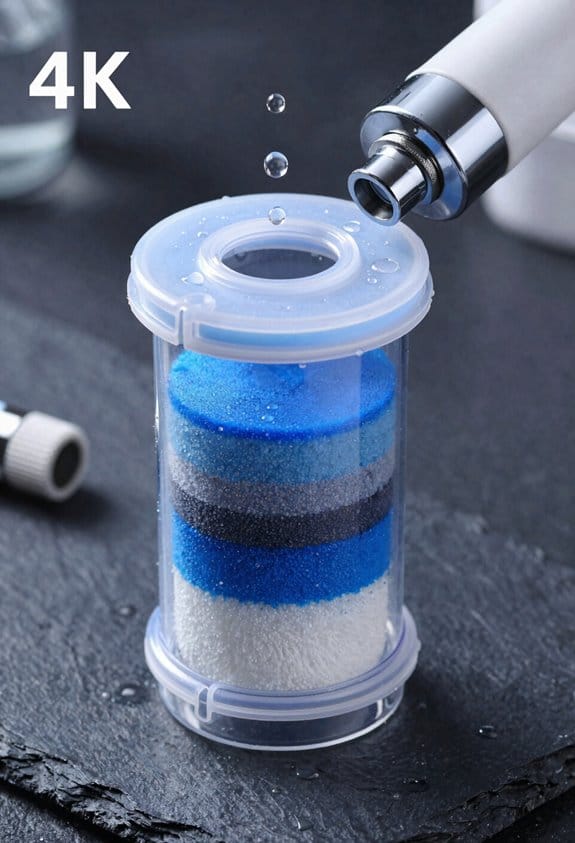
Water filters and softeners remove fundamentally different substances from your water, which is why understanding what each one targets helps you choose the right system for your specific water problems. Filters focus on contaminants that pose health risks, including chlorine removal, bacterial filtration, lead, chemicals, and sediment. They trap these impurities as water passes through multiple media stages, improving taste and clarity. Softeners, however, target hard minerals like calcium and magnesium that don’t threaten your health but cause scaling and buildup. They exchange these minerals for sodium ions through an ion exchange process. While filters protect your body from harmful substances, softeners protect your appliances and plumbing from mineral damage. Neither system fully addresses what the other removes.
How Filters and Softeners Work (And Why It Matters)
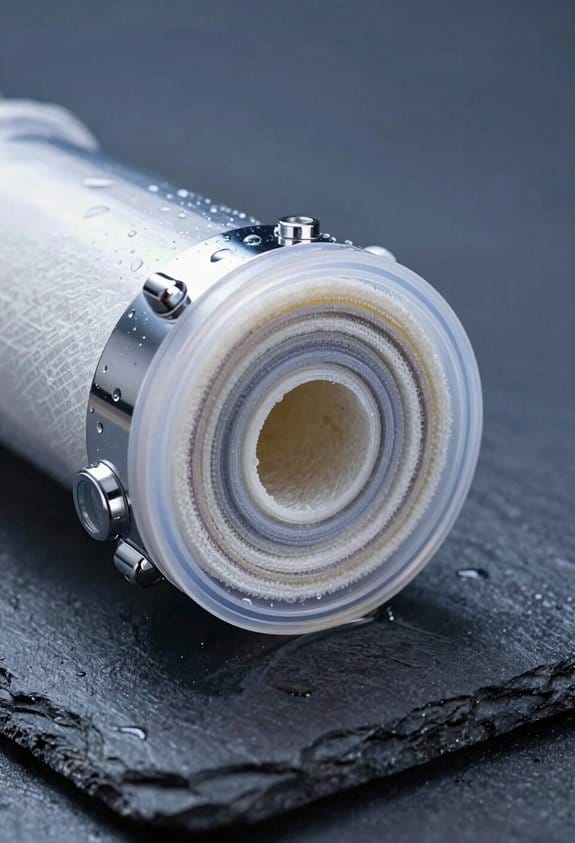
Understanding how each system operates reveals why they solve different water problems, and this knowledge helps you make an informed decision about which solution fits your needs. Filters work through media adsorption, trapping contaminants as water passes through layered materials like sediment, carbon, and UV stages. They physically strain and absorb impurities, removing bacteria, chemicals, and particles. Softeners function differently using ion exchange, where resin beads coated in sodium capture hard minerals like calcium and magnesium. When these beads become saturated, they regenerate using salt brine, releasing sodium ions to restart the process. Understanding these distinct mechanisms matters because filters address health concerns while softeners prevent scale buildup. Knowing how each works guarantees you’ll select the right system for your specific water quality issues.
Signs You Need Both Systems
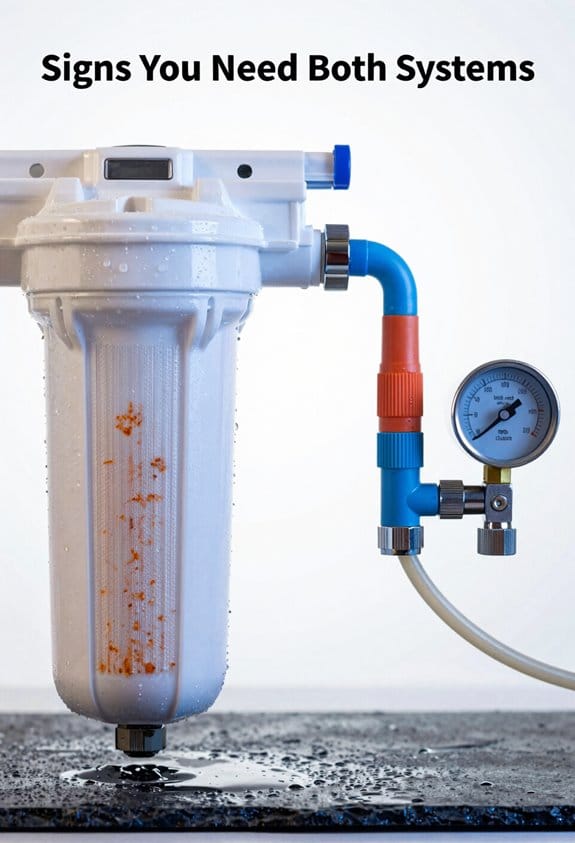
Now that you understand how filters and softeners work independently, you might wonder whether you actually need both systems in your home. The answer depends on your water’s specific problems. If you’re experiencing both hard water deposits on fixtures and concerning contaminants, you’ll benefit from installing both systems. Hard water causes scale buildup in pipes and appliances, while contamination creates health risks that softening alone won’t address. Consider your plumbing compatibility when choosing equipment size and location. Review each system’s maintenance schedule too—filters need regular cartridge replacements, while salt-based softeners require periodic regeneration cycles. Combining both systems guarantees thorough water treatment, protecting your health and your home’s infrastructure simultaneously.
Choose the Right System for Your Water
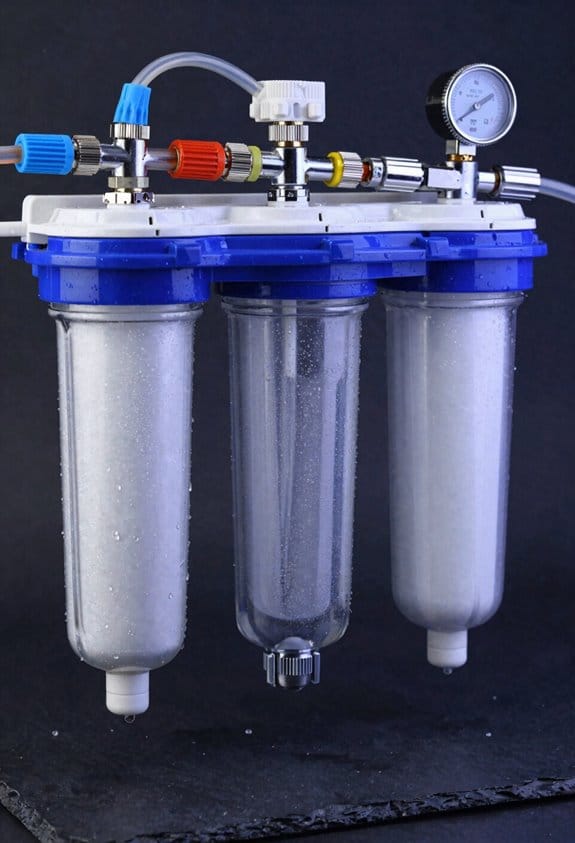
Figuring out which system to install starts with testing your water to identify what problems you’re actually dealing with. A home inspection can reveal existing pipe damage or scale buildup, helping you determine if you need a softener. Next, consider your budget planning—filters typically cost less upfront, while softeners require more investment but save money on appliances and detergent long-term. If your water’s hard and contaminated, you’ll need both systems working together. For hard water alone, a salt-based softener works best. If contamination’s your only concern, a quality filter suffices. Some homeowners choose combo units that handle both issues simultaneously, streamlining installation and maintenance while maximizing water quality throughout their entire home.
Frequently Asked Questions
How Often Do Water Filter Cartridges Need Replacement Compared to Softener Regeneration Cycles?
I’d say filter cartridges typically need replacement every 6-12 months depending on media lifespan and water quality, while softener regeneration cycles occur monthly or quarterly based on your replacement frequency and hardness levels.
Can You Use a Water Filter and Softener Together in the Same System?
Why not tackle both water problems at once? Yes, I’d recommend combining them—install your softener at point of entry placement, then run your filter in parallel flow for thorough treatment addressing hardness and contaminants simultaneously.
What Is the Average Cost Difference Between Installing Filters Versus Water Softeners?
I’d say filters typically run you $200-$500 for upfront investment, while softeners demand a steeper installation costs of $1,000-$2,500. Your initial choice depends on which system addresses your water quality needs first.
Do Water Softeners Add Too Much Sodium to Drinking Water for Health?
Are you concerned about what’s really entering your body? I’d say water softeners don’t add dangerous sodium levels. Their sodium content poses minimal health risks for most people, though those on sodium-restricted diets should consider salt-free alternatives.
Which System Requires More Maintenance and Ongoing Operational Expenses Long-Term?
Water softeners demand higher long-term costs. You’ll need regular salt procurement for regeneration cycles, while filter upkeep involves occasional cartridge replacements. Softener maintenance and ongoing salt expenses markedly exceed typical filter replacement costs.