As an Amazon Associate, we earn from qualifying purchases. Some links on this site are affiliate links at no extra cost to you. Our recommendations are based on thorough research and editorial judgment.

What Sediment Prefilters Do and Why Changing Them First Matters

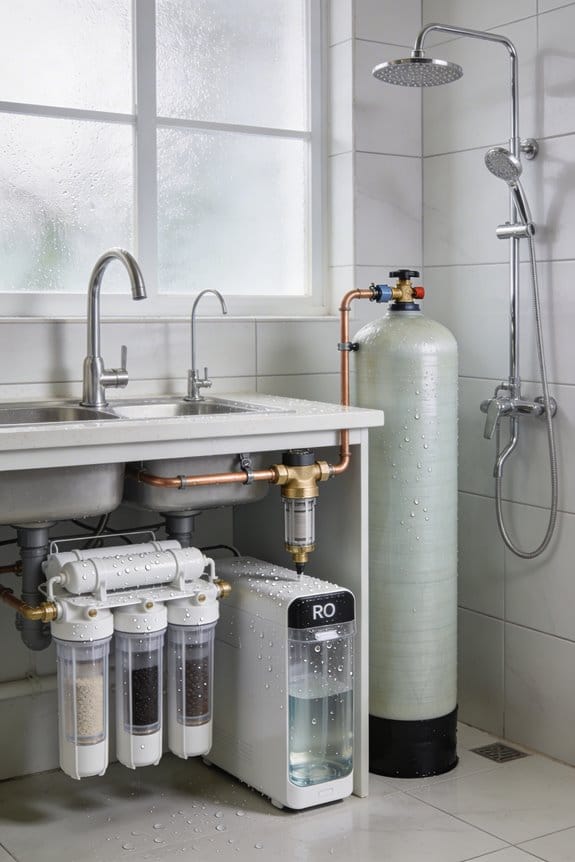
Sediment prefilters trap sand, silt, rust, and debris that cloud your water before these particles damage expensive downstream equipment like carbon filters and RO membranes. They’re your system’s first defense, removing suspended solids based on micron ratings—typically 50 down to 1 micron. You’ll want to replace yours every three to six months since skipping maintenance causes clogged filters, voided warranties, and costly replacements. Understanding what happens when prefilters fail reveals why prioritizing this maintenance step protects your entire filtration system.
Key Takeaways
- Sediment prefilters capture sand, silt, rust, and organic matter (1–50 microns) that cause cloudiness and reduce water quality.
- Neglecting prefilter changes clogs downstream carbon filters, damages RO membranes, fouls softener resin, and voids system warranties.
- Changing prefilters first prevents sediment from reaching expensive downstream equipment, extending system lifespan and maintaining consistent performance.
- Replacement frequency depends on water quality; well water typically requires changes every three months, municipal water every six.
- Visual signs for replacement include visible sediment, cloudy water, reduced pressure, and seasonal changes requiring routine monthly inspection.
What Sediment Prefilters Trap
Sediment prefilters work to catch and hold back a wide range of physical impurities that flow through your water system, and understanding what they trap helps you appreciate why they’re so important for your home’s water quality. These filters capture sand, silt, and clay particles that create visible cloudiness in your water. They also trap rust from aging pipes, organic matter, and pipe debris that accumulate over time. While sediment prefilters don’t remove dissolved minerals or microbial contaminants like bacteria, they’re excellent at removing suspended solids. The filters work by acting as a sieve, with micron ratings determining particle sizes they’ll catch—larger particles at 50–20 microns, and finer materials down to 1 micron.
Where Sediment in Your Water Comes From
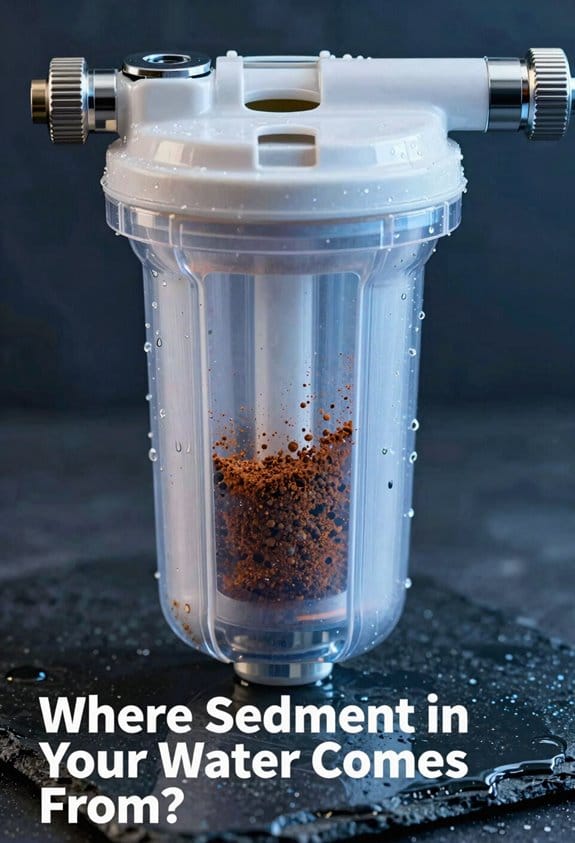
Understanding where sediment builds up in your water helps you recognize why prefilters aren’t optional—they’re essential protection for your whole system. Sediment enters your water through multiple sources. Well water commonly contains groundwater intrusion, bringing sand, silt, and clay from surrounding soil layers. Municipal water systems may introduce particles from aging pipes that corrode and break down over time. Agricultural runoff carries dirt and debris into water sources during heavy rain. Even your home’s plumbing can generate sediment as pipes deteriorate internally. Water treatment facilities can’t always remove every particle before water reaches your tap. Understanding these sources explains why sediment prefilters catch what other systems miss, protecting your investment in water quality equipment.
The Cost of Skipping Sediment Prefilter Maintenance
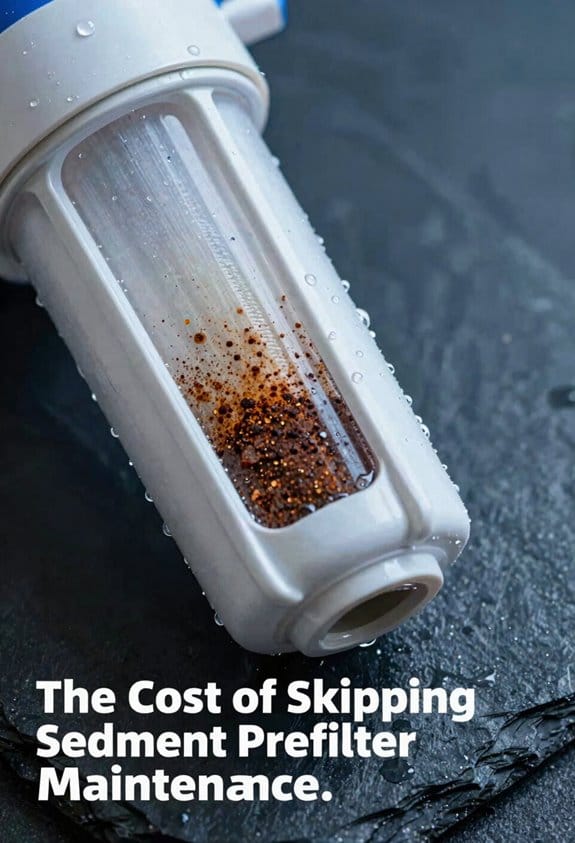
Many homeowners don’t realize that neglecting sediment prefilter changes can trigger a domino effect of expensive repairs throughout your water system. When you skip maintenance, sediment accumulates and clogs your carbon filters, softener resin, and RO membranes prematurely. This forces you to replace downstream equipment far sooner than necessary, draining your wallet. Additionally, skipping prefilter changes can void your system’s warranty, leaving you responsible for all repair costs. Sediment buildup also creates health risks by allowing contaminants to bypass filtration stages, potentially reaching your drinking water. The pressure drops from clogged filters strain your plumbing system, causing leaks and water damage. Simply changing your sediment prefilter every three to six months prevents these cascading problems and protects your investment.
How Prefilters Protect Downstream Equipment
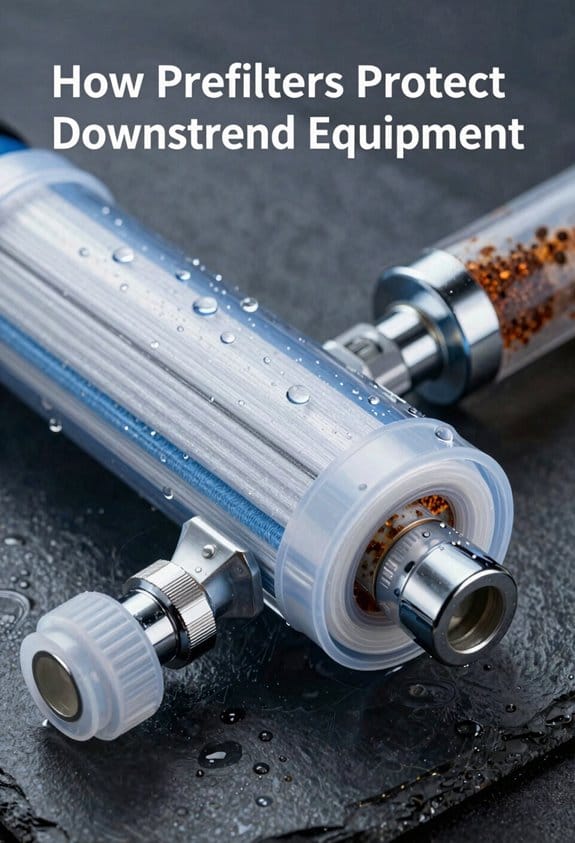
Your water system’s downstream equipment—like carbon filters, softener resin beds, and RO membranes—faces constant threats from sediment that escapes initial filtration stages, but a properly maintained prefilter acts as your first line of defense. When sediment bypasses your prefilter, it clogs these sensitive components, reducing their effectiveness and shortening their lifespan appreciably. I’ve seen systems fail prematurely because operators neglected prefilter maintenance.
A quality prefilter traps particles before they reach carbon filters, preventing resin fouling in softeners and membrane damage in reverse osmosis systems. This protection makes certain equipment longevity and performance consistency across your entire filtration setup. By removing large suspended solids upfront, you’re investing in reliable water quality and avoiding expensive replacements downstream.
When to Replace Your Sediment Prefilter
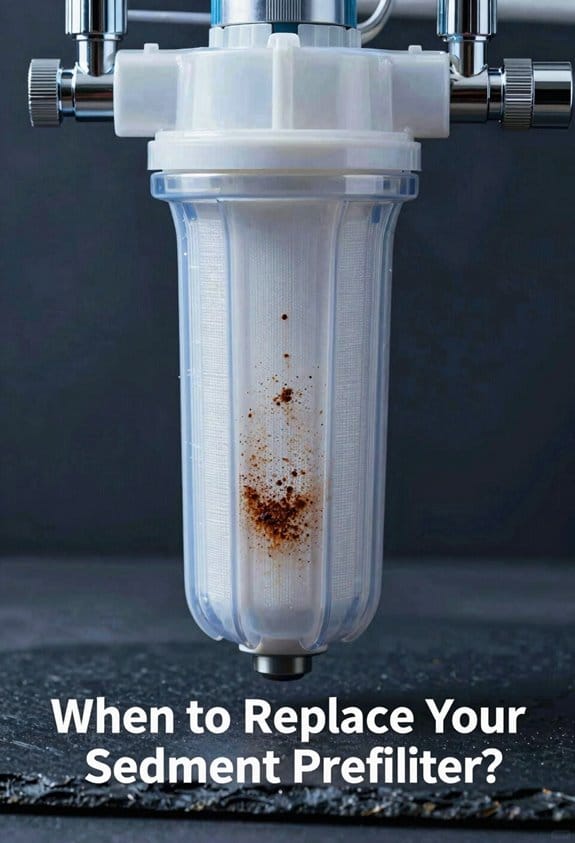
Most sediment prefilters need replacement every three to six months, though the exact timing depends on your water quality and usage patterns. I’d recommend tracking your usage patterns to establish seasonal schedules that work for your household. If you notice visible sediment in your tap water, cloudy appearance, or reduced water pressure, these signs indicate your filter’s reached capacity. Well water users typically need more frequent replacements than municipal water users because their water contains more particles. You can also monitor your filter’s condition by checking it visually—a dark, discolored cartridge signals replacement time. Establishing consistent maintenance schedules prevents system damage and guarantees your water remains clean and clear throughout the year.
Why Prefilter Maintenance Comes First
When I think about water filtration systems, I need to take into account the order in which filters do their work, because this sequence determines how well the entire system functions. Your prefilter sits first in line, so maintaining it prevents sediment from overwhelming your carbon and softener filters downstream. I recommend routine inspection every month to catch problems early. Seasonal flushing, especially before winter, clears accumulated debris that builds pressure on your system. When you neglect prefilter maintenance, you’re fundamentally forcing your other filters to work harder, which shortens their lifespan markedly. By prioritizing prefilter care, you’re protecting your investment and ensuring consistent water quality throughout your home’s filtration system.
Frequently Asked Questions
Can Sediment Prefilters Remove Chlorine, Bacteria, or Chemical Contaminants From Water?
I’d love to tell you sediment prefilters handle everything, but they won’t. They’re excellent at trapping particles, yet they can’t achieve chlorine breakdown or bacterial exclusion. You’ll need dedicated carbon or UV filters for that.
What’s the Difference Between Micron Ratings and How Do I Choose the Right One?
Micron ratings measure pore size—lower numbers trap finer particles. I’d choose based on your water’s sediment level: coarser ratings (50–20 micron) offer better flow rate; finer ones (5–1 micron) catch more particles.
How Much Water Pressure Will a Clogged Sediment Prefilter Cause Me to Lose?
I can’t give you exact numbers, but clogged sediment prefilters cause significant pressure drop and flow reduction—you’ll notice declining water pressure throughout your plumbing. I’d replace yours every 3–6 months to prevent this.
Are Spin-Down Sediment Prefilters Truly Reusable or Do They Eventually Need Replacement?
I’ve found spin-down prefilters are partially reusable, but they’ll eventually need replacement. You can rinse and reuse the screen multiple times, yet spin down longevity depends on water quality. Screen maintenance becomes harder as sediment accumulates, eventually requiring a new cartridge.
Can I Install a Sediment Prefilter Myself Without Professional Plumbing Help?
Yes, you can confidently complete DIY installation yourself. Simply shut off water supply, unscrew the housing, swap cartridges, and reattach. However, check warranty concerns—some manufacturers require professional installation for coverage.