As an Amazon Associate, we earn from qualifying purchases. Some links on this site are affiliate links at no extra cost to you. Our recommendations are based on thorough research and editorial judgment.

How Under Sink Water Filters Work and Why They Are Growing in Popularity

Under-sink filters work through multi-stage purification, combining sediment filters, activated carbon, and reverse osmosis membranes to remove up to 99.99% of contaminants including heavy metals, bacteria, and chemicals. They’re growing in popularity because they provide continuous filtered water via a dedicated faucet, unlike pitcher filters requiring frequent replacements. Though installation costs more upfront, homeowners save money long-term since filters last up to three years. Their superior performance and convenience make them increasingly preferred over alternative filtration methods.
Key Takeaways
- Under-sink filters use multi-stage purification—sediment removal, activated carbon, reverse osmosis, and polishing—to eliminate up to 99.99% of contaminants.
- Reverse osmosis membranes force water through microscopic pores, trapping dissolved contaminants like heavy metals, chemicals, and microplastics with high effectiveness.
- Dedicated faucets provide continuous filtered water access, eliminating pitcher refill inconvenience while maintaining superior filtration compared to pitcher systems.
- Lower long-term costs result from extended filter lifespan—up to three years versus monthly pitcher replacements—despite higher initial installation expenses.
- Growing adoption driven by superior contaminant removal, space-saving aesthetics, convenient dedicated faucet access, and significant cost savings over time.
What Happens Inside Your Under Sink Filter System
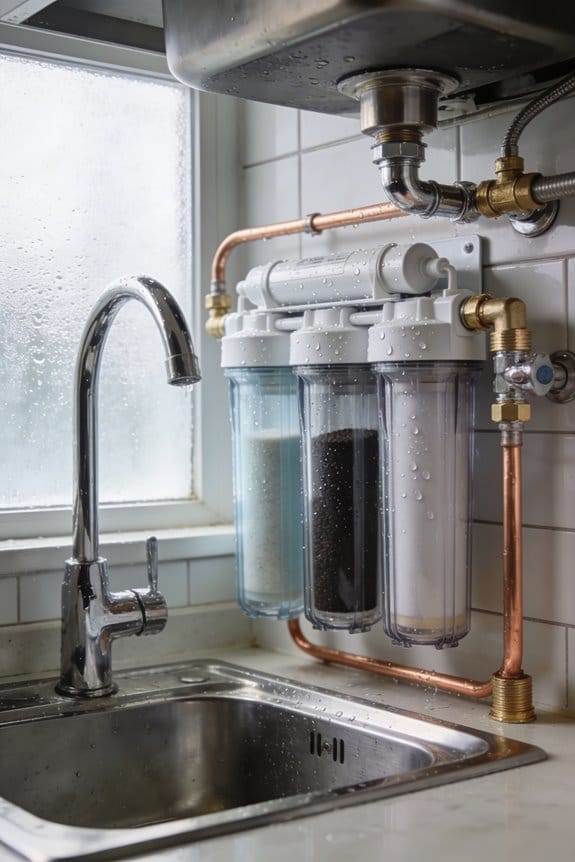
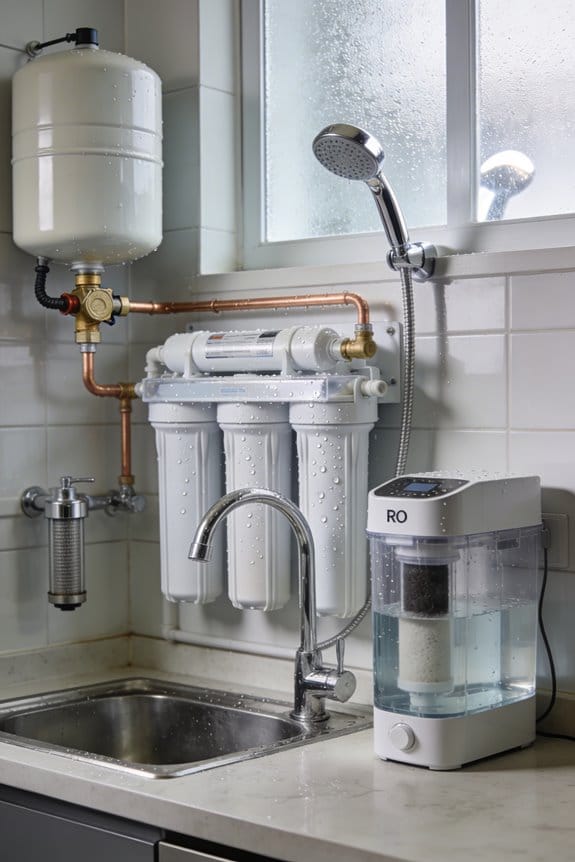
When you turn on your dedicated under-sink faucet, you’re triggering a multi-stage filtering process that transforms ordinary tap water into highly purified drinking water. Water enters from your cold water pipe through a plastic tube, then passes through sediment filters that remove rust, dirt, and debris. Next, activated carbon filters trap chlorine and odors, while the reverse osmosis membrane forces water through its tiny pores under high pressure, catching up to 95% of contaminants. The system maintains constant pressure, ensuring immediate flow dynamics when you open the faucet. A post-carbon filter polish the water before it reaches your cup, preventing microbial regrowth and delivering clean, fresh-tasting water for drinking and cooking.
How Multi-Stage Under-Sink Filters Work
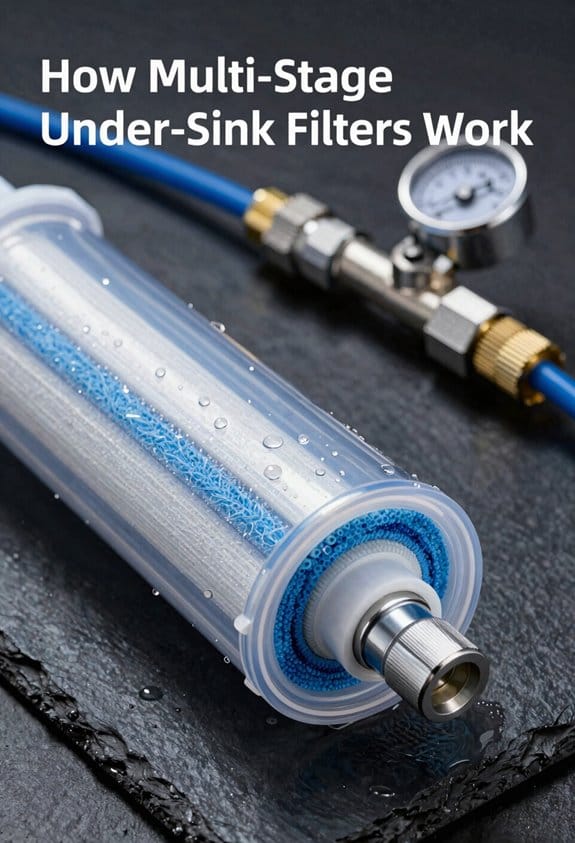
Because tap water contains various types of contaminants—from visible particles to dissolved chemicals—a single filter can’t remove them all effectively, which is why multi-stage systems use several different filtering layers working together. Understanding filter sequencing helps you see how each stage targets specific problems. The staged flowcharts of these systems typically follow this order: sediment filters catch large particles like rust and dirt first, then granular activated carbon removes chlorine and odors, followed by a semipermeable membrane that traps dissolved contaminants under pressure. Finally, a post-carbon filter polishes the water before it reaches your faucet. This sequential approach guarantees all-inclusive purification, with each layer building on the previous one’s work to deliver cleaner, safer drinking water.
Reverse Osmosis and Activated Carbon: How Contaminants Are Removed
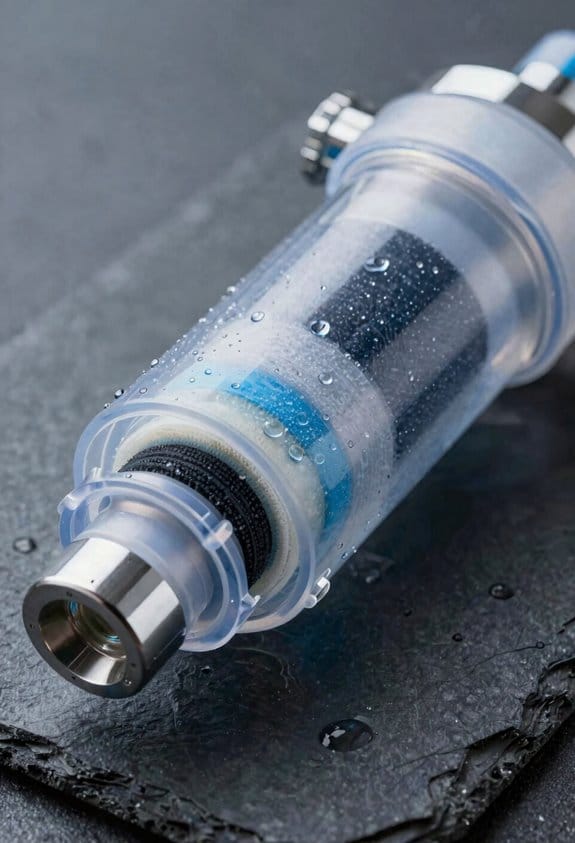
While the multi-stage filtering system I described uses several different layers to catch various contaminants, two of these stages—reverse osmosis and activated carbon—deserve a closer look because they’re responsible for removing most of the harmful substances from your water.
Reverse osmosis works through membrane rejection, forcing water molecules through a semipermeable barrier that traps up to 95% of dissolved contaminants. This includes heavy metals, chemicals, and minerals that smaller filters can’t catch.
Activated carbon functions differently through carbon adsorption, where the porous material chemically binds to chlorine, odors, and organic compounds. Together, these technologies create a powerful combination that removes 99.99% of harmful substances, ensuring your drinking water is markedly cleaner than what flows from your regular tap.
What Contaminants Do Under-Sink Filters Remove?
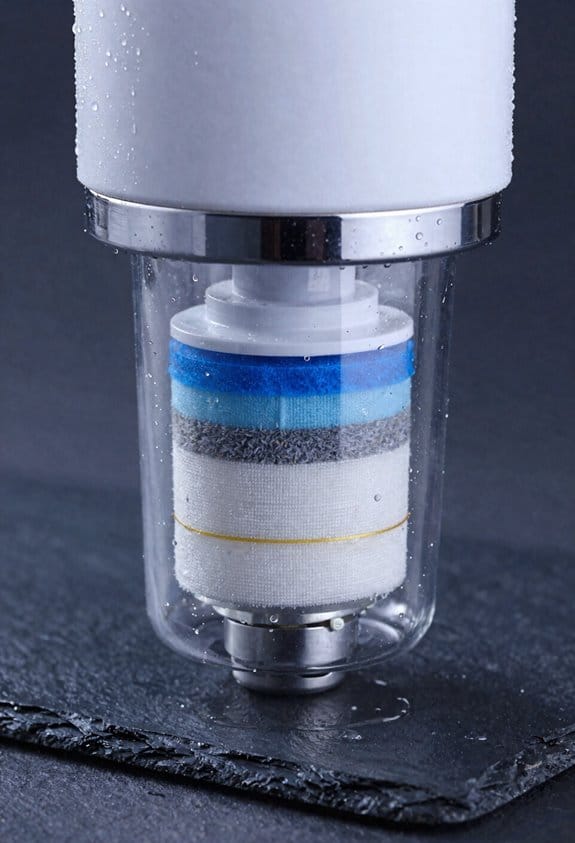
Now that you understand how reverse osmosis and activated carbon work together to purify your water, you’re probably wondering exactly which contaminants these systems remove. Under-sink filters tackle a broad range of pollutants that affect water quality and safety. They eliminate heavy metals like lead and arsenic, which can accumulate in your body over time. The systems also remove microbial pathogens including bacteria and viruses that cause illness. Additionally, they filter out chlorine, PFAS chemicals, fluoride, and microplastics. Some advanced systems remove up to 99.99% of approximately 90 different contaminants. Importantly, these filters retain beneficial minerals such as potassium and magnesium, ensuring your water stays healthy while removing harmful substances.
Under-Sink Filters vs. Pitchers & Faucet Filters
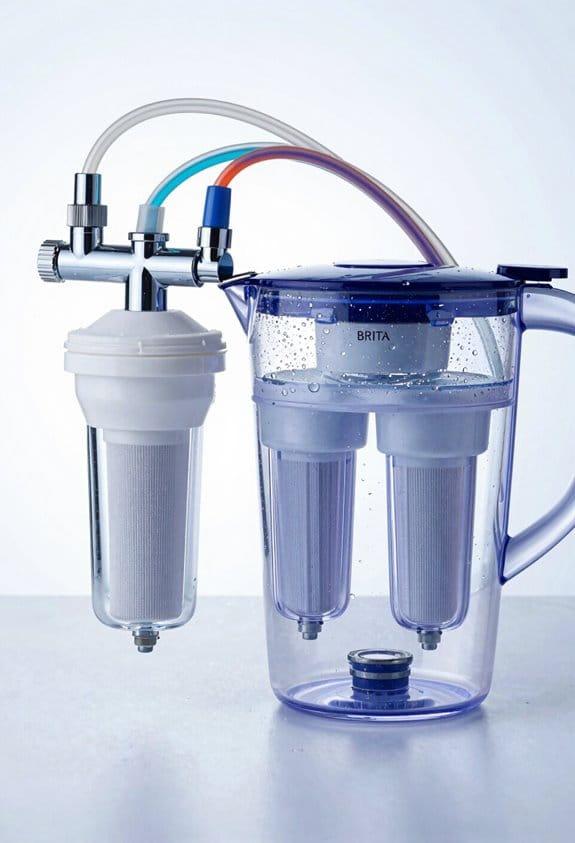
When you’re deciding how to filter your drinking water, you’ll find three popular options available: under-sink systems, pitcher filters, and faucet-mounted filters. Under-sink filters offer superior performance, removing up to 99.99% of contaminants compared to pitchers’ limited capabilities. While pitchers require frequent refills and filter replacements, under-sink systems provide continuous filtered water through a dedicated faucet. Regarding cost comparison, under-sink filters have higher upfront expenses but lower long-term costs due to extended filter life—up to three years versus pitchers’ monthly replacements. From an aesthetic impact perspective, under-sink systems remain hidden from view, preserving your sink’s appearance, whereas pitchers occupy valuable counter or refrigerator space. Faucet-mounted filters fall between these options in performance and convenience.
Installing Your Under-Sink Filter: What You Need
Once you’ve decided to install an under-sink water filter, you’ll need to gather the essential components and tools before beginning your setup. Your tools checklist should include an adjustable wrench, screwdriver, and bucket for catching water during installation. Before starting, assess your space considerations by measuring the area under your sink to guarantee adequate room for the filter system and its components. Most systems require 12-15 inches of clearance. You’ll also need the filter itself, plastic tubing, and a dedicated faucet, which typically come included. Check that your cold water line is accessible and that you have sufficient pressure between 20-60 psi for peak operation. Having everything prepared beforehand makes installation smoother and more efficient.
Why Homeowners Are Ditching Alternative Water Filters
As concerns about tap water contamination grow, many homeowners find themselves comparing different filtration options, and they’re increasingly choosing under-sink systems over alternatives like pitcher filters and faucet-mounted filters. Under-sink filters offer superior performance, removing up to 99.99% of contaminants compared to pitcher filters’ limited capacity. The cost savings become evident over time; while initial installation requires investment, under-sink systems filter 15 times more water than pitchers before replacement. Additionally, these systems improve space aesthetics by eliminating bulky pitcher filters from refrigerators and countertops. The dedicated faucet provides convenient access to filtered water for drinking and cooking without cluttering your sink area. For homeowners prioritizing both water quality and practical home organization, under-sink filters represent the most all-encompassing solution available today.
Frequently Asked Questions
How Often Do I Need to Replace the Filters or Cartridges in My System?
I’d recommend replacing your cartridges every 1-3 years, depending on your water quality and usage. Most systems have a filter lifespan of up to 10,000 gallons. Regular cartridge maintenance guarantees peak performance and contaminant removal.
Will an Under-Sink Filter System Work With My Current Water Pressure?
Sure, your water pressure’s probably fine—unless you’re living in some dystopian bunker. I’ve found most systems work great between 20-60 psi, and they’ll deliver solid flow rates without requiring you to sacrifice a limb.
Can I Use an Under-Sink Filter With Well Water or Only Municipal Water?
You can absolutely use under-sink filters with well water. I’d recommend systems targeting nitrate removal, since well water often contains higher nitrate levels than municipal supplies. Multi-stage systems work best for well water quality.
Does Filtering Water Waste a Lot of Water During the Filtration Process?
I’ll be honest—reverse osmosis systems do create water loss during backwash frequency cycles, typically wasting 3-4 gallons for every 1 gallon filtered. However, you’re getting superior purification that pitcher filters can’t match.
Are Under-Sink Filters Compatible With All Sink Types and Cabinet Configurations?
Like a puzzle’s missing piece, compatibility hinges on your space’s dimensions. I’d verify mounting dimensions and drain clearance beneath your sink—most systems fit standard cabinets, but you’ll need precise measurements first.