As an Amazon Associate, we earn from qualifying purchases. Some links on this site are affiliate links at no extra cost to you. Our recommendations are based on thorough research and editorial judgment.

Why Eco-Conscious Homeowners Are Switching From Bottled Water to Home Filters

Eco-conscious homeowners switch to home filters because bottled water costs thousands yearly while filtered tap water costs pennies per gallon. Plastic bottles fragment into microplastics—you’d ingest thousands of particles annually—whereas home filtration eliminates this exposure. One filter replaces roughly 2,000 bottles yearly, drastically reducing plastic waste and carbon emissions from production and transport. Installation takes minutes, replacement cartridges cost $20–$50 annually, and you’ll break even in 6–12 months. The financial and environmental benefits compound when you understand what’s actually in your bottled water.
Key Takeaways
- One home filter replaces roughly 2,000 plastic bottles yearly, significantly reducing plastic waste and environmental impact.
- Bottled water production used energy equivalent to 64 million barrels of oil in 2016 alone.
- Filtered tap water reduces microplastic exposure since home filtration bypasses plastic containers entirely.
- Home filters break even financially in 6–12 months while eliminating ongoing bottled water expenses.
- Installation takes minutes with instant refilling at the sink, maintaining convenience without environmental costs.
Why Bottled Water Costs Hundreds More Than Filtered Tap
When you’re thirsty and reaching for a bottle at the store, you might not realize you’re paying hundreds or even thousands of times more than you’d spend using filtered tap water at home. The production costs of bottled water are substantial. Manufacturing involves extracting, processing, and packaging water into plastic bottles, which requires significant resources and labor. Additionally, you’re paying a convenience premium—companies charge extra because bottled water is portable and ready to drink. Transportation across distances adds further expenses. In contrast, a home filtration system requires one upfront investment. Once installed, filtered tap water costs just pennies per gallon, making it economically superior for long-term household use.
Microplastics in Plastic Bottles: What You’re Actually Drinking
As plastic bottles break down over time, they don’t disappear—they fragment into tiny particles called microplastics that end up in your drinking water. Scientists have found that microplastic prevalence in bottled water is markedly higher than in tap water, meaning you’re likely consuming thousands of these particles annually without realizing it. When you drink bottled water, you’re ingesting microscopic fragments that accumulate in your body over time. These particles come from bottle degradation during storage, transport, and sitting on shelves. Your digestive system can’t break down or eliminate microplastics effectively, so they remain in your tissues. Filtered tap water eliminates this concern entirely since it bypasses plastic containers altogether. Switching to home filtration systems protects you from unwanted particle ingestion while reducing environmental impact simultaneously.
Your Bottled Water’s Hidden Carbon Cost
Beyond the microplastics you’re consuming, there’s another invisible problem hiding inside your bottled water purchase: the enormous amount of energy and emissions required to get that bottle into your hand. When we examine the lifecycle accounting of bottled water, the numbers become startling. Production consumes fossil fuels, manufacturing requires tremendous water waste, and transportation across long distances generates significant carbon emissions. In 2016 alone, U.S. bottled water production used energy equivalent to 64 million barrels of oil. These embedded emissions—hidden throughout production, bottling, and delivery—make each bottle far more environmentally costly than tap water. Filtered tap water, by contrast, requires minimal energy after initial system installation, making it the genuinely sustainable choice for environmentally conscious households.
What Water Filters Remove That Tap Water Doesn’t
While municipal tap water in the United States meets safety standards set by the Environmental Protection Agency, water filters can remove additional contaminants that standard treatment plants don’t eliminate or only partially reduce. The contaminant spectrum includes sediment, lead, chlorine, and emerging pollutants like PFAS that concern many homeowners. Advanced filtration technologies, particularly reverse osmosis and ultra filtration benefits, target microscopic particles that standard municipal treatment misses. Ultra filtration benefits users by removing bacteria and viruses effectively. These systems provide an additional layer of protection, capturing substances that may persist in tap water despite regulatory compliance. By installing home filters, you’re addressing gaps in municipal treatment, ensuring cleaner water for your household’s specific needs and concerns.
Tap Water Is Safer Than Bottled (Here’s Why)
Many people believe bottled water‘s purity makes it inherently safer than tap water, but the reality contradicts this assumption. Municipal tap water undergoes rigorous tap testing transparency, with the EPA requiring frequent testing and public reporting of results. This source tracing accuracy means you know exactly where your water comes from and what it contains. Bottled water, conversely, faces fewer regulations and less frequent testing. Tap water reliably meets safety standards across U.S. municipal systems, removing contaminants like sediment, lead, and chlorine through established treatment processes. When you add a home filtration system, you gain even greater protection by reducing microplastics and additional impurities. The combination of regulated municipal treatment and home filters provides water quality that rivals or exceeds bottled alternatives, without the unnecessary expense or environmental impact.
Filters Pay for Themselves (Do the Math)
The financial case for switching to home water filters is straightforward when you calculate what you’re currently spending on bottled water. Most families spending $1,000 to $2,000 yearly on bottled water find their break even point within six to twelve months of installing a filter system. Once you’ve covered the initial investment, your lifecycle savings accumulate markedly. A quality filter system costs $100 to $500 upfront, then requires occasional replacement cartridges costing $20 to $50 annually. Compared to continuous bottle purchases, you’re looking at saving hundreds of dollars each year indefinitely. When you factor in reduced plastic waste and environmental impact alongside these financial benefits, the decision becomes even clearer. The math simply works in favor of home filtration solutions.
One Filter Replaces 2,000+ Plastic Bottles Yearly
Installing a single home water filter can eliminate your need for roughly 2,000 plastic bottles every year, which represents a dramatic shift in your consumption habits. This significant reduction directly decreases the plastic waste entering landfills and oceans. When you consider that Americans collectively use 50 billion plastic bottles yearly, your individual choice multiplies across households and communities. Community programs increasingly promote filter adoption through behavioral nudges, making sustainable choices easier for families. By switching to a filtered tap system, you’re not just reducing personal consumption; you’re contributing to broader environmental protection efforts. This change demonstrates how individual actions, when combined with community initiatives, create meaningful environmental impact without requiring sacrifice to convenience or water quality.
Switch Without Losing Convenience
You might worry that switching to filtered tap water means giving up the convenience you’ve grown used to, but home filtration systems actually make staying hydrated just as easy as buying bottled water, and in some ways even easier. Portable pitchers with built-in filters sit on your countertop, ready whenever you need a drink. Many systems include on-the-go bottles that you can fill and carry throughout your day, eliminating trips to the store. Installation takes minutes, and refilling happens instantly at your sink. Unlike bottled water, you’re never without supply or waiting for delivery. These systems deliver the same convenience as purchasing bottles, while removing the burden of transporting heavy cases home from shopping trips.
Choose Your First Water Filter: A Quick Comparison
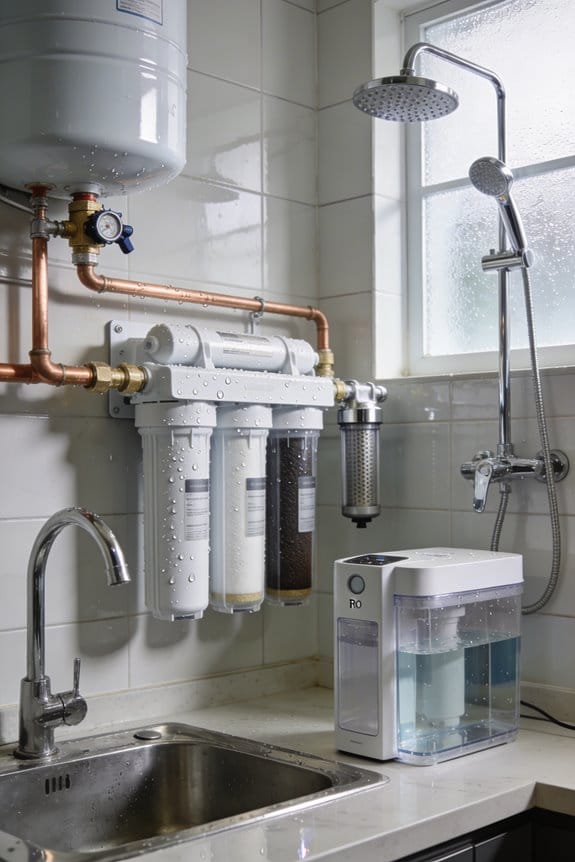
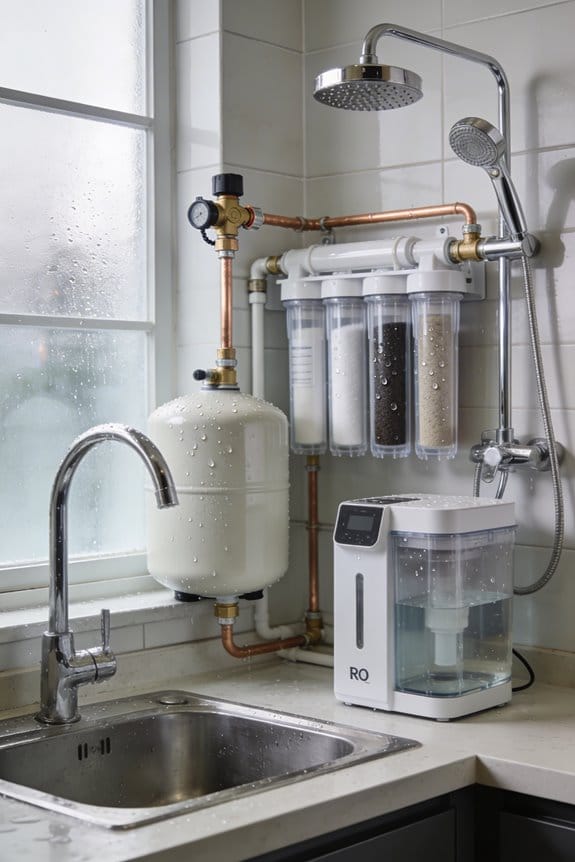
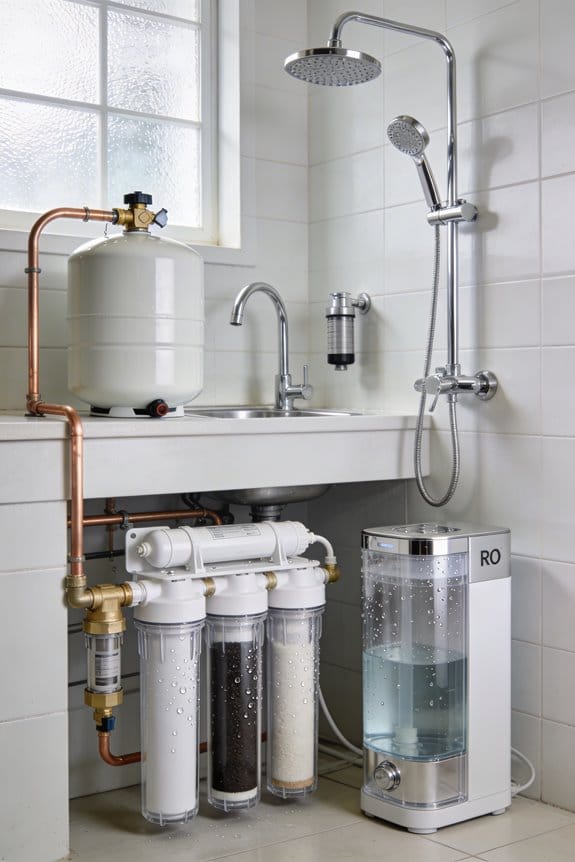
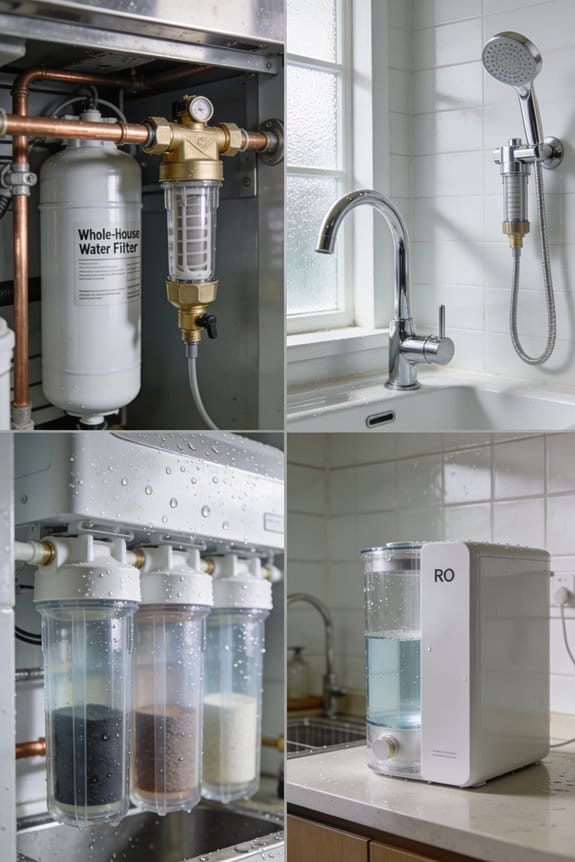
Selecting a home water filter doesn’t require extensive research or technical knowledge, though understanding a few key options will help you make the best choice for your needs. A carbon filter, which uses activated charcoal to remove chlorine and contaminants, works well for basic purification and fits most budgets. If you prefer something simpler, a gravity pitcher requires no installation and filters water through replaceable cartridges as you pour. For more thorough filtration, reverse osmosis systems remove smaller particles but cost more initially. Consider your water quality concerns, available space, and budget when deciding. Each option provides significant improvements over bottled water while reducing plastic waste and long-term expenses for your household.
Filter Maintenance: How Long They Last and What They Cost
While selecting a filter is an important first step, understanding maintenance requirements and replacement costs guarantees your system continues delivering clean water effectively over time. Most filters require replacement every six to twelve months, depending on water usage and quality. I recommend following your manufacturer’s replacement schedules to maintain peak performance. Installation tips suggest marking your replacement date on a calendar to avoid missing service intervals. Filter cartridges typically cost between twenty and fifty dollars, making annual maintenance affordable compared to bottled water expenses. Some systems use longer-lasting filters lasting up to three years, reducing replacement frequency. Regular maintenance makes certain contaminant removal remains effective, protecting your health while sustaining your investment in home filtration.
Frequently Asked Questions
Do Water Filters Remove All Types of Contaminants, Including Bacteria and Viruses?
I’d tell you that most standard filters won’t remove all contaminants. While they’re effective at bacterial removal and reducing sediment, lead, and chlorine, viral filtration requires specialized systems like reverse osmosis for thorough protection.
Can I Install a Home Water Filtration System Myself, or Do I Need Professional Help?
You can handle many DIY installation projects yourself, though I’d recommend checking your local permit requirements first. Complex systems might need professional help, but simpler filters are manageable for homeowners.
How Does Filtered Tap Water Taste Compared to Bottled Water Brands?
Like comparing fresh spring water to stale shelf stock, filtered tap water often tastes noticeably cleaner. I’d recommend sensory testing both for taste comparisons—you’ll likely find filtered tap rivals premium bottled brands while costing substantially less.
What’s the Environmental Impact of Manufacturing Water Filters Themselves?
I’ll be honest—filter manufacturing does generate lifecycle emissions and requires material sourcing, but you’ll offset these impacts within months by eliminating thousands of plastic bottles. It’s genuinely the greener choice.
Are There Any Health Risks Associated With Drinking Unfiltered Tap Water Long-Term?
I’ve found that unfiltered tap water’s a ticking time bomb for your health. You’re risking lead exposure and endocrine disruptors that accumulate silently in your body, potentially causing long-term developmental and hormonal damage.