As an Amazon Associate, we earn from qualifying purchases. Some links on this site are affiliate links at no extra cost to you. Our recommendations are based on thorough research and editorial judgment.

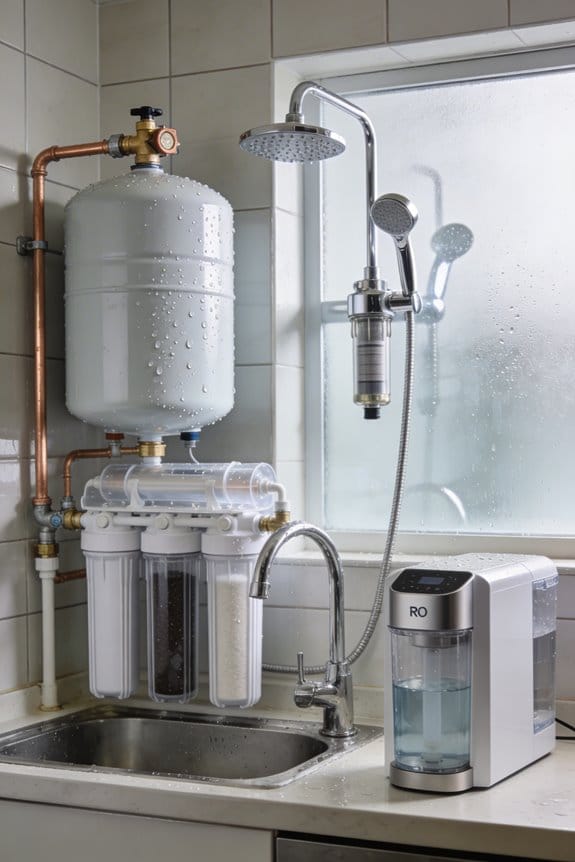
What Smart Water Filters With App Monitoring Actually Do in Real Time

Smart water filters with app monitoring combine multiple sensors that track pH levels, mineral content, contaminants, pressure, and flow rates simultaneously—giving you instant visibility into your water quality 24/7. You’ll receive immediate alerts when filters clog, contamination breaks through, or leaks occur. The system learns your usage patterns and predicts when replacement’s needed, typically around 90% saturation. You can control your filtration remotely, adjust settings, and view consumption data whenever you want. Understanding how these systems work reveals opportunities to optimize your home’s water safety markedly.
Key Takeaways
- Monitor water quality metrics continuously, including pH levels, mineral content, contaminants, and particulate matter through sensor fusion technology.
- Track filter performance in real time by measuring differential pressure and flow rates to detect when effectiveness declines.
- Send instant alerts when water pressure drops, contamination breaches safe standards, or leaks occur with timestamped event logging.
- Display live usage dashboards showing daily, weekly, and monthly water consumption patterns accessible through the mobile app.
- Enable remote control of filtration intensity, scheduling adjustments, and system shutoff from anywhere via smartphone for convenience.
How Smart Filters Monitor Water Quality 24/7
Smart water filters don’t just clean your water once and call it done—they’re constantly working behind the scenes, monitoring multiple aspects of your water quality throughout the day and night. Through continuous monitoring, sensors track pH levels, mineral content, and contaminants in real time. This sensor fusion approach combines data from multiple sources, including flow rates, pressure levels, and temperature readings, to give you a complete picture of your water’s purity. The system measures total organic carbon upstream and downstream of filters, detecting changes in particulate matter like PM2.5 and PM10. You’ll receive alerts if contaminants breach filters or water quality drops, ensuring you always know exactly what’s flowing from your tap.
What Happens When Filters Reach Their Limit
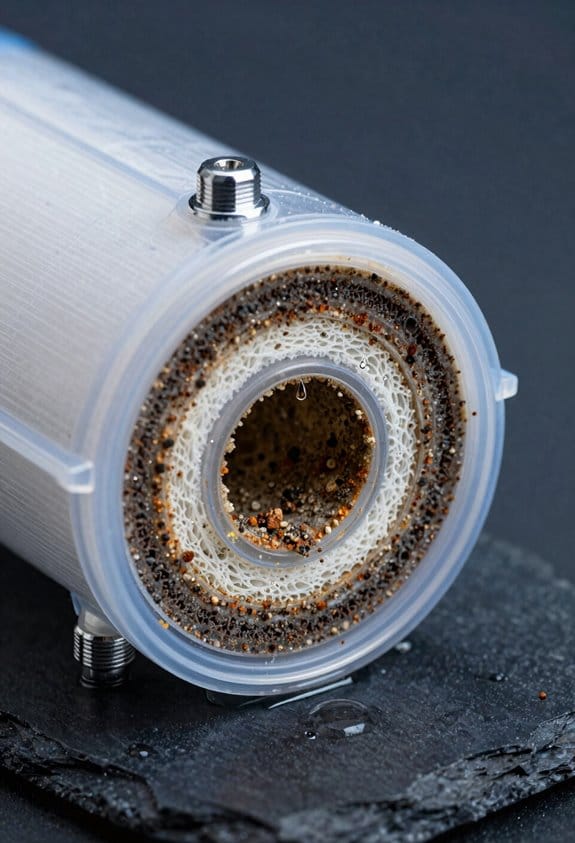
Although your filter may seem like it’s working fine, it’s actually counting down to the moment when it can no longer protect your water quality. As filters trap contaminants, they gradually fill up and lose effectiveness. When your filter reaches its end of life, contaminant breakthrough occurs—meaning harmful particles slip through into your water.
Your smart filter system detects this through sensors measuring differential pressure and flow rates. When pressure increases markedly, it signals that the filter’s capacity is nearly full. The app sends you replacement reminders based on usage patterns and contamination levels detected. Real-time monitoring shows you exactly when performance drops, preventing water quality issues before they happen. Replacing filters promptly maintains the 98% purity standard your system’s designed to deliver.
Instant Alerts: Clogs, Contamination, and Leaks Explained
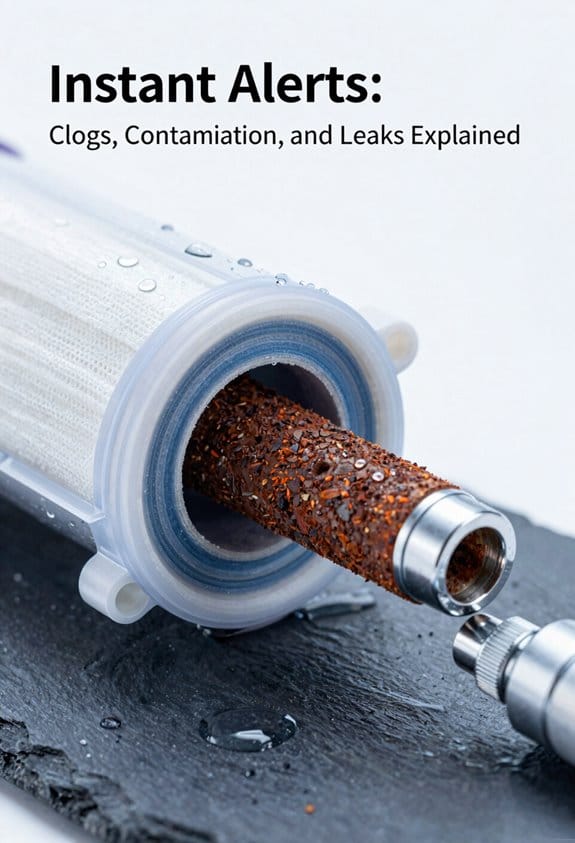
When your water filter system picks up warning signs, it kicks into action by sending you alerts through your smartphone app, letting you know exactly what’s happening inside your pipes. The system uses sensor fusion—combining data from multiple sensors like pressure gauges and flow meters—to detect problems accurately. If a clog develops, you’ll receive an immediate notification about decreased water pressure. Contamination breakthroughs trigger alerts when water quality drops below safe standards. Leak detection sensors identify unexpected water loss, preventing damage and waste. Event logging records each alert with timestamps, creating a detailed history you can review anytime. This comprehensive monitoring guarantees you catch issues early, maintaining peak filter performance and water purity before serious problems develop.
Control Your Water System From Anywhere
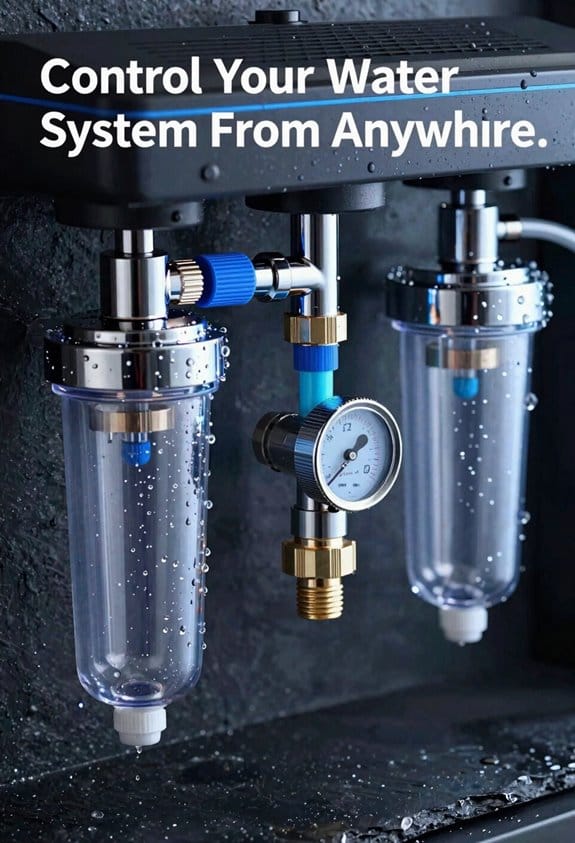
Beyond receiving alerts about what’s happening with your water system, you’ll want the ability to manage your filter from anywhere, and that’s exactly what app-based remote control provides. I can turn my water on or off using my smartphone, even when I’m away from home. The app lets me adjust filtration intensity settings based on my water quality needs without being physically present. If I’m on vacation and worried about a potential leak, I can remotely shutoff the water immediately. I can also schedule overrides for specific times, allowing me to customize when my system operates at peak performance. This remote access means I maintain complete control over my water purification process from any location with internet connectivity.
Track Usage: See Every Drop in Your App
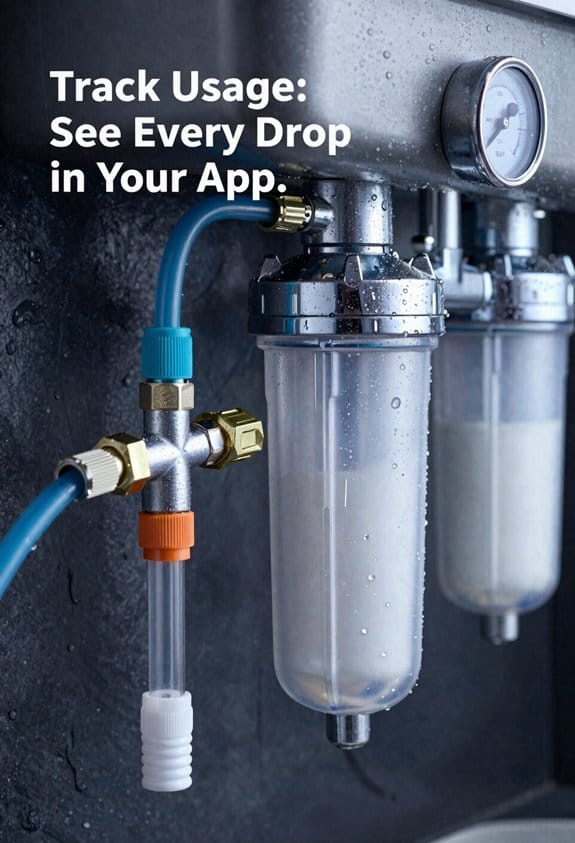
Understanding your water consumption breaks down into clear, measurable data that your smart filter app collects and displays automatically. Your usage dashboard tracks every drop metering through your system, showing you exactly how much water you’re using daily, weekly, and monthly. This real-time monitoring helps you identify consumption patterns and spot unusual spikes that might indicate leaks or wasteful habits. The app provides visual graphs and charts, making it simple to understand your household’s water usage at a glance. By reviewing this data regularly, you can make informed decisions about conservation, adjust your filtration settings accordingly, and manage your water bills more effectively. This transparency empowers you to become a more conscious water consumer.
Smart Adaptation: How Filters Respond to Water Changes
Your smart water filter system continuously monitors the quality and characteristics of water flowing through it, automatically adjusting its filtration intensity based on real-time data from multiple sensors. When contaminants increase, the system responds by intensifying purification efforts, while cleaner water requires less aggressive filtering. This adaptive dosing approach optimizes performance without wasting resources or reducing water flow. Flow responsive valves adjust pressure levels automatically, ensuring consistent delivery even when upstream water conditions change. Sensors detect turbidity, conductivity, and organic carbon levels, triggering immediate operational adjustments. Rather than using fixed settings, your filter learns your water’s patterns and responds dynamically. This intelligent adaptation means you’re always getting appropriately filtered water matched to actual conditions, maximizing both purity and efficiency.
When to Replace Filters: Predictive Alerts Explained
Since your smart water filter system tracks multiple data points continuously, it can predict when replacement is needed long before filters actually fail, which means you’ll never be caught without clean water. The system uses predictive modeling, analyzing flow rates, pressure changes, and contaminant levels to determine filter lifespan accurately. Sensor fusion combines information from multiple sensors, creating a holistic picture of filter condition. Based on this analysis, the system generates personalized replacement schedules tailored to your water quality and usage patterns. User reminders arrive through your app before filters reach capacity, typically around 90% saturation. This proactive approach prevents breakthrough events where contaminants slip through, ensuring consistent water purity. You can even order replacement filters directly through the app, making maintenance seamless and convenient.
Set Up App Connectivity in 5 Minutes
Getting your smart water filter connected to its app takes just a few straightforward steps, and I’ll walk you through the process so you can start monitoring your water quality right away. First, download the SmartHQ app on your smartphone, then power on your filter system. The Quick Pairing feature automatically detects your device within One Minute. You’ll enter your WiFi credentials to establish the connection. Next, complete the Privacy Setup by creating a secure password and enabling two-factor authentication for account protection. If you want family members or guests to check your water quality, configure Guest Access through the app’s sharing settings. Once finished, you’ll receive real-time alerts and can monitor your system remotely from anywhere.
Troubleshooting Common App Connectivity Issues
Even though the SmartHQ app setup is designed to be simple, connectivity problems can still occur due to WiFi interference, incorrect credentials, or device compatibility issues. I’ve found that performing network resets often resolves persistent connection failures. To do this, restart your router by unplugging it for thirty seconds, then reconnect your filter device. If problems persist, check for firmware conflicts between your app version and the filter’s software. Visit the SmartHQ support page to download the latest firmware update. Verify your WiFi password and make sure your device isn’t blocked by network restrictions. Try connecting to a 2.4GHz band instead of 5GHz, since some filters work better on slower frequencies. These troubleshooting steps typically restore connectivity quickly and reliably.
Frequently Asked Questions
Can Smart Water Filters Work Without Wifi or Internet Connectivity?
Yes, I can tell you smart filters work without WiFi through battery operation and local logging. They’ll filter water and track data independently, though you’ll lose remote app access and real-time alerts until reconnected.
How Often Does the App Update Water Quality Data in Real Time?
I’ll give you real-time updates based on your filter’s sensor latency. Most apps refresh water quality data every few seconds to minutes, depending on your system’s update frequency and WiFi connection strength.
What Happens to My Data if the Cloud Platform Goes Down?
Your data’s your lifeboat when clouds disappear. I’ve got offline backups safeguarding everything you own—your water quality records, usage patterns, filter history. You’re never stranded; we’re protecting what’s yours locally too.
Are Smart Filter Systems Compatible With Well Water or Only Municipal Supplies?
I’ve found that smart filter systems work with well water too, not just municipal supplies. They’re customizable for groundwater’s unique challenges—you’ll get sediment prevention and pressure management features tailored to your source.
Can I Integrate Multiple Smart Filters Into One Centralized App Dashboard?
Think of your filters as instruments in an orchestra—each plays independently, yet they can harmonize through one conductor. Yes, you’ll integrate multiple smart filters via multi-device pairing into your centralized dashboard, receiving unified alerts across your entire system.


