As an Amazon Associate, we earn from qualifying purchases. Some links on this site are affiliate links at no extra cost to you. Our recommendations are based on thorough research and editorial judgment.


How Bath Filters Work for Soaking Tubs and Baby Baths

Bath filters work by attaching directly to your faucet and passing water through two filtration stages before it fills your tub. First, a physical mesh layer traps sediment, rust, and microplastics. Then, chemical media like activated carbon absorbs chlorine, heavy metals, and odors. This two-stage approach removes up to 99% of chlorine while reducing harmful contaminants that irritate skin—especially important for babies. Flow rate matters; slower water means better filtration. Understanding your specific water quality and faucet setup helps you choose the right filter for peak results.
Key Takeaways
- Bath filters attach directly to faucets and use multi-stage filtration: physical mesh traps sediment, then activated carbon absorbs chlorine and chemicals.
- Filters remove up to 99% of chlorine, chloramines, heavy metals, fluoride, pesticides, and microplastics, reducing skin irritants for babies and families.
- Optimal flow rate around 1.8 gallons per minute balances filtration effectiveness with reasonable tub fill time for toddler bathing.
- Filter lifespan averages 2,500 gallons or 30–50 baths (3–6 months), with faster degradation from hard water and high chlorine levels.
- Weekly flushing removes trapped sediment; air-drying between uses prevents mold and extends filter life to approximately 12 months with proper care.
How Bath Filters Work: The Basic Setup
Since you’re filling your bathtub, water flows from the faucet through a filter that’s attached directly to the spout or connected to a diverter valve, which means the filter acts as the primary water source for your tub. The filtration process happens in stages. First, physical filtration traps large dirt particles and sediment. Then, chemical filtration uses specialized media like activated carbon to absorb contaminants from your water. Installation tips are straightforward: most filters feature tool-free designs with adjustable straps and handles that fit standard faucets. For proper faucet compatibility, you’ll need a minimum four-inch spigot length to guarantee secure attachment. This basic setup allows your bath water to become cleaner before it ever reaches your tub.
What Your Filter Actually Removes

Now that you understand how bath filters work mechanically, I’ll explain what contaminants they actually remove from your water. Bath filters eliminate chlorine up to 99%, reducing it from typical levels around 2 ppm to nearly zero. They also capture chloramines, THMs, VOCs, and pesticides through multi-stage filtration media. Heavy metals, fluoride, and odor-causing compounds like hydrogen sulfide get removed as well. For skin benefits, this means fewer irritants that can cause dryness or sensitivity. For infant safety, filtered water reduces exposure to potentially harmful chemicals during vulnerable developmental stages. Sediment, rust particles, and microplastics are physically trapped, ensuring cleaner water for your entire family’s bathing experience.
Physical vs. Chemical Filtration: Two-Stage Cleanup

To understand why bath filters work so effectively, you’ll want to know how they use two different methods to clean your water. First, physical filtration traps large particles through particle capture. The filter’s mesh acts like a net, catching dirt, sediment, and rust particles before they enter your tub. This initial stage prevents visible contamination from reaching your bathwater.
Second, chemical filtration handles invisible contaminants through chemical neutralization. Activated carbon and specialized media absorb chlorine, odors, and harmful chemicals. Calcium sulfite instantly reacts with chlorine to eliminate it entirely. Copper-zinc formulations reduce heavy metals and other dangerous substances.
Together, these two stages create all-encompassing water purification. Physical filtration removes what you can see, while chemical filtration tackles what you can’t.
Finding the Right Flow Rate for Your Tub
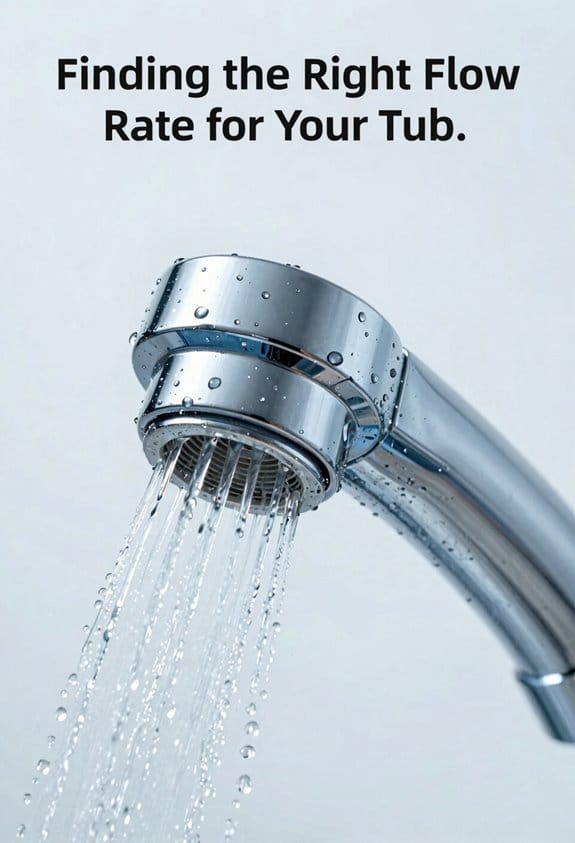
Getting water to flow at the right speed makes a significant difference in how well your bath filter actually works. I’ve found that optimal flowrates range between 0.9 and 3.6 gallons per minute for most tubs. When water moves too quickly, it doesn’t spend enough time contacting the filter media, meaning contaminants slip through unfiltered. At slower speeds, your filter removes nearly all chlorine, reducing it by up to 99 percent. For toddler bathing, maintaining around 1.8 gallons per minute guarantees complete filtration while still filling the tub reasonably fast. Higher flows cause spillover, leaving unfiltered water in your bath. Testing your faucet’s flow rate helps you choose the right filter size and understand how long filling will take.
Faucet Filters vs. Shower Filter Hacks: Which Fits Your Tub?

Once you’ve determined your faucet’s flow rate, you’ll need to decide which filter setup actually works best for your bathing situation. Direct faucet filters offer convenience and tool-free installation, making them a straightforward portable option for most homes. They attach securely to standard spigots and require no plumbing modifications. Shower filter hacks, however, provide superior filtration because they contain more media and accommodate slower flow rates more effectively. From a cost comparison perspective, faucet filters typically cost less upfront, while shower filters may offer longer-lasting performance. Consider your tub’s design, your plumbing setup, and how much filtration capacity you need. Both solutions work well; your choice depends on balancing convenience, performance, and budget within your specific circumstances.
Installing Your Bath Filter in Minutes
Installing a bath filter requires just a few straightforward steps and no special tools, making it an accessible project you can complete in minutes. You’ll attach the filter directly to your faucet using adjustable straps or handles that tighten by hand. First, confirm your spigot is at least four inches long for a secure fit. Slide the filter housing onto the faucet, then secure the straps firmly but not excessively tight. This quick install approach offers significant space savings compared to under-sink systems, since the filter attaches directly to your existing faucet without requiring cabinet modifications. The tool-free design means you won’t need wrenches or plumbing knowledge. Once installed, run water through the filter briefly before filling your tub to activate the filtration media properly.
How Long Your Bath Filter Lasts
Because bath filters use physical and chemical media to trap contaminants, they don’t last forever—I need to replace mine periodically to maintain effective filtration. Most filters last about 2,500 gallons or 30 to 50 baths, typically lasting three to six months with regular use. Replacement timing depends on your water quality and how often you bathe, since chlorine levels and sediment accumulation vary by location. I’ve learned to watch for performance indicators, like reduced chlorine removal or slower water flow, which signal that the filter’s media has become saturated. When I notice these signs, I know it’s time for a replacement. Using filters beyond their capacity compromises water quality, so staying consistent with maintenance makes certain my family gets properly filtered water every time we bathe.
When to Replace Your Filter
Knowing when to replace your bath filter helps you maintain clean, safe water for your family’s bathing routine. Most filters last approximately 2,500 gallons or 30-50 baths, which typically spans 3-6 months with regular use. Several replacement indicators signal when you should install a new filter. If you notice reduced water flow, weaker filtration performance, or visible discoloration on the filter media, replacement’s necessary. Seasonal timing matters too; families using filters frequently during warmer months may need replacements more often than those bathing occasionally. Hard water areas and high chlorine levels accelerate filter degradation. Dual-filter systems can extend effectiveness to twelve months. Monitoring these factors guarantees your filter continues removing chlorine, contaminants, and sediment effectively, protecting your skin and health.
Maintenance Habits That Extend Filter Life
I’ll consistently recommend a few simple practices that help your bath filter work longer and more effectively. First, establish a regular flushing schedule by running water through your filter weekly, which removes trapped sediment and prevents buildup that reduces flow rates. Second, adopt proper storage practices by keeping your filter in a cool, dry place when not in use, protecting the media from degradation. Between uses, allow the filter to air-dry completely to prevent mold growth. Additionally, monitor your water quality regularly; if you notice slower flow or weaker filtration, it’s time to replace the cartridge sooner rather than later. These maintenance habits maximize your filter’s lifespan and maintain consistent water quality for healthier baths.
Frequently Asked Questions
Are Bath Filters Safe for Babies and Sensitive Skin Conditions?
I’d recommend consulting a pediatric dermatologist before using bath filters on sensitive skin. Most feature hypoallergenic materials and sensitive formulas, though allergy testing guarantees safety for your baby’s delicate needs.
Can I Use Bath Filters With Well Water or Only Municipal Supplies?
I’ll tell you bath filters work with well water, though compatibility considerations differ from municipal supplies. Your private supply may contain unique sediment or minerals requiring pre-filtration assessment before installation.
Do Bath Filters Work Effectively With Hot Water Above 100 Degrees?
I’ve watched filters fail like ice melting under extreme heat—yes, they work with hot water, but you’ll hit temperature limits around 100-110°F. Beyond that, heat destabilizes media, reduces flow, causing mineral scaling that shortens lifespan markedly.
What’s the Cost Difference Between Replacing Filters Versus Whole-House Filtration Systems?
I’ve found bath filters cost markedly less upfront—you’re looking at minimal installation costs compared to whole-house systems’ thousands. You’ll see long term savings through affordable replacements every few months versus expensive professional installation.
Can Bath Filters Remove Bacteria, Viruses, or Only Chemical Contaminants?
I’ll tell you straight: bath filters primarily target chemical contaminants like chlorine and heavy metals, not bacteria or viruses. They lack antimicrobial coatings or virus inactivation technology needed for microbial removal.


