As an Amazon Associate, we earn from qualifying purchases. Some links on this site are affiliate links at no extra cost to you. Our recommendations are based on thorough research and editorial judgment.

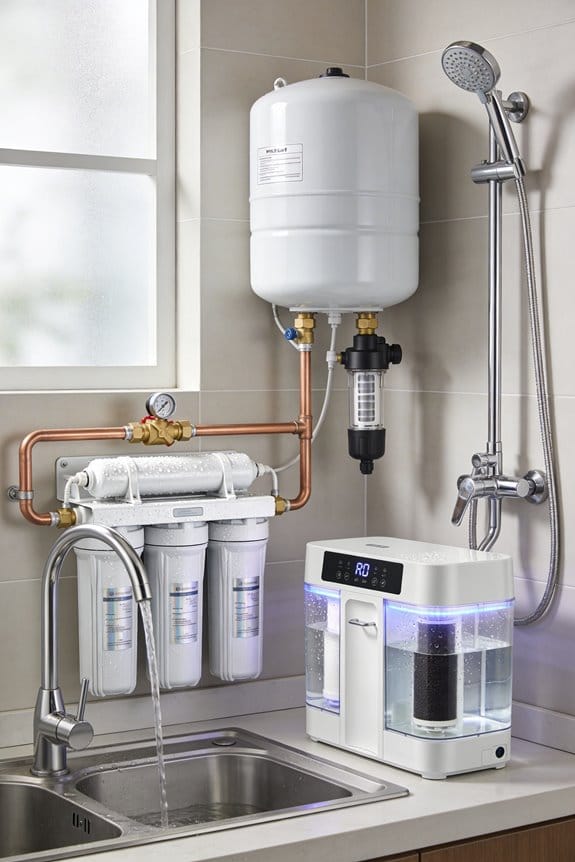
Why Hard Water in the Shower Causes Dry Skin and What to Do About It

Hard water contains calcium and magnesium minerals that strip your skin’s natural protective oils instead of rinsing away with soap, leaving you dry and tight. These minerals create a residue barrier that prevents moisture from absorbing into your skin. To combat this, install a shower filter with activated carbon to remove minerals at the source. Follow up with gentle cleansers and moisturize damp skin immediately after showering. Understanding the specific ways hard water damages your skin barrier reveals additional strategies for relief.
Key Takeaways
- Hard water minerals strip natural protective oils from skin, leaving it dry and tight.
- Calcium and magnesium create a barrier that blocks water absorption and moisture retention.
- Mineral residue combines with soap to form a film that prevents proper rinsing.
- Installing a shower filter with activated carbon removes minerals at the water source.
- Apply moisturizer to damp skin immediately after showering to trap hydration effectively.
Hard Water Damages Skin: Here’s Why
Hard water—water that contains high levels of calcium and magnesium minerals from limestone and chalk deposits—strips your skin of its natural protective oils, leaving it dry, tight, and uncomfortable. When you shower with hard water, these minerals combine with soap to create residue that blocks moisture from penetrating your skin. This mineral abrasion effectively sandpapers your skin’s surface, weakening its protective barrier.
Additionally, hard water causes pH imbalance on your skin. Your skin naturally maintains a slightly acidic pH that protects against bacteria and irritation. Hard water disrupts this balance, making your skin more vulnerable to sensitivity and inflammation. The combination of mineral buildup and pH disruption forces your skin to work harder to maintain hydration, resulting in persistent dryness that moisturizers alone can’t fully resolve.
How Mineral Buildup Strips Away Moisture
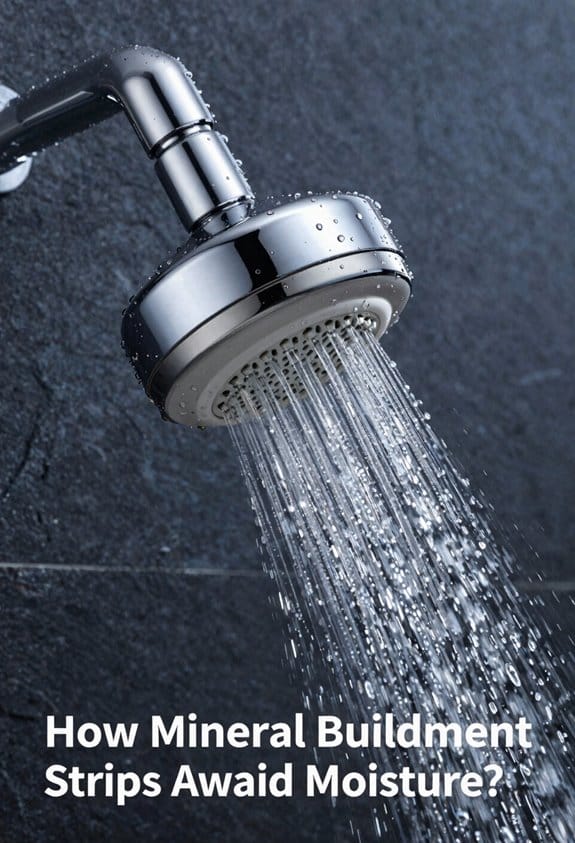
When calcium and magnesium minerals coat your skin’s surface, they create a barrier that prevents water from penetrating deep into your skin cells. This mineral abrasion damages your skin’s protective layer, making it harder for moisture to stay locked in. Additionally, hard water causes lipid depletion—your skin loses essential oils that normally trap hydration. The mineral residue combines with soap, forming a film that blocks proper rinsing. When you shower with hard water, your skin can’t absorb the moisture it needs, leaving it parched and tight. This process intensifies after hot showers, since heat opens your pores while minerals simultaneously strip away protective oils. The result is persistent dryness that feels uncomfortable and looks flaky.
Hard Water Triggers Eczema, Psoriasis, and Acne
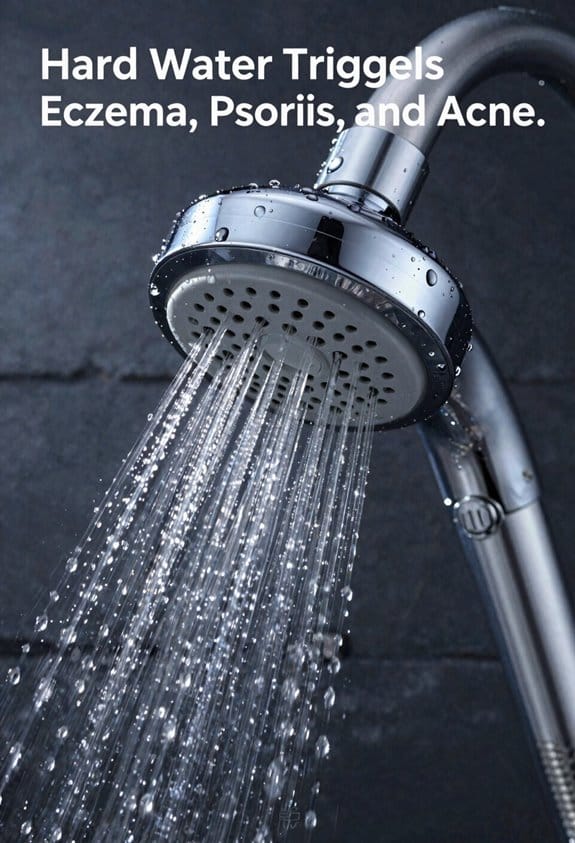
Because mineral buildup doesn’t just dry out your skin, it can also trigger or worsen serious skin conditions like eczema, psoriasis, and acne. If you have eczema, hard water creates eczema triggers by disrupting your skin barrier, leading to intense red rashes and itching. The mineral deposits clog your pores, and acne mechanisms develop when bacteria become trapped beneath soap scum residue. For psoriasis sufferers, hard water intensifies flare-ups and irritability markedly. These conditions become harder to manage because your treatments won’t work as effectively when minerals interfere with absorption. Additionally, hard water causes dermatitis and rosacea to worsen, leaving you frustrated with your skin care routine. Understanding this connection helps you address the root cause rather than just treating symptoms.
Install a Shower Filter to Remove Minerals
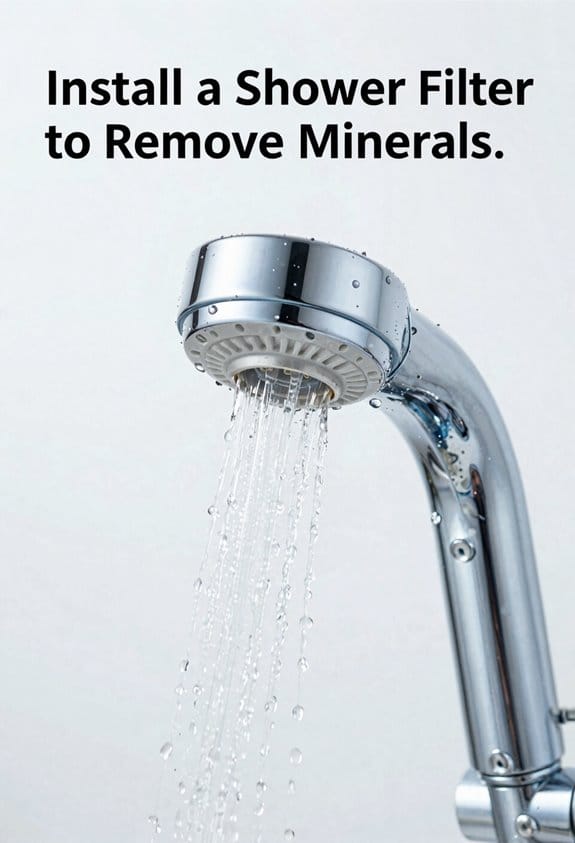
Now that you understand how mineral buildup worsens skin conditions, you’ll want to address the source of the problem—your shower water itself. Installing a shower filter is one of the most effective solutions available. These filters work by using activated carbon, a porous material that traps minerals, chlorine, and other contaminants as water passes through. An inline filter attaches directly to your showerhead, making installation simple and requiring no plumbing changes. The activated carbon removes calcium and magnesium deposits that strip your skin’s natural oils. Most filters last three to six months before needing replacement, depending on your water hardness level. By filtering your shower water, you’ll immediately reduce mineral exposure, allowing your skin barrier to recover and your symptoms to improve over time.
Moisturize and Cleanse Your Way Through Hard Water
While installing a shower filter addresses the problem at its source, you’ll also need to adjust your daily skincare routine to combat hard water’s effects. Start by using gentle cleansers that won’t strip away your skin’s natural oils further. These products work to neutralize mineral deposits while keeping your skin hydrated.
The key timing is damp moisturizing—apply moisturizer to slightly wet skin immediately after showering. This method traps water in your skin, creating a protective barrier against mineral residue. Pat your skin dry gently rather than rubbing, which can cause additional irritation.
Choose glycerin-based products specifically, as they attract and hold moisture effectively. When you combine these cleansing and moisturizing strategies with your filtered shower water, you’ll notice significant improvements in skin texture and hydration levels.
When Professional Help Becomes Necessary
Despite your best efforts with filtered showerheads, gentle cleansers, and consistent moisturizing routines, some skin conditions won’t improve on their own. If your skin remains persistently dry, inflamed, or worsening despite home care, it’s time to seek dermatologist consultation. A dermatologist can diagnose underlying conditions like eczema or dermatitis that hard water exacerbates, then recommend professional treatments tailored to your needs.
Additionally, consider whether your home’s water hardness is the root cause. You might hire plumber services to test your water’s mineral content and assess your current filtration system’s effectiveness. A plumber can recommend whole-house water softening solutions beyond basic shower filters, potentially addressing hard water problems throughout your home and providing more extensive relief for your skin and overall health.
Frequently Asked Questions
Does Hard Water Affect Nails, and Can It Cause Brittleness or Breakage?
Yes, hard water affects your nails by stripping nail moisture and disrupting cuticle health. I’d say you’ll notice brittleness and breakage as minerals compromise your nail’s natural protective barrier.
How Long Does It Take to See Skin Improvement After Installing a Shower Filter?
You can’t teach an old dog new tricks, but you can give your skin a fresh start. I’d say you’ll notice visible improvement within 2-3 weeks, though the gradual timeline extends to two months for complete transformation.
Can Hard Water Cause Hair Color Fading, and How Do I Prevent It?
Yes, hard water fades hair color by causing mineral buildup that strips pigment. I’d recommend installing a shower filter for color longevity and pigment preservation, then use chelating shampoos weekly.
Is Soft Water Better for Sensitive Skin Conditions Like Rosacea and Dermatitis?
As they say, an ounce of prevention beats a pound of cure. Yes, I’ve found soft water markedly helps sensitive skin conditions. It reduces rosacea triggers and dermatitis flare-ups by eliminating mineral buildup that irritates your skin barrier.
What’s the Difference Between Shower Filters and Whole-House Water Softening Systems?
I’d say shower filters use cartridge filters for targeted mineral removal at your showerhead, while salt-based systems treat your entire home’s water supply. Filters are cheaper and easier; systems offer thorough softening but require maintenance.