As an Amazon Associate, we earn from qualifying purchases. Some links on this site are affiliate links at no extra cost to you. Our recommendations are based on thorough research and editorial judgment.

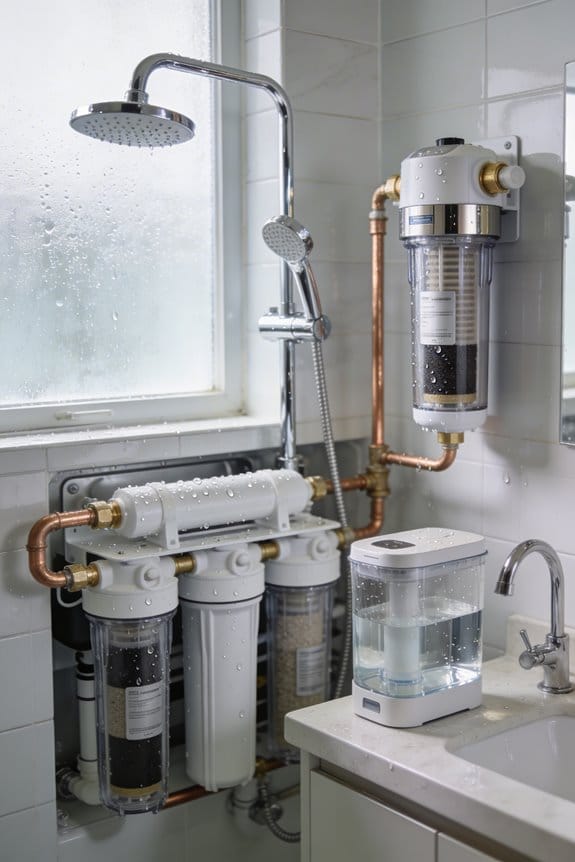
What a Shower Filter Actually Removes From Your Shower Water

I’ll tell you what shower filters actually remove from your water. They eliminate chlorine and chloramine through chemical reactions, reduce heavy metals like lead and mercury using special media, and trap sediment and visible particles with fine mesh layers. Activated carbon removes odors and harmful disinfection byproducts, while copper-zinc alloy media prevent bacteria and algae growth. These multi-stage systems work together to give you cleaner, fresher water—and there’s much more to discover about how each technology functions.
Key Takeaways
- Shower filters remove over 90% of chlorine and chloramine using KDF media, vitamin C, or calcium sulfite technologies.
- Heavy metals like lead, mercury, and arsenic are reduced through redox reactions in zinc-copper alloy media systems.
- Sediment, mineral deposits, and visible particles are trapped by sand filters, stainless steel mesh, and micro-porous cotton layers.
- Activated carbon and KDF media eliminate odors and disinfection byproducts that cause unpleasant shower water smells.
- KDF-55 media inhibit bacteria, algae, and fungi growth through redox reactions without introducing additional chemicals.
What Shower Filters Remove: Chlorine and Chloramine
Since chlorine’s been added to municipal water supplies for over a century to kill harmful bacteria, you’ve probably noticed its distinctive smell in your shower, but what you might not realize is that chlorine can also irritate your skin and hair when you’re exposed to it daily. Shower filters tackle this problem through several methods. Vitamin C filters achieve 99.9% chlorine removal by neutralizing it chemically. KDF 55 media uses chlorine oxidation, a redox reaction that converts chlorine into harmless chloride. Calcium sulfite works similarly, neutralizing chlorine in both hot and cold water. For chloramine neutralization, which is trickier since it’s more stable than chlorine, multi-stage filters combine these technologies. Most quality shower filters reduce chlorine by over 90%, making them effective solutions for daily exposure concerns.
Heavy Metals Shower Filters Eliminate From Tap Water
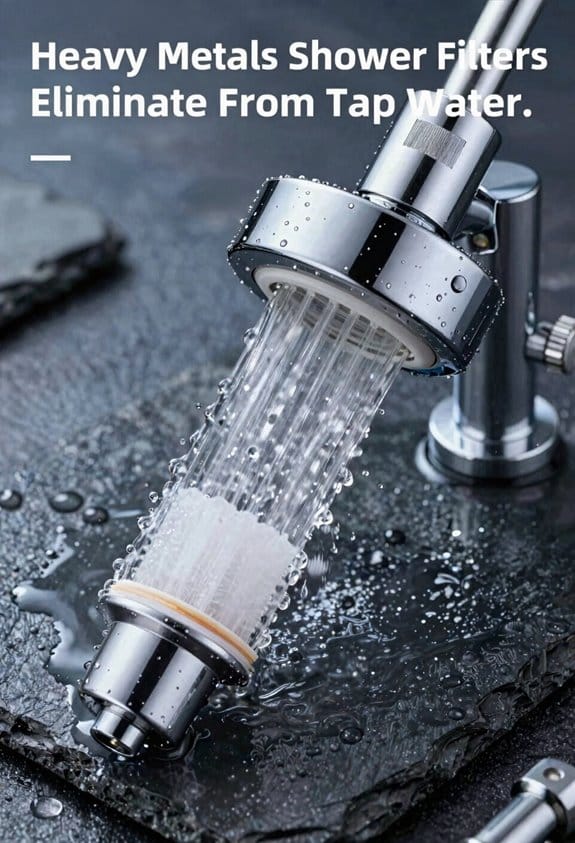
Beyond chlorine removal, shower filters address another notable water quality concern: heavy metals that can accumulate in your tap water from aging pipes and industrial sources. KDF-55 media effectively reduces lead removal and mercury reduction through a redox chemical process, where metals are converted into harmless forms. Zinc-copper alloys work similarly, trapping dangerous contaminants like arsenic and mercury before they reach your skin. Multi-stage filtration systems prioritize KDF-55 as their primary heavy metal defense, combining it with other media for thorough protection. While these filters perform impressively, you should know that some systems occasionally show slight increases in copper or zinc levels after filtration, so choosing quality brands matters greatly for your health.
Sediment, Mineral Deposits, and Visible Particles
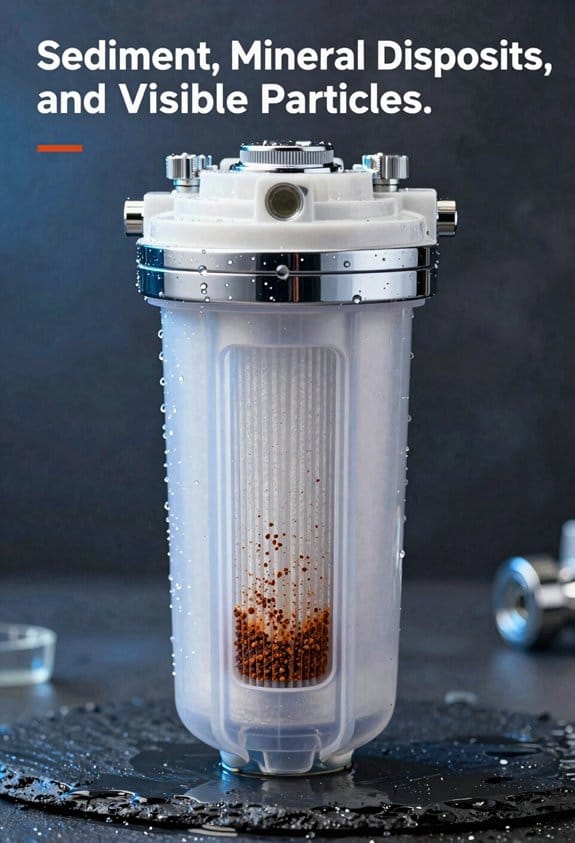
While heavy metals represent one water quality concern, shower filters also tackle a more visible problem: sediment, mineral deposits, and particles that can cloud your water and affect your skin. Sand filters block large sediments like mineral deposits and grain buildup, while ultra-fine stainless steel mesh captures medium-sized particles. Micro-porous PP cotton traps smaller sediments, dust, and impurities that create cloudy residue. Some filters, like Showerwise, specifically reduce dirt, sediment, iron oxide, and scale. A final mesh layer secures the filtering media and blocks additional sediments when water reverses direction. These multi-stage systems work together to remove visible contaminants, leaving you with clearer, cleaner shower water that feels better on your skin.
Odors and Disinfection Byproducts Your Filter Tackles
As you’ve learned about how shower filters remove sediments and heavy metals, you might’ve noticed another common water quality issue: unpleasant odors and chemical byproducts that affect your shower experience.
Shower filters tackle odor reduction through activated carbon and redox media, which work together to eliminate chlorine, hydrogen sulfide, and combined chlorine smells. These materials neutralize the compounds responsible for that distinctive chlorine scent you notice during your shower.
DBP removal—disinfection byproducts—happens when filters like the Weddell Duo remove all detected disinfection byproducts from your water. Activated carbon adsorbs these tricky contaminants, while KDF media converts chlorine through a redox reaction, preventing the formation of harmful byproducts. This combination guarantees your shower water smells fresher and contains fewer chemical compounds that your body absorbs through your skin and lungs.
Bacteria and Algae Growth Shower Filters Prevent
Your shower filter doesn’t just remove chlorine and sediment—it also stops bacteria, algae, and fungi from thriving in your water. KDF media, a copper-zinc alloy, prevents microbial inhibition by creating an environment where these organisms can’t survive or reproduce. This biofilm control is essential because bacteria and algae naturally develop in warm shower environments.
When you use a filter with KDF-55, the redox reaction neutralizes harmful microorganisms without adding chemicals to your water. Showerwise filters similarly reduce bacteria, algae, and fungi growth throughout the filtration process. By controlling these biological contaminants, your shower filter protects you from potential skin irritation and infections. The continuous microbial inhibition means you’re getting cleaner water every time you shower, providing an extra layer of protection beyond chlorine removal.
Why These Removals Work: Multi-Stage Filtration Technology
The reason shower filters work so effectively comes down to their multi-stage design, which tackles different contaminants at each layer rather than relying on a single filtration method. I’ll explain how media sequencing—the strategic ordering of filter materials—creates staged flowpaths that maximize removal efficiency.
Water first encounters sand and mesh layers that trap large sediments like mineral deposits. Next, micro-porous cotton captures smaller particles and dust. Then activated carbon and KDF-55 media work together: carbon adsorbs chlorine and odors while KDF-55 removes heavy metals through a redox reaction. Finally, calcium sulfite neutralizes any remaining chlorine in both hot and cold water.
This layered approach guarantees each contaminant type encounters the most effective material for removal.
Frequently Asked Questions
How Often Do Shower Filters Need Replacement for Optimal Performance?
I’d recommend replacing your shower filter’s cartridge every 6-12 months for peak performance. Your filter’s lifespan depends on water quality and usage, but regular cartridge replacement guarantees you’re maintaining effective chlorine and contaminant reduction.
Do Shower Filters Remove Fluoride From Tap Water?
I’ve found that most shower filters don’t effectively remove fluoride. The fluoride chemistry requires specialized filtration media—like activated alumina—that standard shower filters lack. Their filtration efficacy simply isn’t designed for fluoride removal.
Can Shower Filters Increase Water Pressure or Flow Rate?
No, shower filters can’t create or catalyze pressure. While filtration affects flow dynamics, pressure myths persist among users. Your shower head’s inherent design determines flow rate—filters simply don’t possess pressure-producing properties.
Are Shower Filters Effective for Well Water and Hard Water?
I’d say shower filters work well for both. They’re effective at iron removal from well water and handle hard water’s scale control through sediment filtration and redox media, though you might need replacement filters more frequently.
Do Shower Filters Remove Viruses and Parasites From Water?
I’d literally need a medical-grade laboratory to filter what shower filters claim they can’t do—they won’t remove viruses or parasites. Standard filtration media lacks virus removal and parasite filtration capabilities for shower use.